Emergency Plumbing in Denver, CO — Licensed Master Plumbers, Answering 24/7 Since 1990
Burst pipe at 2 a.m. in Congress Park. Sewage coming up the basement drain in Baker. No hot water the morning of a showing in Wash Park. Larimer Denver Plumbers answers emergency plumbing Denver CO calls around the clock, every day of the year with 50 licensed professionals and 10 fully stocked service vans staged across the city. We've worked on Denver's plumbing since 1990: the clay laterals under century-old bungalows, the galvanized supply lines behind lath-and-plaster walls, the swamp cooler lines that split in January and don't show themselves until March. You get a real dispatcher, a written price before we start, and a permit pulled where the city requires one.
- Licensed Master, Journeyman & Residential Plumbers
- 24/7 Live Dispatch & Never an Answering Service
- Upfront Written Pricing Before Work Starts
- Permits Pulled, Inspections Passed
- 50 Skilled Plumbing Professionals
- 10 Fully Loaded Equipped Service Vans
Request Emergency Service
Fill out the form below and our team will contact you immediately!
Instant Service Credit & Discounts AvailableWhy Act Before Denver's First Freeze?
Denver's average first freeze lands on October 7, the first hard freeze at 28°F usually follows around October 19, and the first measurable snow averages October 18 — but the range is brutal for planning. Denver has frozen as early as September 8 and held off until November 15. That unpredictability is exactly why waiting for the forecast doesn't work.
The window between late September and mid-October is when three jobs have to happen: sprinkler blowout, swamp cooler shutdown, and hose bib disconnection. Miss it and you're not calling a plumber in October — you're calling one in January, at overtime rates, with water already in the drywall. Get ahead of it and the same work costs a fraction and takes an afternoon.
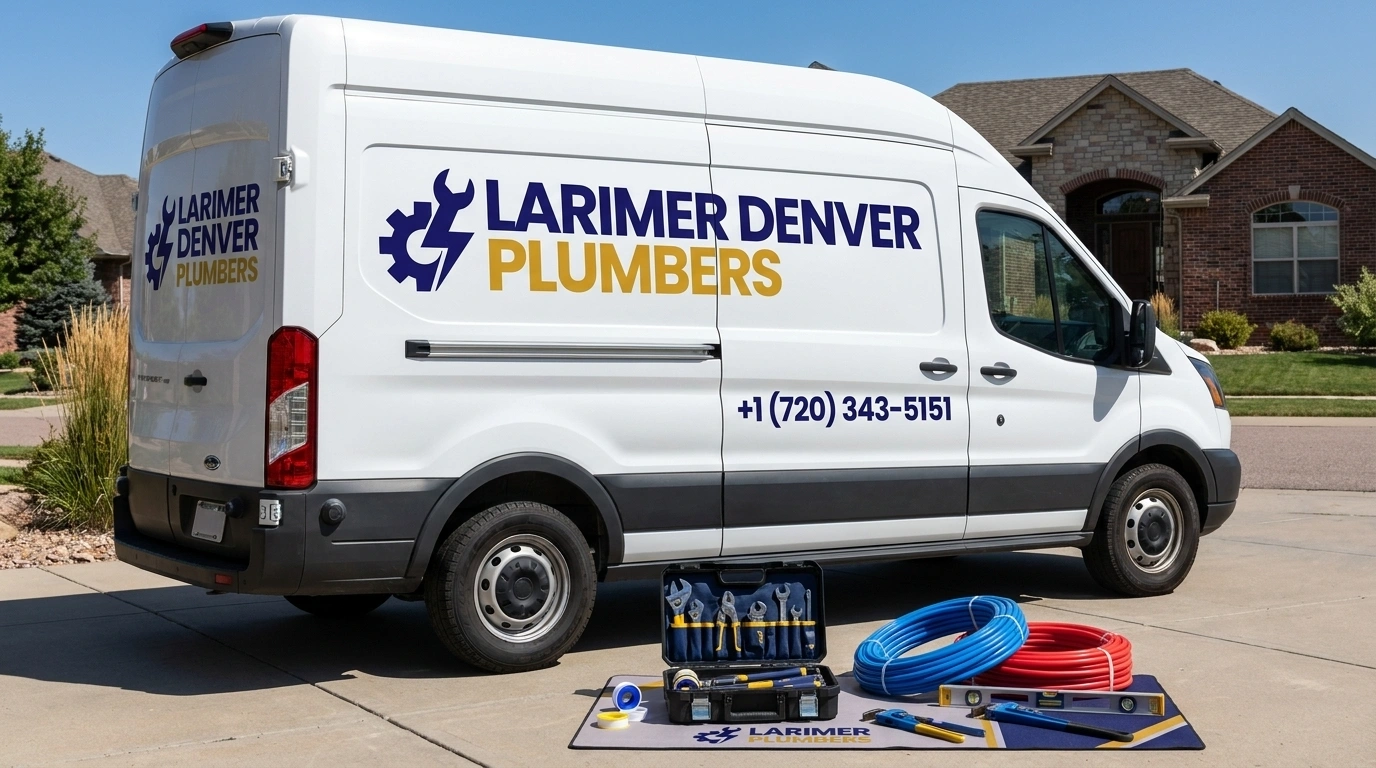

Why Do Pipes Burst in Denver Homes After the First Freeze?
Denver's problem isn't sustained cold the way Minneapolis has sustained cold. It's the swing. Chinook winds can drive 40-degree temperature jumps in a matter of hours, and metal pipe expands and contracts with every one of them. Joints that held for decades start weeping. Solder fatigues. Copper work-hardens.
Here's the part most homeowners get wrong: the pipe rarely fails while it's frozen. Ice forms, pressure builds between the blockage and the closed fixture, and the split usually opens as the pipe thaws and water starts moving again. That's why Denver plumbers see call volume double on the warm-up, not the cold snap — and why the February 2021 event, with overnight lows of minus 16, had Denver Fire running multiple crews on burst-pipe calls days after the cold left.
Unheated crawl spaces, exterior-wall runs, garage supply lines, and attic-routed cooler lines are where it starts. If you're hearing pipes crack, seeing a drop in pressure, or finding one fixture dead while the others work, you're in the window before the break, not after it. That's the cheapest moment to call.
How Fast Can a 24 Hour Emergency Plumber Denver CO Reach You?
Most nights, inside 60 to 90 minutes anywhere inside city limits. Our 10 vans stage across the east-central corridor, the north side, and the southwest quadrant rather than running everything out of one yard, which is what keeps drive times honest during a storm.
During a metro-wide freeze event, be realistic: when 400 homes split at once, every shop in the city triages. We sequence by active water loss first — a flowing burst or a sewage backup outranks a dead water heater, and we'll tell you honestly where you sit in the queue instead of promising a window we'll miss. What we won't do is route you to an overflow call center in another state.
Typical timelines once we're on site: a burst supply line isolated and capped in 1–2 hours, a main-line drain cleared in 1–3 hours, a water heater swapped same-day if the unit is in stock, a sewer lateral camera-inspected and diagnosed the same visit. Full sewer replacement or trenchless lining runs 1–3 days depending on depth, access, and permit scheduling.

What's the Most Effective Emergency Plumbing Approach for Denver Homes?
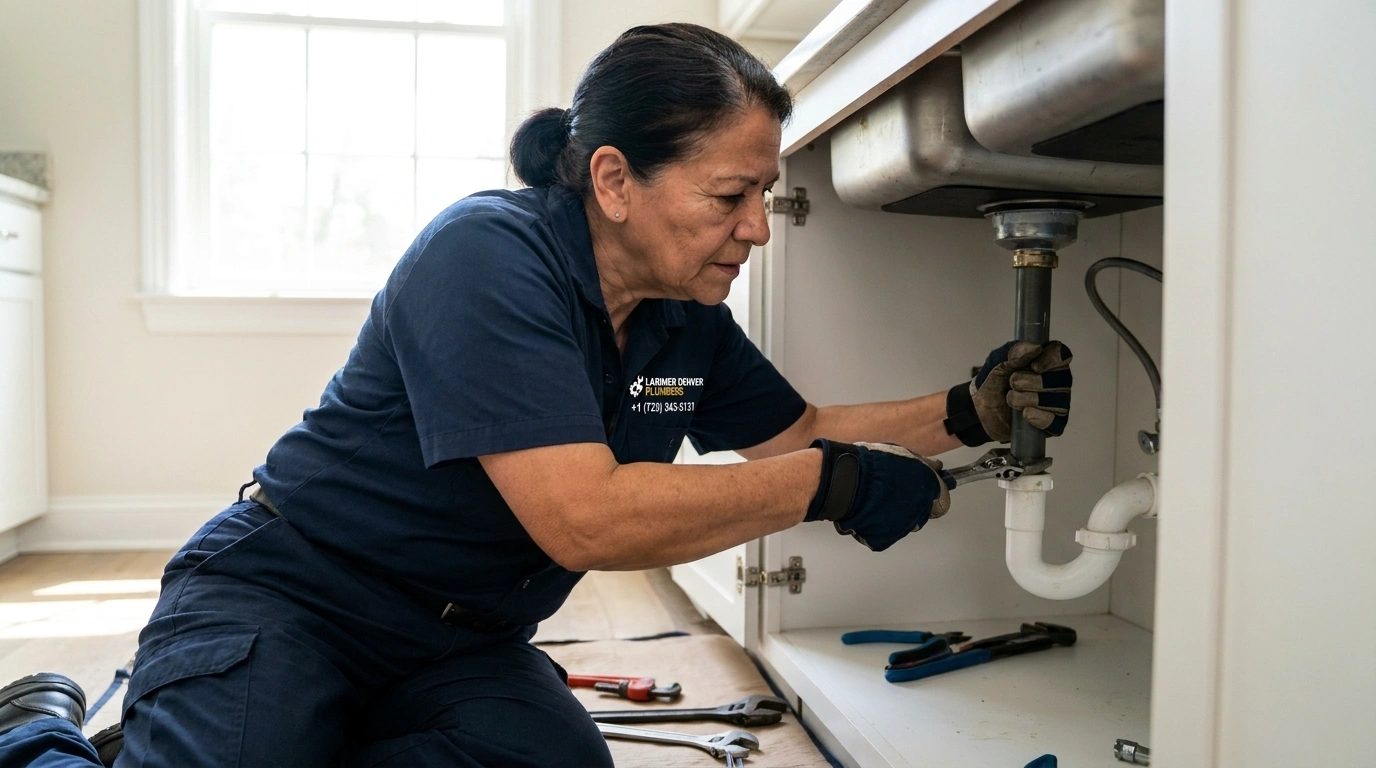
Effective emergency work in Denver has three parts, in this order: stop the loss, diagnose the cause, then repair to code. Skipping the middle step is what produces the callback three weeks later.
Stopping the loss means isolating at the nearest valve rather than shutting the whole house down if we can avoid it. Diagnosis in Denver almost always means answering a material question — is this galvanized failing from the inside, is this clay lateral separated at the joints from soil heave, is this a pressure problem the house has had for twenty years. And repair to code means Denver's adopted plumbing code, not a generic national one: where static pressure inside a building exceeds 80 psi, an approved pressure-reducing valve conforming to ASSE 1003 or CSA B356 with strainer is required to bring it down.
The difference between a patch and a repair is whether anyone asked why it failed. On a 1920s Park Hill bungalow, a pinhole in a copper line eight feet from the meter usually isn't a bad fitting — it's 95 psi hammering that joint for a decade. We fix the leak and we tell you about the pressure.
How Denver Plumbing Systems Actually Fail
Why Larimer Denver Plumbers Wins — Local, Licensed, and Actually Open
Plenty of companies list twenty trades and rotate the same content through forty cities. Denver isn't a generic market. It sits at 5,280 feet on expansive bentonite clay, with a housing stock where roughly 17% predates 1939 and another 27% went up between 1940 and 1969, fed by a utility running municipal pressure well above 100 psi. Those four facts explain most of what goes wrong here.
We've worked this specific market since 1990 from an address on Detroit Street in Denver's east-central core. Our techs know which blocks have Orangeburg and which have clay, which Denver Water pressure zones run hot, and what the inspector at Denver Community Planning and Development will actually flag.

System Expertise — Denver's Pipe Materials, Decade by Decade
Denver's failure patterns track the year the house went up, and knowing the material before we open a wall saves you money on diagnostic time.
Clay Tile Laterals
Standard through the 1950s. Capitol Hill, Baker, and Five Points homes from the late 1800s through the 1920s commonly still have them. Brittle, and they separate at the joints when bentonite heaves.
Cast Iron & Early Clay
Park Hill, Washington Park, and Congress Park, developed 1920s–1940s. Cast iron corrodes internally and restricts flow long before it leaks.
Orangeburg
Bituminized wood-fiber pipe used from the 1940s into the early 1970s. Common in Harvey Park and the 1950s–60s suburban ring. It deforms and collapses, and it's among the leading reasons for sewer replacement in Denver homes built before 1978.
Galvanized Steel Supply
Corrodes from the inside out. Produces low pressure, rusty water, and hidden pinhole leaks. Frequently spliced to copper mid-run, which accelerates both. Learn more about pipe repiping.
Polybutylene
Appears in some 1978–mid-1990s builds. Known failure rate; worth identifying before it decides for you.
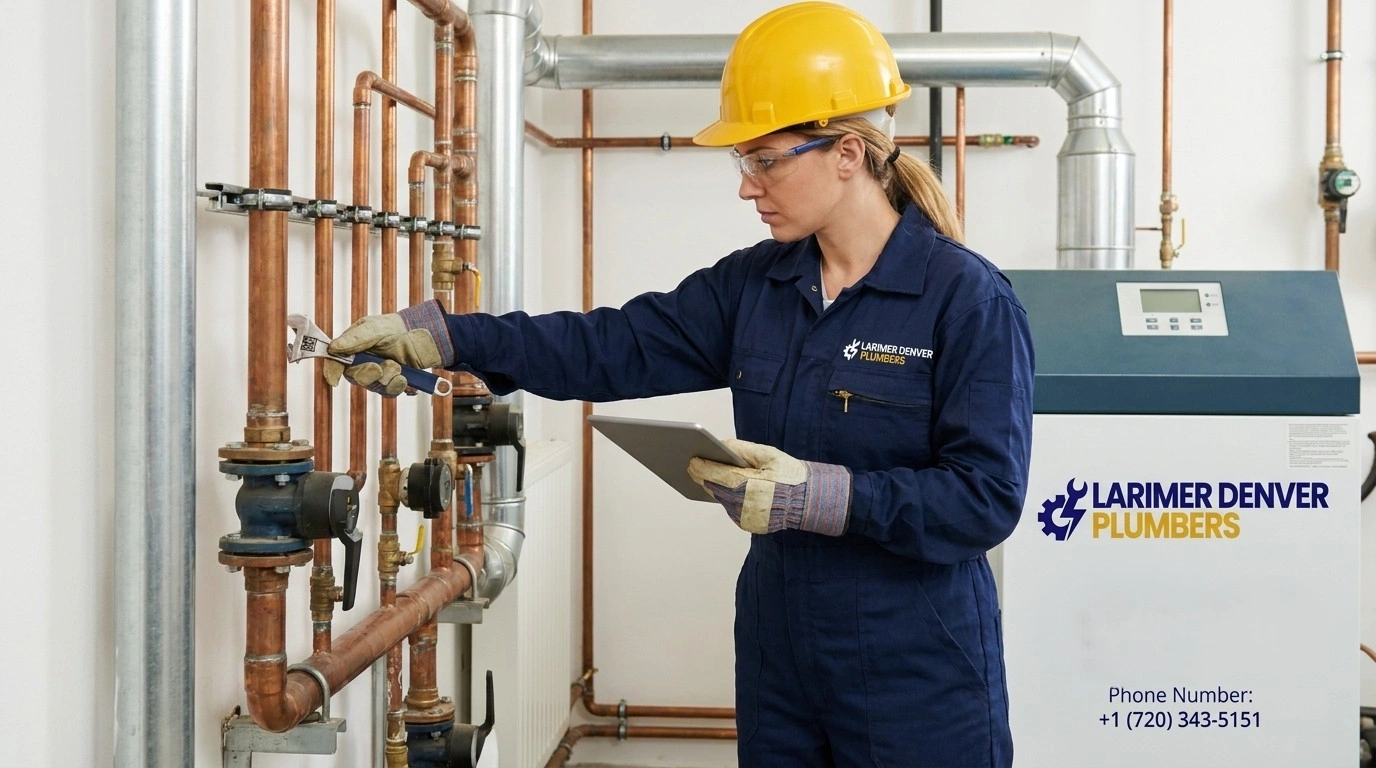
Freeze-Rated Repairs Built for the Denver Metro
Anything we install has to survive a hundred freeze-thaw cycles a year, not one winter. Across the Denver metro that changes what we specify.
- Frost-free sillcocks pitched to drain, with vacuum breakers as Denver's code requires on exterior hose bibbs.
- Thermal expansion tanks sized to the water heater wherever a PRV, check valve, or backflow preventer has created a closed system — mandatory here, and the single most common thing we find missing on a water heater that drips from the T&P.
- Insulated and heat-taped runs in crawl spaces, garages, and exterior-wall cavities, with the tape on a thermostat rather than a permanent circuit.
- Swamp cooler supply lines drained, blown, and isolated at a proper ball valve, not a saddle valve that will leak in three years.
Rental, Second-Home and Absentee-Owner Workflows
A lot of Denver property sits empty — mountain-weekend owners, out-of-state landlords, homes between tenants. Those are the properties where a small leak becomes a $40,000 claim, because nobody is there to hear it.
- Time-stamped photo documentation of every repair, with the tech's name on the report.
- Remote coordination by lockbox, keypad code, or on-site property manager, with arrival and completion photos sent to the owner.
- Winterization packages for vacant properties: system drain-down, heat verification, and a documented shut-off location.
- Direct billing and consolidated invoicing for owners running multiple doors.


Commercial and Property Manager Rescue
A restaurant with a backed-up grease line at 6 p.m. isn't losing a fixture — it's losing a service. Our commercial plumbing side runs on the same 24/7 rotation as residential, with techs credentialed beyond standard residential work.
- Priority dispatch for restaurants, clinics, multi-family, and retail where downtime is revenue.
- Medical gas certification — a credential almost no Denver residential shop carries, and a requirement for clinical and dental facilities across the city.
- Backflow prevention certification for Denver Water's annual compliance testing.
- Off-hours and overnight scheduling so the work happens when your doors are closed.
Sewage Backups, Gas Leaks and Water Damage — The Denver Emergencies That Are Health Risks, Not Inconveniences
Three plumbing failures in Denver are genuine health-and-safety events, and they get handled differently from a dripping faucet.
Sewage Backup
When a lateral fails and wastewater comes up a basement floor drain, you're dealing with bacterial contamination on porous surfaces — carpet, drywall, subfloor. The mistake is cleaning it yourself with a shop vac. Keep people and pets out of the affected area, don't run water anywhere in the house, and call. We isolate, clear, camera the line to find the actual failure point, and coordinate remediation.
Gas Leak
If you smell gas, don't call from inside the house. Leave, then call Xcel's emergency line from outside, then call us for the gas line repair once the utility has made the property safe. Don't operate switches, garage doors, or anything that sparks on your way out.
Water Near Electrical
If water is coming through a ceiling, running near outlets, or pooling around a panel or furnace, cut power to the affected area at the breaker before you touch anything.

Safety Guidance Summary
- Shut off the main water supply first — everything else is secondary to stopping the flow.
- Kill power to any zone where water is near outlets, appliances, or the panel.
- Open a low faucet to drain pressure out of the lines after the main is closed.
- Photograph everything before cleanup begins; sudden and accidental damage like a burst pipe is often covered by homeowners policies, while slow leaks and gradual corrosion typically are not.
- Do not sweep, vacuum, or dry-clean sewage contamination. Treat it as a health job.
Licensed, Code-Compliant Plumbing Work in Denver, CO
Colorado licenses plumbers through the State Plumbing Board under DORA, and Denver adds its own permitting layer through Community Planning and Development. Our team holds Journeyman, Master, and Residential Plumber licenses, plus Backflow Prevention and Medical Gas certifications, and we carry General Liability, Workers' Compensation, Commercial Auto, Inland Marine, and Contractors Errors & Omissions coverage.
Here's the part worth knowing as a homeowner: a plumbing contractor is required to obtain permits for work the company performs, and that work cannot be done under a homeowner-issued permit or one issued to another company. If a contractor asks you to pull a homeowner permit for their work, that's a problem — and the liability lands on you, not them. We pull the permit, we schedule the inspection, and the job closes with a passing inspection on record. Budget roughly $75–$200 for standard residential plumbing permits in Denver; it's included in the quote, not added afterward.
What Should You Do First in a Plumbing Emergency?
Before we arrive, four actions in this order will save you most of the damage. This is the homeowner side of the job — the technical repair method is above; this is what you control in the first five minutes.
Find & Close the Main Shut-Off
In most Denver homes it's on the front-facing basement wall, near the meter, or in a crawl-space utility area. Denver Fire routinely ends up doing this for homeowners who can't locate it — know yours before you need it.
Cut Power to the Affected Area
If water is anywhere near outlets, appliances, or the panel, cut power at the breaker before you touch anything else.
Open the Lowest Faucet
Drain standing pressure from the lines by opening the lowest faucet in the house after the main valve is closed.
Move & Photograph
Move what you can, photograph what you can't. Your insurer will want images from before cleanup started.
How We Compare to Typical Denver Plumbing Companies
Denver homeowners are deservedly skeptical. The recurring complaint in local forums and neighborhood groups isn't slow service; it's a $95 advertised rooter call that becomes a $245 charge for work that didn't clear the line, then a $295 camera fee, then a $6,800 sewer quote. Here's an honest comparison of how three kinds of shops operate.
| Company Type | Emergency Coverage | Denver-Specific Work | Pricing Transparency | Commercial & PM Support | Permits & Inspection |
|---|---|---|---|---|---|
| National Franchise | 24/7 advertised, often routed to an out-of-state call center | Generic playbook, limited pipe-material knowledge | Diagnostic fee, price revealed on site | Handled, but as a general account | Usually pulled, often line-itemed after the quote |
| Small Owner-Operator | Business hours, after-hours by luck | Often excellent local knowledge | Frequently good, sometimes verbal only | Limited capacity for multi-site work | Varies; some skip them |
| Larimer Denver Plumbers | 24/7 with in-house dispatch and 10 staged vans | Material and neighborhood mapping built from 1990 onward | Written price before work begins, service call credited | Dedicated commercial rotation, medical gas and backflow certified | Pulled as standard, included in quote, inspection scheduled by us |
What Makes Larimer Denver Plumbers Different
We're not trying to be the cheapest van in the Mile High City. We're trying to be the one you don't have to call twice.
- Since 1990 — one market, one city, one trade. Not a franchise territory.
- 50 licensed professionals, 10 stocked vans — enough depth to staff a real on-call rotation instead of burning out one tech with a pager.
- Written pricing before the wrench comes out, with your service call fee credited toward approved work.
- We pull the permit. Application, inspection scheduling, and a closed permit on record.
- Diagnosis before replacement. We camera the line before we quote the dig. If a $400 clear solves it, we'll tell you that before we tell you about the $12,000 replacement.
- Recognized locally — BBB Torch Awards for Ethics, ColoradoBiz Top Company Awards, Quality Business Awards, Denver Post Top Workplaces, and Nextdoor Neighborhood Faves.
- Five standing offers: Instant Service Call Credit, Sewer & Drain Savings, Water Heater Incentive, Routine Maintenance, and a First Responder / Senior Benefit.

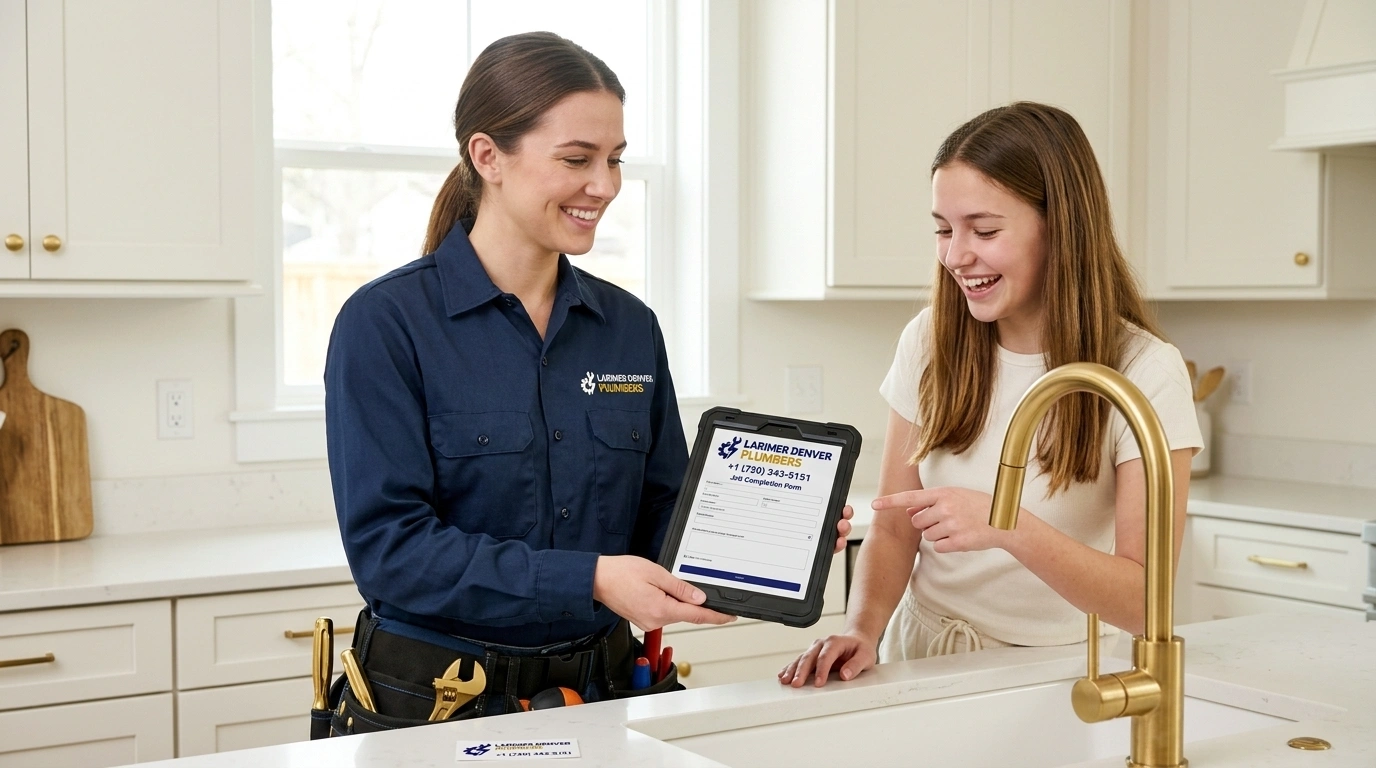
Is a 24/7 Emergency Plumber in Denver Worth It?
Run the arithmetic on a burst half-inch supply line. It moves several hundred gallons an hour. Four hours of that overnight in a finished basement means drywall, flooring, baseboard, insulation, and a mold clock that starts at 48 hours. Against that, a 24 hour emergency plumbing Denver CO call-out is the cheapest line on the eventual invoice.
The second argument is diagnostic. Most of what gets sold as an emergency in Denver is actually a symptom of something structural — pressure above code, a lateral separated by soil heave, galvanized at end of life, a missing expansion tank. Someone who fixes the symptom at 3 a.m. and leaves has sold you the same emergency again in six months.
Bottom line: A cheap emergency call that doesn't answer why is the most expensive plumbing you can buy in Denver.
Before & After: Real Denver Emergency Plumbing Repairs
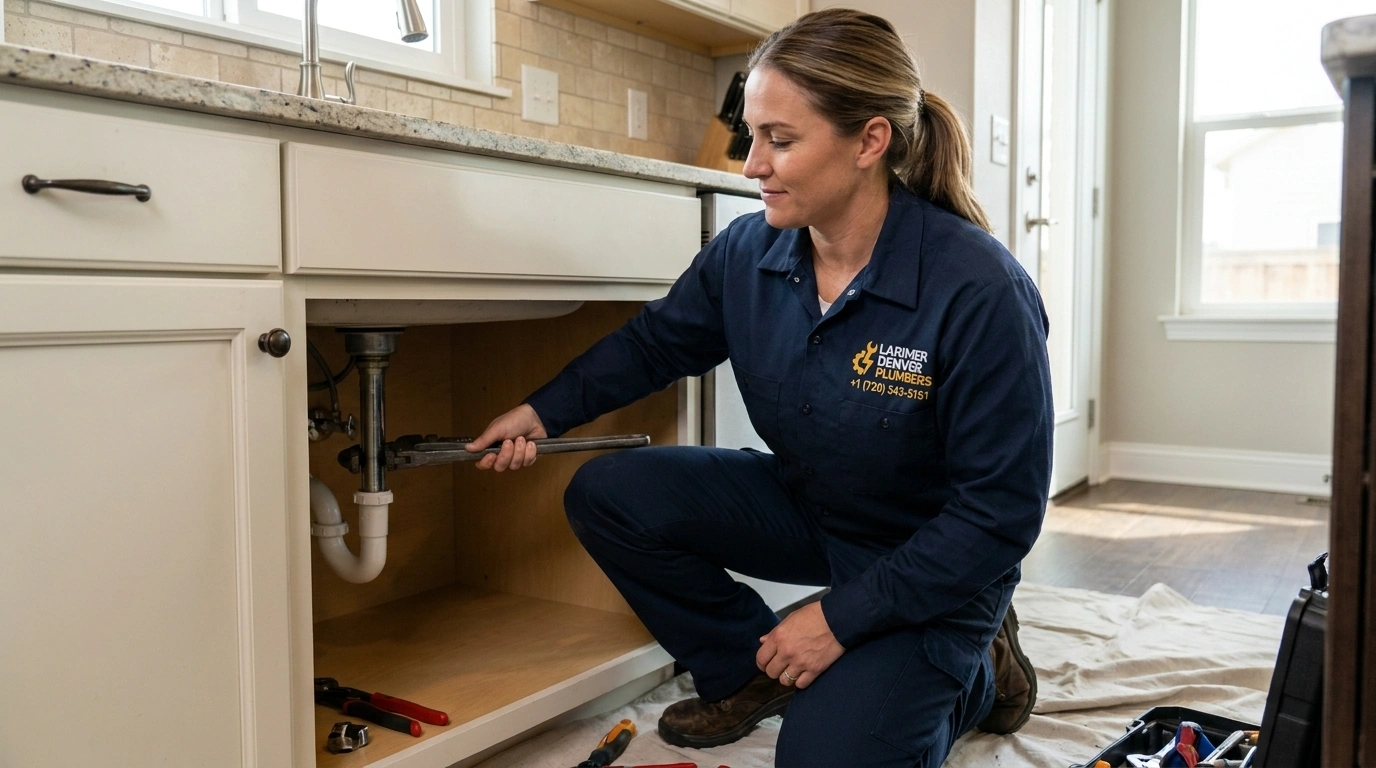
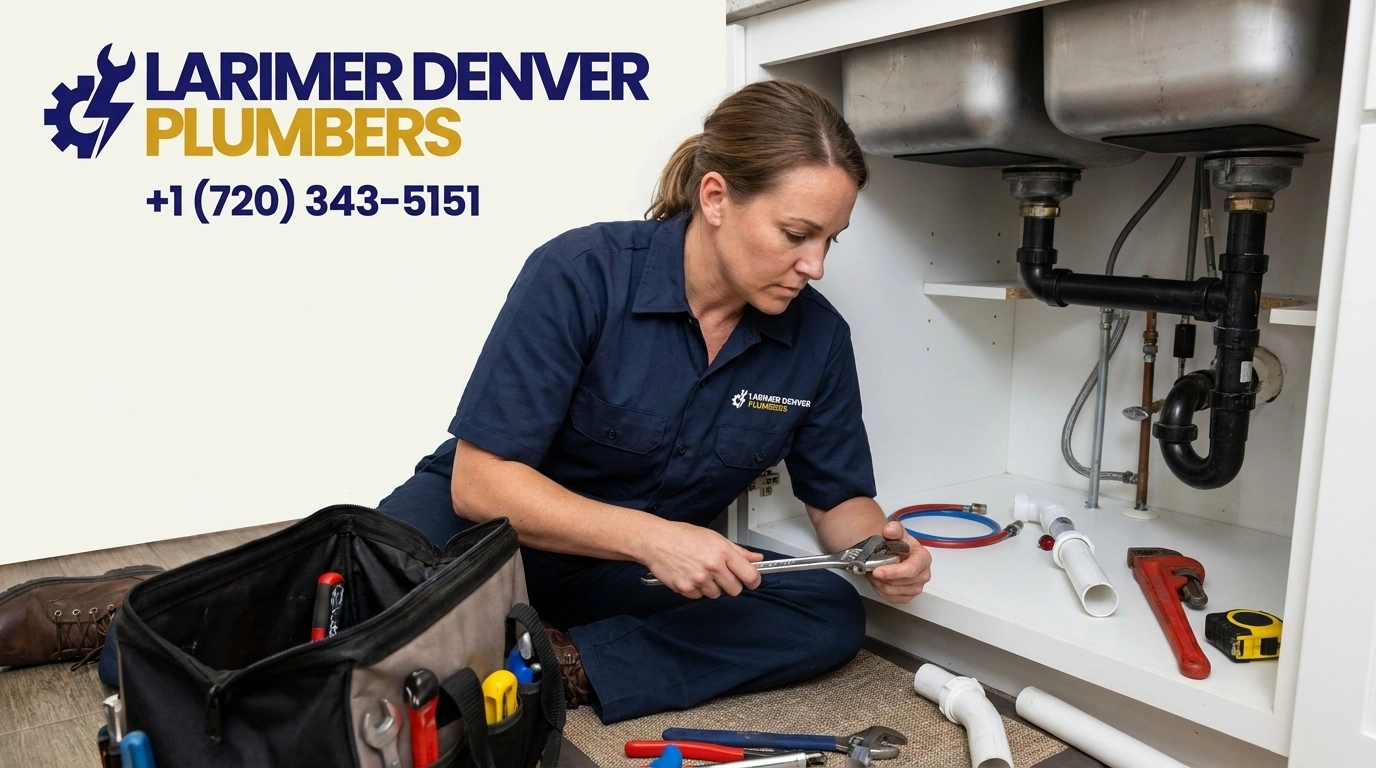
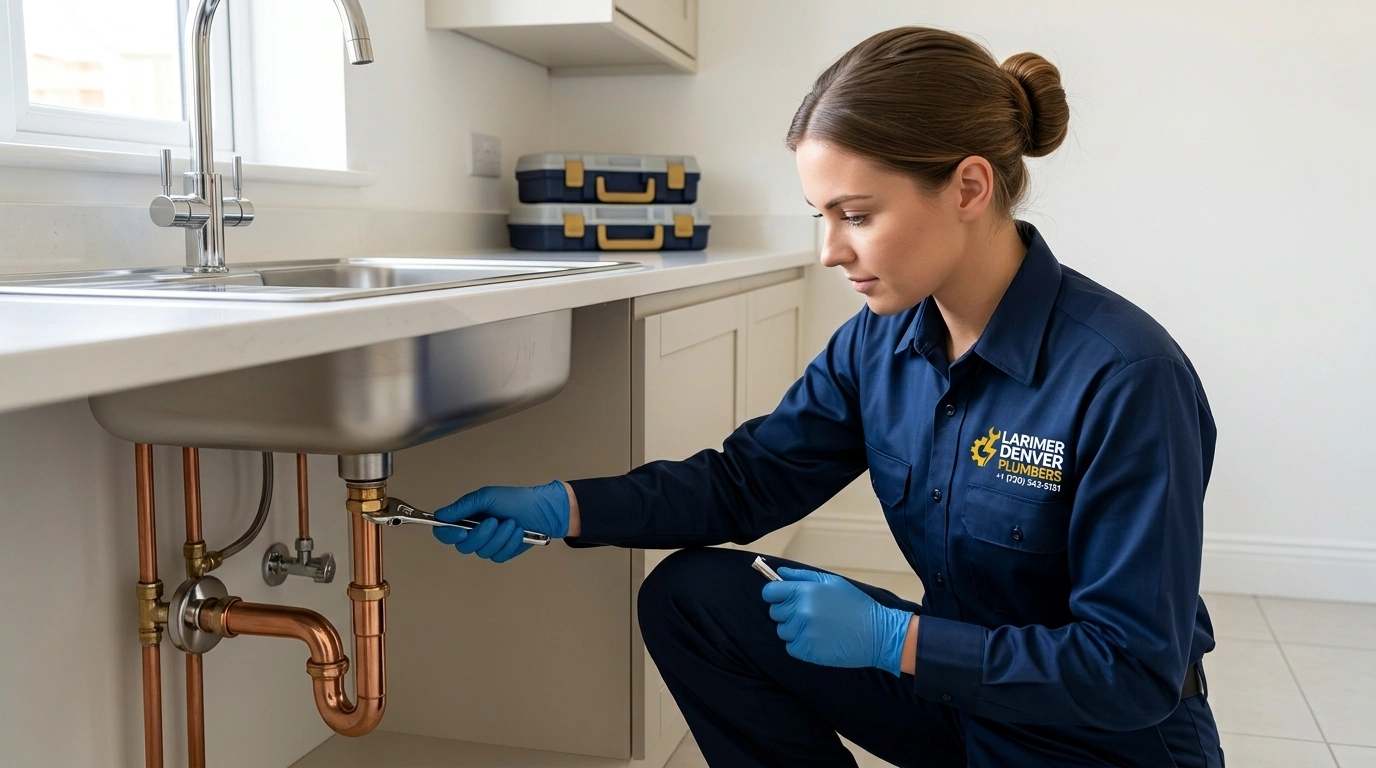
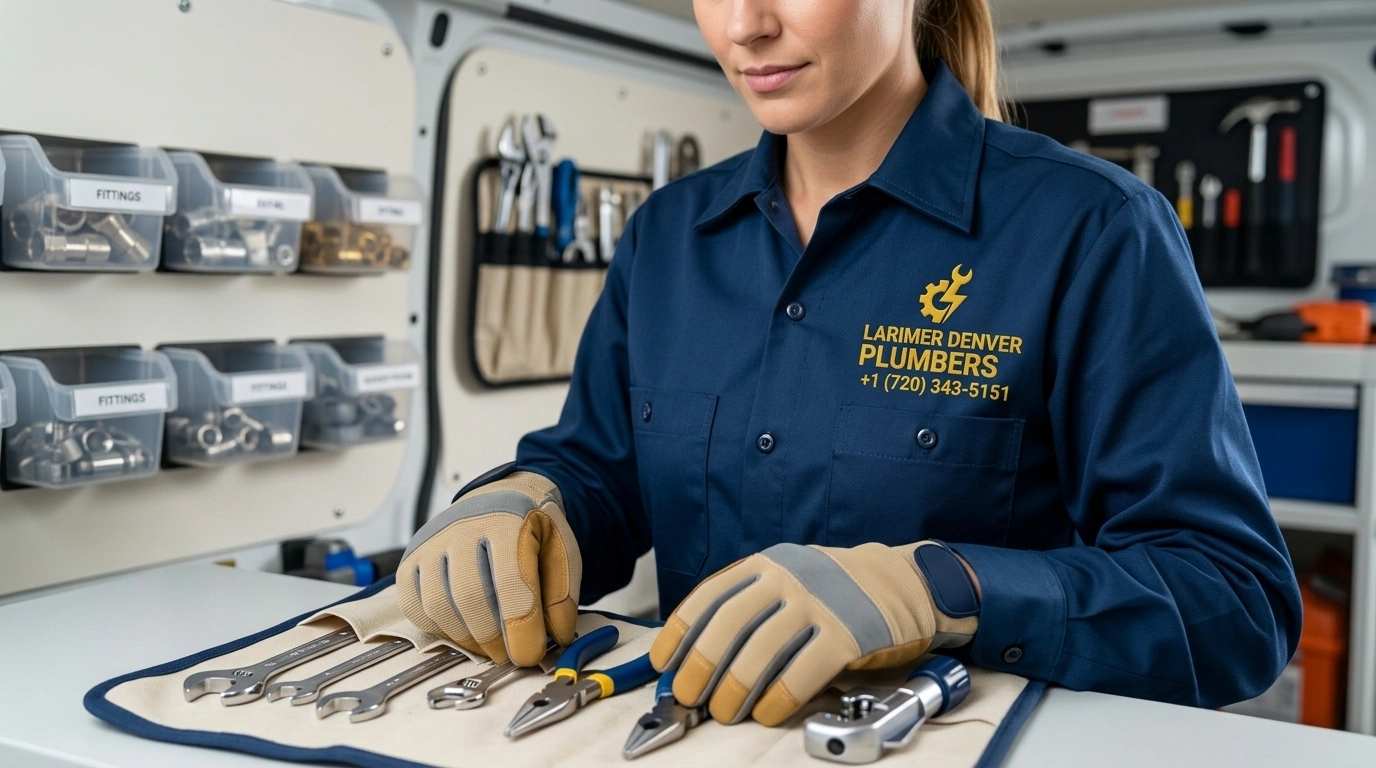
We don't publish stock photography. Our before-and-after documentation comes from real Denver addresses — camera stills of root intrusion in clay laterals, separated joints in Congress Park, Orangeburg ovality in southwest Denver, galvanized cutaways showing 70% flow restriction, trenchless liners cured in place under mature landscaping, and water heater installs with the expansion tank and drain pan the previous install skipped.
Every image ties to a dated work order, the tech's initials, and the permit number where one applied. You see what failed, what we installed, and what the inspector signed off on.

How Denver Plumbing Fails by Season
October–November (First Freeze)
Denver's average first freeze is October 7, first hard freeze around October 19. Sprinkler blowout season runs roughly late September through mid-November. Because of the current Stage 1 drought declaration, Denver Water prohibited lawn watering and all spray irrigation as of October 1, 2026 — but turning the system off is not the same as winterizing it, and an above-ground backflow assembly full of water will crack on the first hard night.
- Sprinkler blowout, swamp cooler shutdown, and hose bib disconnection all compete for the same three weeks. Book early.
- Backflow preventers are brass or bronze castings — they don't flex, and water left inside splits them.
- Outdoor faucet covers and crawl-space insulation go in now, not in December.
December–February (Deep Freeze & Thaw Bursts)
This is peak emergency season, and the most common Denver call in the window is a frozen-burst supply line. Expect the surge on the warm-up rather than the cold night.
- Unheated crawl spaces, garages, and exterior-wall runs fail first.
- A single dead fixture while others still run usually means a localized freeze — call before it thaws.
- Water heaters work hardest in this window; a unit past 10 years often chooses January to fail.
- Main-line backups spike as grease from holiday cooking meets a root-compromised lateral.
March–May (Thaw, Hidden Leaks & Spring Melt)
March is the month the January failures finally surface. Swamp cooler lines that split mid-winter have been running quietly inside a wall cavity for eight weeks.
- Stains on ceilings and walls, musty smell, and unexplained water bill jumps are the tells.
- Snowmelt and soil moisture swing bentonite clay hard, stressing laterals and shifting foundations.
- Best window of the year for a sewer scope, trenchless lining, and any planned excavation.
- Under the current drought resolution, sprinklers stay off into spring 2027 pending board action.
June–September (Monsoon, Swamp Coolers & Drought Pressure)
Denver's summer humidity typically runs 15–35%, which is why evaporative cooling works here — the exception being the monsoon stretch from roughly mid-July to mid-August.
- Swamp cooler startup, pad replacement, float and saddle-valve leaks.
- Drought pricing surcharges make a running toilet or a slab leak genuinely expensive.
- Best season for repipes, water heater upgrades, fixture work, and anything that benefits from the house being warm and dry.
Scheduling Intelligence: How We Route Vans Across Denver
Denver traffic isn't uniform and neither is Denver weather. I-25 and I-70 at rush hour, Colfax during an event at Ball Arena, Coors Field letting out, a spring storm that shuts the Boulder Turnpike — all of it changes who gets to you fastest.
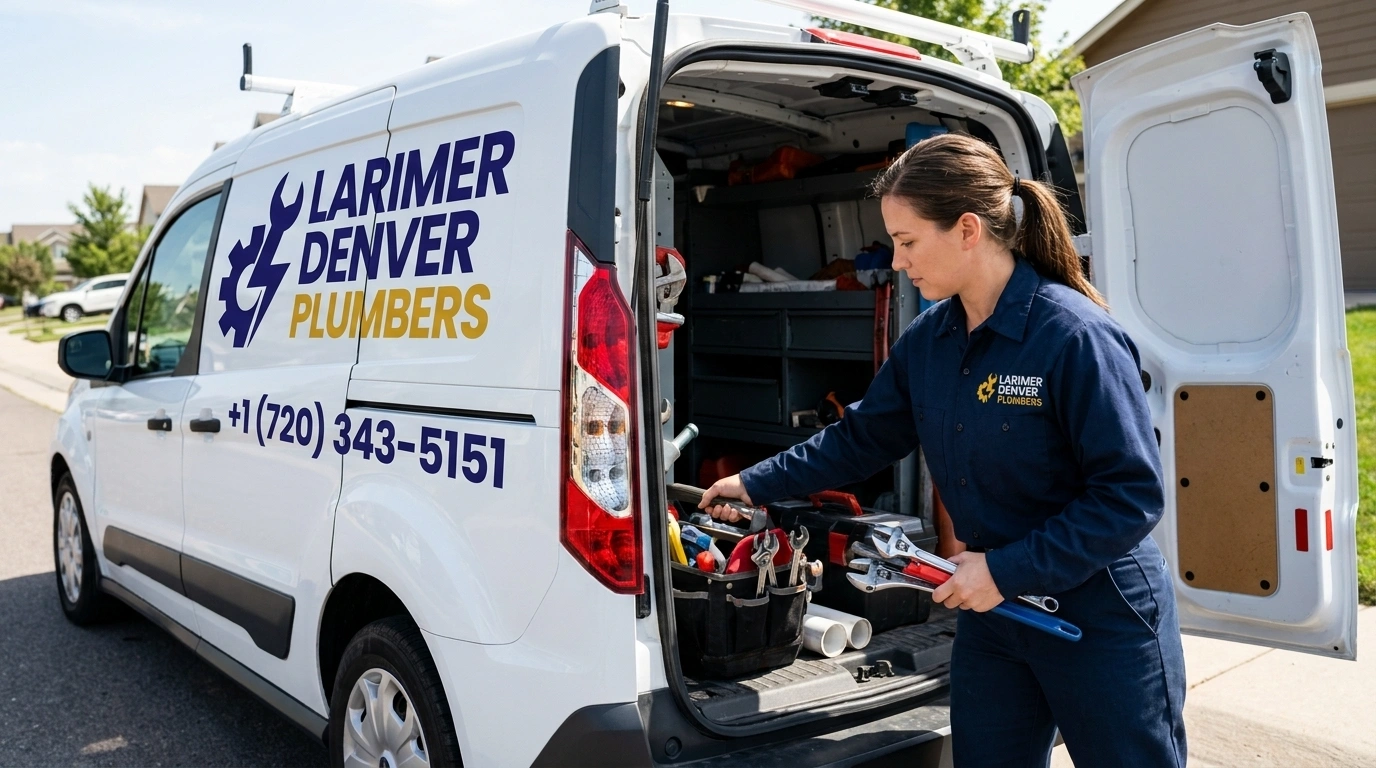
We stage vans rather than centralizing them: east-central out of the Cherry Creek and Congress Park corridor, north through Five Points, RiNo and Sunnyside, southwest toward Harvey Park and Athmar, and northeast toward Central Park, Montbello, and Green Valley Ranch. On storm days we shorten route legs and pre-stock vans with freeze-repair inventory — fittings, PEX, torch kits, shut-off valves — so a tech isn't leaving your house to find parts.
We also ask three questions on the phone that most shops don't: where's your shut-off, is anyone home with mobility limits, and is the driveway or alley clear. That's the difference between arriving and arriving ready.

How Can I Stop Plumbing Emergencies From Happening Again?
Most Denver emergencies are predictable a year in advance. Prevention here is mostly four things.
- Know your static water pressure. A $15 gauge on a hose bib tells you in thirty seconds. Anything over 80 psi needs a PRV; anything over 60 is quietly aging every fixture in the house.
- Scope the lateral once. If your house predates 1978, a one-time camera inspection tells you whether you own clay, cast iron, or Orangeburg — and that answer changes your ten-year budget.
- Winterize on a calendar, not a forecast. Blowout, cooler shutdown, and hose bibs by the first week of October.
- Replace the water heater on age, not failure. Twelve years is the honest end of a tank's life in hard-ish water. Replacing on your schedule costs a fraction of replacing on its schedule.
- Add annual backflow testing if you have an irrigation system or a commercial service, and check the expansion tank whenever the heater is serviced.
What We Fix — From Symptoms to Targeted Repairs
We'd rather list what you're actually seeing than list services you have to translate.
Water Through Ceiling or Wall
Supply-line break, cooler line, or failed shower pan above. Water leak detection locates the source without unnecessary demolition.
Sewage Backing Up at Floor Drain
Main lateral blockage, root intrusion, or collapse. Our sewer camera inspection identifies the failure before quoting the repair.
Banging Pipes When Tap Shuts
Water hammer from pressure above code. Requires pressure testing and likely a PRV installation.
Rusty Water & Weak Pressure
Galvanized supply at end of life. Whole-house repiping is the permanent solution.
T&P Valve Dripping on Water Heater
Closed system with no expansion tank, or a heater past its life.
Gurgling Drain When Washer Runs
Venting problem or a partially blocked main. Drain cleaning and diagnostics resolve it.
Wet Spot or Sunken Yard
Underground lateral leak. Sewer line repair or trenchless replacement before the damage spreads.
Water Bill Jumped — No Usage Change
Slab leak, hidden line break, or a running fixture. Non-invasive detection finds it fast.
No Hot Water or One Dead Fixture in Winter
Freeze in progress. Call immediately — this is the cheapest moment before the break, not after it.
Every repair comes with photos, a plain-English explanation of the cause, and a priority rating — immediate, this season, or monitor — so you can budget instead of guess.
How Much Does an Emergency Plumber Cost in Denver?
Straight answer, because the "call for quote" runaround is the top complaint in this market.
Standard business-hours rates in Denver run roughly $110–$140/hour for a journeyman and $135–$175/hour for a master plumber, which is what you're paying for on any job requiring a permit. Emergency and after-hours work carries a 1.5×–2× multiplier, typically landing at $175–$325/hour for the first two hours, with most single burst-supply-line invoices totaling $550–$2,200 once you include parts, drywall access, and water extraction. Holiday windows add roughly 25% on top. Service call fees in the metro generally run $100–$250 and cover travel, diagnostics, and the first stretch of labor.
For reference on common non-emergency work: drain cleaning averages around $184 in Denver with a typical range of $114–$275; a sewer scope runs $299–$400 standalone; sewer repair typically falls between $975 and $2,634, while a full replacement involving significant excavation can range $5,000 to $25,000+ if the line runs under a sidewalk or into the street.
Your service call fee is credited toward approved work, the written estimate comes before we start, and the permit cost is inside the number — not added after.

Our Proven 6-Step Emergency Plumbing Process
Live Phone Triage (2–5 Minutes)
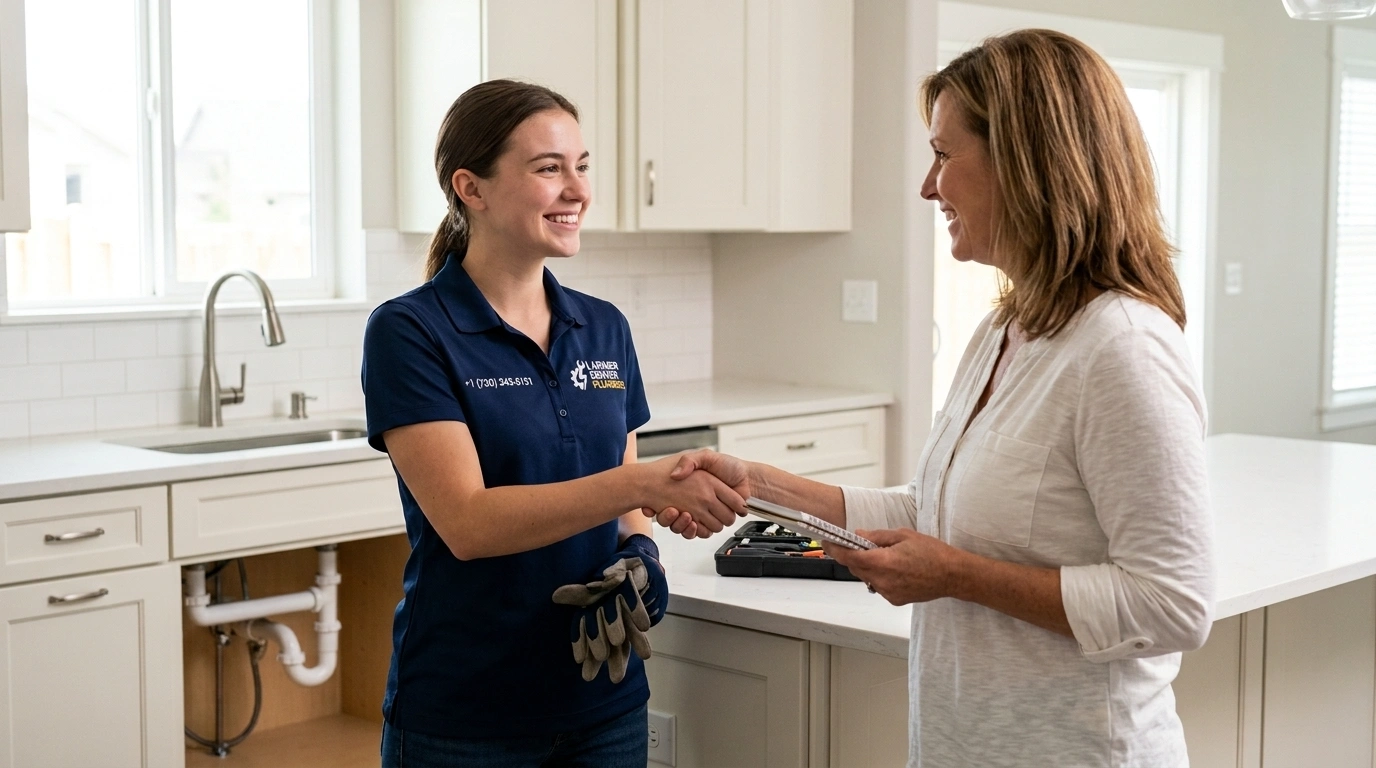
A person picks up, not a menu. We ask what you're seeing, whether water is moving right now, whether you've found the main shut-off, and whether anyone is at risk. If we can talk you through stopping the loss before the van arrives, we do — that call costs you nothing and saves the floor.
On-Site Diagnosis & Isolation
The tech stops the active loss first, then diagnoses. That means locating the failure, identifying the pipe material, checking static pressure at a hose bib, and for any drain or sewer issue running a camera before quoting a repair. You see the screen.
Written Plan & Transparent Estimate
Before anything is cut or replaced, you get a written scope with a price, a timeline, and an honest split between what has to happen tonight and what can wait until Tuesday at standard rates. Your service call fee applies to approved work.
Emergency Repair & Stabilization (Hour 1–4)
Most emergency calls are stabilized the same visit: burst lines capped or replaced, mains cleared, heaters repaired or swapped, gas lines isolated. Where a permanent fix requires a permit or excavation, we make the property safe and functional first.
Permanent Repair to Denver Code
The lasting fix gets done to Denver's adopted plumbing code — correct materials, proper venting, PRV where static pressure demands it, expansion tank on any closed system, vacuum breakers on exterior hose bibbs, drain pan and correctly terminated T&P discharge on every tank install. Permit pulled, inspection scheduled.
Verify, Document & Follow Up
We pressure-test, re-camera where a drain was the issue, and photograph the completed work. You get the documentation, the permit number, and the inspection result. If the same failure recurs inside the warranty window, we come back — no second service call.
What's Included in a Denver Emergency Plumbing Call?
The point is to get you from "there's water where there shouldn't be" to a closed permit and a system you understand.
- Live phone triage — symptoms, shut-off guidance, safety check, access details.
- On-site diagnosis — failure located, pipe material identified, static pressure tested.
- Camera inspection on any drain, main, or sewer call before a repair is quoted.
- Written estimate with priority ratings and your service call credited.
- Emergency stabilization to stop active loss and restore basic function.
- Permanent repair to code, with the permit pulled and the inspection scheduled by us.
- Photo documentation and a follow-up verification on completed work.

Commercial Plumbing Emergency? Protect Your Building, Your Tenants and Your Revenue
For a restaurant, clinic, or multi-family property, a plumbing failure isn't a repair line — it's closed doors, displaced tenants, and in some cases a health department conversation. Our commercial plumbing rotation runs on the same 24/7 dispatch as residential.
- Priority commercial dispatch for food service, medical, retail, and multi-family.
- Medical gas certification for dental, clinical, and surgical facilities — a credential very few Denver plumbing shops hold.
- Backflow compliance. Denver Water requires approved backflow prevention assemblies on all commercial, industrial, domestic, irrigation, and fire line services, tested at installation and annually thereafter by a certified tester, with reports submitted to Denver Water's Cross-Connection Control office. There are no exemptions and no grandfathering, and service can be suspended for non-compliance. We test, we repair, and we file the report.
- Grease line jetting and preventive scheduling so a Friday-night backup never happens.
- After-hours and overnight work scheduled around your operating hours.
Serving Denver and the Front Range Since 1990
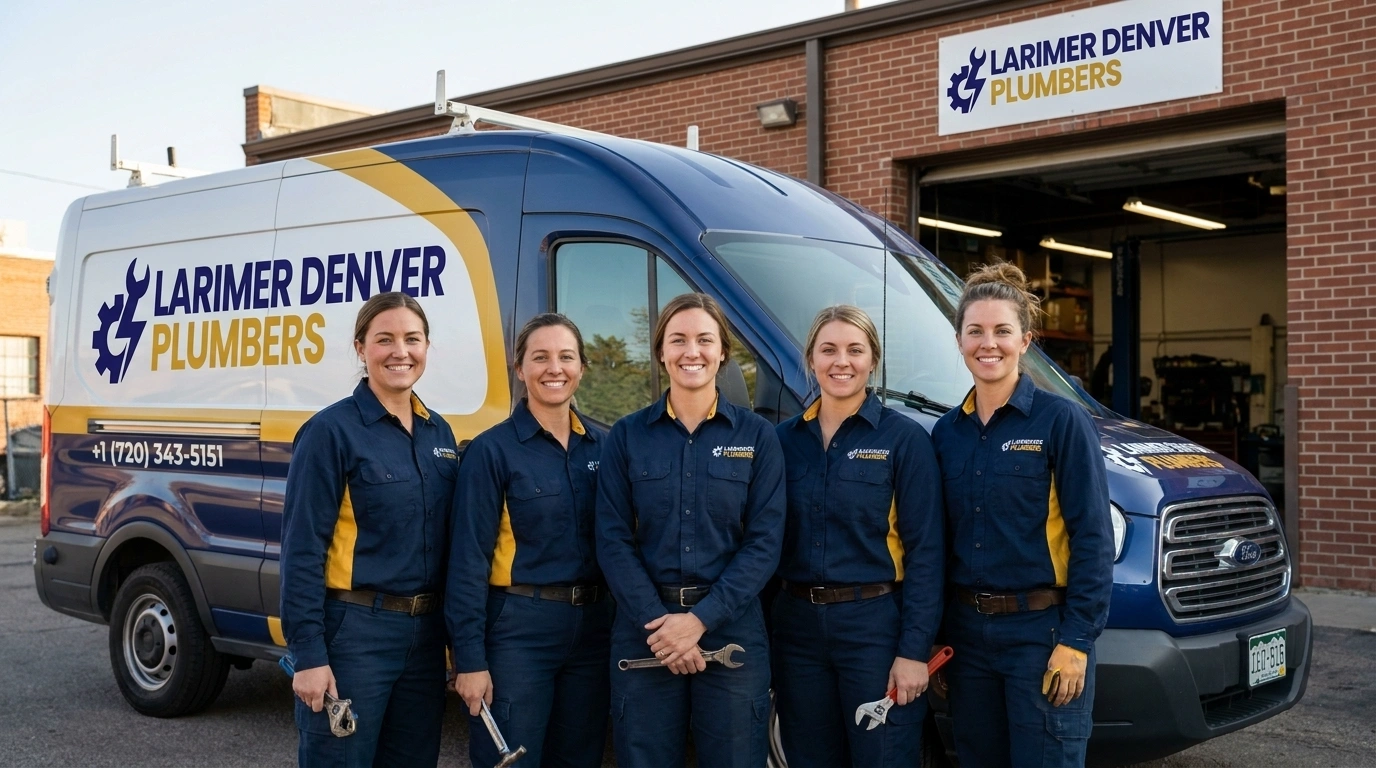
Larimer Denver Plumbers has worked this city since 1990, out of 329 Detroit St in Denver's east-central core. Fifty licensed professionals. Ten fully equipped service vans. Journeyman, Master, and Residential plumbing licenses, plus Backflow Prevention and Medical Gas certification. Full insurance across General Liability, Workers' Compensation, Commercial Auto, Inland Marine, and Contractors Errors & Omissions.
Every job log carries a date, the technician's initials, a clear scope of work, and a permit number where one applied. We serve all 18 Denver neighborhoods on our coverage map — from Capitol Hill and Cherry Creek to Montbello and Green Valley Ranch — plus 19 surrounding communities including Lakewood, Aurora, Arvada, Littleton, Englewood, Wheat Ridge, Westminster, Thornton, Centennial, and Golden. Worth noting for our suburban customers: Lakewood, Littleton, Centennial, Wheat Ridge, Greenwood Village, Sheridan, Glendale, and Edgewater all buy water from Denver Water and operate under the same rules, restrictions, and backflow requirements as the city itself.
Our Emergency Plumbing Services in Denver, CO
We don't just respond — we resolve, with the specializations Denver's housing stock actually demands.
Sewer Line Repair & Replacement
Clay, cast iron, and Orangeburg — open-cut or trenchless.
Trenchless Pipe Lining
CIPP and pipe bursting that preserve mature landscaping and finished driveways.
Drain Cleaning & Hydro Jetting
Mainline, branch line, and commercial grease.
Water Heater Repair & Replacement
Tank and tankless, expansion tank and venting to code.
Leak Detection & Slab Leak Location
Non-invasive, before anyone cuts concrete.
Sewer Camera Inspection
Including pre-purchase sewer scopes for Denver buyers.
Burst & Frozen Pipe Repair, Repiping
Galvanized and polybutylene replacement.
Backflow Testing, Repair & Replacement
Denver Water annual compliance.
Full-Spectrum Plumbing
Gas line repair, sump pumps, boilers, fixtures, commercial plumbing, and water damage restoration.

What's the Safest Way to Shut Down a Plumbing Emergency?
The safest shutdown is the narrowest one that stops the loss. If the failure is at a single fixture, close the angle stop under it and the rest of the house keeps working. If it's in a branch or you can't identify it, go to the main. Close it slowly — slamming a gate valve that hasn't moved in fifteen years is how old valves snap.
Then depressurize by opening the lowest faucet in the house, kill power to any wet zone at the breaker, and leave sewage contamination alone until someone with proper equipment handles it.
What You Shouldn't Do
- Don't thaw a frozen pipe with an open flame.
- Don't pour chemical drain opener into a line that's already fully blocked.
- Don't run a shop vac over sewage.
Each of those turns a repair into a bigger repair.
Backed by a Written Guarantee — Serving Denver Since 1990
Every repair carries a written workmanship guarantee. If the same failure returns inside the warranty window, we come back and make it right without a second service call. Parts carry their manufacturer warranty, and we register it for you on water heater and major equipment installs so you're not hunting for a receipt three years from now.
We also stand behind the estimate itself. The written number is the number. If we open a wall and find something genuinely unexpected, work stops and you get a revised scope to approve before anything else happens.

Company Gallery — Real Denver Homes. Real Repairs. Real Results.
See what actually failed, what we installed, and what the inspector signed off on. Our gallery documents real work across Denver — root intrusion in Congress Park clay laterals, collapsed Orangeburg in southwest Denver, galvanized cutaways showing what 70 years of internal corrosion does to flow, trenchless liners cured in place under Wash Park landscaping, and water heater installs with the expansion tanks and drain pans the previous install left out. Every image ties to a dated work order, technician initials, and a permit number. No stock photography.
What's the Best Emergency Plumber Near Me in Denver?
If you're still searching "best emergency plumbers denver near me" at midnight with water on the floor, here's what to actually screen for: does a person answer, do they hold a Master license, will they give you a written price before starting, and will they pull the permit.
Larimer Denver Plumbers has answered that search since 1990. Whether it's a burst pipe in a Berkeley bungalow, a main-line backup in Five Points, a dead water heater in Lowry, a slab leak in Harvey Park, or a grease line shutting down a RiNo kitchen on a Saturday night — same dispatch, same rotation, same pricing standard.
Coverage runs across all 18 Denver neighborhoods and 19 surrounding communities, with 10 vans staged so drive times stay honest during a storm. Booking takes two minutes. You'll get a written estimate with your service call credited toward approved work, a permit where the city requires one, photo documentation of everything we touch, and a workmanship guarantee in writing.
You don't need to compare six quotes at 2 a.m. Call (720) 343-5151 and get a licensed tech, a real price, and the water stopped.
Got Questions?
We're glad to answer them, whether you're mid-emergency or planning ahead for October. Tell us what you're seeing, and we'll tell you honestly whether it's a tonight problem or a Tuesday problem.
Visit
329 Detroit St, Denver, CO 80206Denver County, Colorado
From Capitol Hill to Green Valley Ranch, at any hour, on any day of the year, Larimer Denver Plumbers is the team Denver calls for emergency plumbing Denver CO homeowners and businesses can rely on.
Plumbers in Denver CO — Service Area Coverage
Our rapid-response mobile service units provide full coverage throughout Denver, Capitol Hill, LoHi, Cherry Creek, RiNo, Washington Park, and all surrounding Denver County and Front Range communities.
Denver Communities We Serve
Get Emergency Plumbing Services in Denver Now
Have an active water leak, backed-up mainline, or boiler outage? Our 50 skilled professionals are standing by around the clock. Contact our 24/7 dispatch desk or submit the form below for immediate assistance.
Contact Larimer Denver Plumbers
Denver, CO 80206
Denver County, West Region
Hours of Operation
Request Emergency Dispatch
Submit your service request below for prompt confirmation.