Septic Tank Pumping in Denver, CO — Fast, Professional & Available 24/7
Denver Septic Tank Cleaning & Pumping to protect your property, prevent wastewater backups, and keep your system operating reliably.
When you need septic tank cleaning Denver CO property owners can depend on, you need a team that listens to the symptoms, understands the difference between septic and municipal-sewer problems, and provides clear next-step guidance. Larimer Denver Plumbers serves Denver-area homes, property managers, HOAs, businesses, and facilities with septic tanks, holding tanks, vaults, legacy systems, and On-site Wastewater Treatment Systems (OWTS).
Most Denver properties use municipal sanitary sewer, so we do not assume every slow drain or sewage odor means a full septic tank. If you have a suspected septic backup, gurgling toilet, sewage smell, wet ground near a system, or a tank that needs pumping, our team can help determine whether pumping, drain cleaning, sewer camera inspection, sewer-line work, or another solution is appropriate.
- Septic tank cleaning and pumping support for applicable residential and commercial properties
- Licensed plumbing professionals for related drain, sewer, water, and wastewater concerns
- Fast diagnostic guidance when slow drains, odors, backups, or overflows disrupt your property
- Available 24/7 for urgent septic-system and commercial plumbing emergencies across Denver and the metro area
Call (720) 343-5151 for prompt septic pumping, emergency wastewater guidance, and clear service documentation.
Request Septic Tank Pumping
Fill out the form below and our team will contact you promptly!
Instant Service Credit & Discounts AvailableSeptic Service Backed by 30+ Years of Denver-Area Experience
Partner with a responsive local team that treats wastewater problems, property protection, and clear communication as priorities.
A septic system is not a "pump and forget" fixture. It is part of a property's wastewater infrastructure, and the right response depends on what is actually happening: accumulated solids, a blocked filter, a holding-tank issue, a damaged line, a failed pump component, or a drainfield concern. Larimer Denver Plumbers combines broad plumbing expertise with 24/7 availability so customers have one clear point of contact when a wastewater problem needs immediate attention.
Every service request begins with the property's symptoms, access conditions, and known system details. We explain what professional septic tank pumping Denver CO service can address, what may require additional diagnostics, and what to do next if the issue involves a sewer line, drain blockage, pump, or soil treatment area.
- 30+ years serving Denver, Denver County, and the wider Front Range metro area
- 50 skilled professionals and 10 fully equipped service vans
- Master plumber, journeyman plumber, residential plumber, and backflow-prevention credentials listed within the business profile
- General liability, workers' compensation, commercial auto, inland marine, and professional liability insurance listed within the business profile
- 24/7 operations for urgent plumbing, drain, sewer, and wastewater-related concerns
Septic Tank Pumping Near Denver Landmarks, Neighborhoods & Business Hubs
Serving Denver-area septic, holding-tank, vault, and onsite wastewater properties throughout the Front Range.
Larimer Denver Plumbers supports qualifying septic and onsite wastewater properties near Denver's residential neighborhoods, commercial corridors, mixed-use districts, and surrounding communities. Whether you manage a legacy property near Congress Park, own a home near City Park, oversee a facility close to Cherry Creek, or need guidance for a Denver-metro property outside the city core, our team helps identify the right service path.
Because municipal sewer serves much of Denver, our first priority is accuracy. A sewer backup and a septic backup can look similar inside a building. If you are unsure whether your property has an existing septic tank, OWTS, holding tank, vault, or city sewer connection, call before scheduling. We can help you determine whether Denver septic service or a related drain and sewer solution is more appropriate.
Denver Neighborhoods & Communities
- Downtown / CBD
- Capitol Hill
- City Park
- Congress Park
- Cherry Creek
- Park Hill
- Five Points / RiNo
- Washington Park
- Highland / LoHi
- Berkeley & Sunnyside
- Sloan Lake & Baker
- Lowry & Montbello
- Harvey Park & Green Valley Ranch
- University / University Park
Nearby Service Communities
- Arvada, Aurora, Boulder
- Brighton, Broomfield, Castle Rock
- Centennial, Commerce City, Englewood
- Glendale, Golden, Highlands Ranch
- Lakewood, Littleton, Northglenn
- Parker, Thornton, Westminster
- Wheat Ridge and nearby Front Range communities
Regional Landmarks & Business Hubs
- Denver Union Station
- Colorado State Capitol
- Denver Botanic Gardens
- Denver Zoo
- Denver Museum of Nature & Science
- Coors Field & Ball Arena
- Empower Field at Mile High
- Larimer Square
- Cherry Creek shopping district
- Downtown Denver office corridors
- Five Points / RiNo commercial districts
Specialized Septic Tank Cleaning & Pumping for Denver-Area Wastewater Systems
Denver septic pumping support focused on safe decisions, accurate diagnosis, and property-specific service.
Septic tanks, holding tanks, vaults, effluent filters, lift pumps, building drains, and soil treatment areas work together as a wastewater system. When one component is overloaded, blocked, damaged, or failing, the visible symptom may be a gurgling toilet, slow shower drain, sewer smell outside, or sewage backing up into a lower-level fixture.
Larimer Denver Plumbers does not assume every plumbing issue requires a pump-out. We assess the symptoms and help distinguish among a possible full septic tank, a blocked building drain, a main sewer-line problem, an effluent-filter restriction, pump trouble, or a soil treatment area concern. That practical approach helps Denver-area property owners avoid paying for a service that does not address the real cause.
- Symptom-based guidance for septic, drain, sewer, and wastewater concerns
- Support for homes, commercial sites, HOAs, and properties with holding tanks or vaults
- Related sewer camera inspection, hydro jetting, drain cleaning, and sewer line repair capabilities
- Clear explanations of findings, limitations, and recommended next steps
- 24/7 emergency availability when wastewater is backing up or surfacing
What Happens When a Septic System Fails in Denver?
Common wastewater problems Denver-area property owners face and why they need prompt attention.
A septic backup can happen when wastewater cannot move or disperse as designed. The cause may be excessive solids in the tank, a clogged effluent filter, a damaged pipe, a failed lift pump, a saturated soil treatment area, a blocked sewer line, or another system defect. In some cases, a septic tank pump-out removes accumulated solids and restores capacity. In others, pumping is only the first step toward identifying a larger problem.
Do not ignore widespread slow drains, toilet bubbling, sewage odor, wet soil, or wastewater appearing near fixtures or outside the property. These conditions can disrupt daily operations, damage finishes, expose people and pets to wastewater, and create more expensive repairs if left unaddressed.
Common risks include:
Prevent Backups with Scheduled Septic Tank Pumping in Denver, CO
What Denver-area septic and OWTS properties need to stay reliable, documented, and easier to manage.
Routine pumping removes accumulated liquids, sludge, and floating solids from a septic tank before they contribute to blockages, backup conditions, or stress on downstream components. The appropriate schedule is not identical for every property. Tank capacity, number of occupants, water usage, garbage-disposal habits, plumbing fixtures, prior maintenance, and system design all influence when a tank should be serviced.
Larimer Denver Plumbers can provide practical maintenance planning for applicable systems. We also help customers understand when their symptoms suggest a need for additional drain cleaning, sewer camera inspection, pump evaluation, sewer-line repair, or consultation with the appropriate OWTS professional or local authority.
| Task | Description | Typical Timing | Property Impact |
|---|---|---|---|
| Tank pumping | Remove accumulated liquids, sludge, and scum from an accessible tank | Based on tank condition and household/property use | Helps restore tank capacity and reduce solids overload |
| Visual observations | Review accessible tank and component conditions where service scope allows | During the service visit | Can reveal visible concerns needing follow-up |
| Symptom assessment | Review slow drains, odors, alarms, overflow, and backup history | Before and during service | Helps distinguish tank issues from drain or sewer problems |
| Service documentation | Provide records of the completed work and recommendations | After service | Supports future maintenance planning and property records |
| Repair or diagnostic recommendation | Recommend the next appropriate step when pumping alone may not resolve the issue | When needed | Helps avoid recurring backups and unnecessary work |
Seasonal Timing Guidance
- Schedule maintenance before periods of high household occupancy, extended guests, or seasonal property use.
- Consider service before spring snowmelt or periods of heavy irrigation if a system already shows drainage concerns.
- Do not wait for a backup to locate prior service records or identify tank access points.
- Plan early when a property sale, renovation, lender request, inspection, or system evaluation is approaching.
Frequency note: Most septic tanks need periodic pumping, but there is no universal schedule that fits every Denver-area property. A useful schedule should be based on actual tank size, usage, accumulated solids, occupancy, and system condition — not a one-size-fits-all rule.
Cost range note: Septic pumping cost depends on tank size, access, waste volume, emergency timing, number of tanks, property conditions, and whether other services are required. Larimer Denver Plumbers provides clear pricing information before work begins whenever the service scope can be determined.
Maintenance reminders
- Keep access to the tank area clear when possible.
- Save service reports, maintenance invoices, and known system records.
- Address recurring slow drains, odors, or alarm conditions early.
- Keep grease, wipes, diapers, hygiene products, and non-biodegradable materials out of drains and toilets.
Who Needs Septic Tank Pumping in Denver and the Metro Area?
From legacy residential systems to holding tanks, commercial properties, and HOA-managed sites.
Not every Denver property uses a septic system. However, Denver-area properties with an existing septic tank, OWTS, holding tank, vault, or onsite wastewater component need a reliable plan for pumping, maintenance, and emergency response. Larimer Denver Plumbers helps property owners understand the service that fits their actual system.
Property types we can help evaluate:
How Denver Weather, Snowmelt & Water Use Affect Septic System Performance
Freeze-thaw cycles, runoff, irrigation, and changing household demand can expose existing system weaknesses.
Denver's Front Range conditions can affect septic and onsite wastewater systems in ways that are easy to overlook. Cold snaps and freeze-thaw cycles may affect shallow lines, exposed components, and pump systems. Spring snowmelt, heavy rain, improper grading, roof runoff, and excessive irrigation can add water to areas around a soil treatment area. Higher water use from guests, busy households, commercial activity, or appliance changes can also increase hydraulic demand.
Water conservation helps reduce unnecessary strain, but it does not remove solids already inside a septic tank. Periodic septic system cleaning Denver property owners schedule is still important for managing accumulated material and documenting service history.
Summer
Higher occupancy, outdoor gatherings, irrigation, and increased water use can stress a system already near capacity.
Winter
Freezing temperatures can affect vulnerable lines, components, and access areas.
Spring
Snowmelt and rain can reveal saturated soil, drainage concerns, or weak system performance.
Fall
A good time to review maintenance records before winter weather and holiday occupancy increase demand.
Common Septic System Types Used in Denver & the Front Range
Understanding the wastewater components protecting your property.
Properties with onsite wastewater systems may have different tank configurations, pumping needs, treatment methods, and access conditions. "Septic tank" is the term most homeowners use, while OWTS is the technical and regulatory term for an On-site Wastewater Treatment System. The right service depends on the specific setup, not merely the symptom.
| System or Component | Typical Use | Common Concern | Service Consideration |
|---|---|---|---|
| Conventional septic tank | Separates solids from household wastewater | Accumulated sludge and scum | Periodic pumping and maintenance records |
| Holding tank / vault | Stores wastewater until removal | High level, overflow, capacity limits | Scheduled or emergency pumping |
| Effluent filter | Helps keep solids from moving downstream | Restriction or clogging | May require cleaning, evaluation, or further service |
| Lift-pump system | Moves wastewater where gravity flow is not sufficient | Pump, float, alarm, or electrical failure | Needs diagnosis beyond routine pumping in some cases |
| Soil treatment area / drainfield | Disperses treated effluent into soil | Wet ground, odors, saturation, poor drainage | May require system evaluation or repair planning |
| Building sewer line | Carries wastewater from the building | Roots, blockage, damage, freeze, or collapse | May require drain cleaning, camera inspection, or repair |
Reliability depends on proper installation, responsible use, scheduled pumping, and early attention to unusual symptoms. Pumping can remove tank contents, but it does not automatically repair a failing soil treatment area, damaged pipe, or failed pump.
Our 6-Step Septic Tank Cleaning & Pumping Process
What to expect when Larimer Denver Plumbers helps with a septic or wastewater concern.
Initial Call & Symptom Review
We discuss slow drains, toilet gurgling, sewage odors, backup conditions, known tank location, service history, property type, and whether you may be connected to municipal sewer.
Property & System Assessment
We confirm the service address, access needs, urgency, and available information about the septic tank, holding tank, vault, OWTS, building drain, or sewer connection.
On-Site Access & Safety Setup
Our team reviews safe access conditions and prepares for the work within the actual service scope. Customers should never enter a septic tank or attempt unsafe excavation themselves.
Pumping or Diagnostic Service
When appropriate, we perform septic pumping or identify whether the symptoms call for drain cleaning, sewer camera inspection, hydro jetting, sewer-line repair, or other services.
Findings & Recommendations
We explain what was observed, whether pumping addressed the immediate issue, and what next steps may be needed if a backup, odor, alarm, damaged line, or drainfield concern remains.
Documentation & Future Planning
You receive clear service information for your records, along with recommendations for future maintenance or further evaluation when needed.
What's Included in Our Septic Tank Cleaning & Pumping Service
Clear deliverables for Denver-area property owners, managers, and facilities.
Every septic-service request is different. The exact scope depends on the system type, tank accessibility, known symptoms, waste volume, and whether the problem is truly septic-related. Larimer Denver Plumbers explains what is included before work begins whenever the condition and access allow a clear scope.
Typical service checklist:
- Pre-visit discussion of symptoms, property use, and available system details
- Confirmation of tank, holding-tank, vault, sewer, or drain-related service needs
- On-site assessment of accessible conditions
- Septic pumping where applicable to the confirmed service scope
- Observation of accessible components when practical
- Clear explanation of whether additional plumbing, drain, sewer, or wastewater diagnostics may be needed
- Service records and recommendations for future maintenance or follow-up work
Key Advantages of Working with Larimer Denver Plumbers
Responsive service, full plumbing support, and straightforward communication for Denver-area wastewater concerns.
Larimer Denver Plumbers provides more than a single-service response. When a property has wastewater symptoms, the actual cause may involve a septic tank, holding tank, drain, sewer line, pump component, plumbing fixture, or drainage issue. Our broader commercial plumbing capability helps customers move from uncertainty to an appropriate solution without unnecessary delays.
24/7 emergency response for urgent wastewater, drain, and sewer concerns
50 skilled professionals available across a broad Denver-metro service footprint
10 equipped service vans for responsive dispatch and practical field support
Related drain cleaning, hydro jetting, sewer camera inspection, sewer repair, water leak detection, and restoration services
Clear service documentation and recommendations for property records
Support for residential, commercial, HOA, and property-management needs
Septic Tank Pumping Solutions for Denver-Area Properties
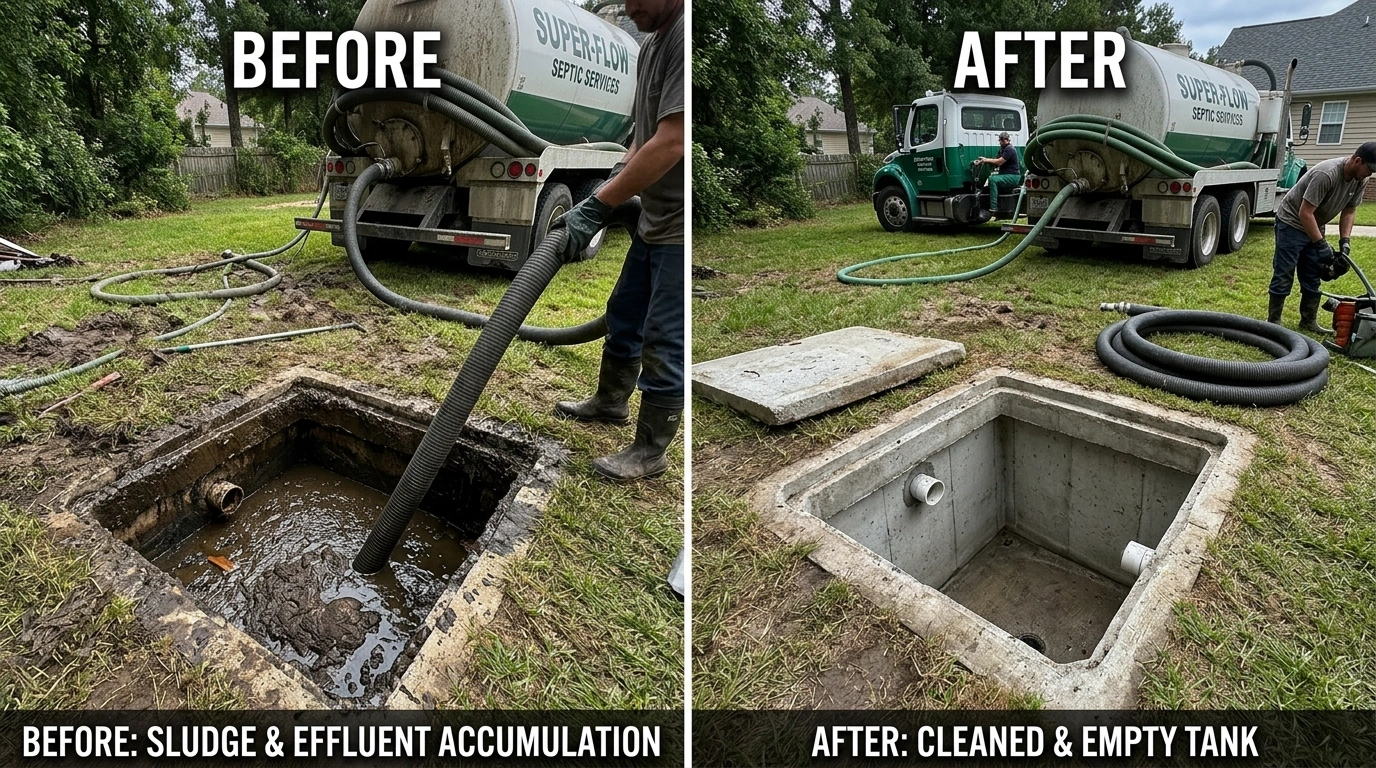
What changes once the right wastewater issue is identified and addressed.
Many customers call after noticing toilet bubbling, slow drains across the property, sewage odor outside, a suspected full tank, or wastewater backing up into a shower or floor drain. The goal is not to make broad promises — it is to identify the likely cause, provide the correct service, and make the next step understandable.
No clear record of the system, prior pumping history, or whether the property uses septic or city sewer.
Better understanding of the wastewater setup, completed service records, and practical maintenance guidance.
Slow drains, recurring odors, gurgling fixtures, or worry about a possible backup.
A documented service response and a clearer determination of whether pumping, drain cleaning, camera inspection, or repair is needed.
Stress about wastewater exposure, property damage, or a property-sale deadline.
A defined action plan and recommendations based on the system's actual condition.
How We Handle Septic Pumping, Drain Issues & Related Wastewater Concerns
Practical service methods based on your property's actual system and symptoms.
Larimer Denver Plumbers approaches septic and wastewater work with safe access, clear communication, and appropriate plumbing diagnostics. We do not recommend a pump-out as a universal fix for every drainage issue. When visible symptoms point to a clogged line, damaged sewer pipe, blocked filter, pump failure, or soil treatment area problem, we explain the next diagnostic or repair path.
Service-method principles:
- Evaluate symptoms before assuming the septic tank is the sole cause
- Use appropriate equipment for confirmed pumping, drain, sewer, and diagnostic work
- Maintain safe access practices around tanks, vaults, wastewater, and excavation areas
- Recommend camera inspection when a buried line, blockage, root intrusion, or pipe condition is suspected
- Document completed work and communicate limitations or follow-up needs clearly
- Coordinate next steps when property conditions require a permit, repair design, local authority input, or specialized OWTS work
Should You Pump, Repair, Replace, or Convert a Failing Septic System?
Helping Denver-area property owners choose a practical long-term path.
A septic tank pump-out can be the right solution when accumulated solids and liquids are the main problem. However, recurring backups, wet ground, ongoing odors, damaged tanks, failed pumps, broken lines, or a saturated soil treatment area may require more than routine pumping. In some situations, a property owner may also explore a septic-to-sanitary-sewer connection where public sewer is available and the required approvals can be obtained.
| Scenario | Pumping or Repair May Help | Replacement, Major Repair, or Conversion May Be Appropriate |
|---|---|---|
| Tank is overdue for pumping with no major recurring symptoms | Yes, pumping may restore capacity | Usually not needed unless other defects are found |
| Slow drains or gurgling fixtures | Possibly, depending on tank condition | Camera inspection or sewer/drain repair may be needed |
| Blocked effluent filter or accessible component issue | Often, with proper service and evaluation | May be needed if components are damaged or obsolete |
| Cracked tank, failing pump system, or damaged line | Limited short-term relief may be possible | Repair or replacement planning is often needed |
| Wet, odorous, or saturated soil treatment area | Pumping may reduce immediate load but may not resolve the cause | System evaluation, repair, or redesign may be necessary |
| Public sewer is available and property conditions support connection | Pumping may serve as interim maintenance | Septic-to-sanitary conversion may be worth evaluating |
When a larger solution may be needed:
- A tank body is cracked, severely deteriorated, or structurally compromised
- Backups return soon after appropriate pumping and diagnostic work
- A lift pump, alarm, or electrical component repeatedly fails
- The soil treatment area shows persistent saturation, wastewater surfacing, or odor
- A property's system no longer fits the building's current use or occupancy
- A sanitary-sewer connection is feasible and appropriate for the property
Denver has a formal permit path for septic-to-sanitary-sewer connections. Requirements and feasibility are property-specific, so owners should confirm available sewer service, permits, design requirements, and any abandonment requirements before planning a conversion.
Septic Tank Pumping Costs in Denver, CO
Straightforward cost information and clear drivers behind your estimate.
The cost of septic tank cleaning Denver CO property owners request depends on the actual system, access conditions, service timing, and whether pumping is the complete solution. A phone call helps us understand whether you need scheduled maintenance, urgent pumping, holding-tank service, drain cleaning, camera inspection, sewer repair, or an on-site evaluation.
Main cost drivers:
- Tank, vault, or holding-tank size and capacity
- Tank location, lid condition, and accessibility
- Whether tank access requires additional work or excavation coordination
- Number of tanks or wastewater components at the property
- Emergency, after-hours, weekend, or same-day service needs
- Waste volume and condition at the time of pumping
- Commercial-property requirements, access restrictions, or coordination needs
- Related hydro jetting, repair, restoration, or follow-up diagnostics
| Service Type | Typical Estimate Considerations |
|---|---|
| Scheduled septic tank pumping | Tank size, access, service history, and waste volume |
| Emergency septic pumping | Urgency, after-hours response, symptoms, and site conditions |
| Holding tank or vault pumping | Capacity, pumping frequency, access, and volume |
| Drain or sewer diagnostics | Camera access, blockage symptoms, line length, and repair findings |
| Repair or replacement planning | Component condition, permits, design needs, excavation, and site conditions |
| Commercial wastewater service | Multiple units, site access, scheduling, volume, and operational needs |
Which Denver-Area Properties Need Septic System Maintenance?
Understanding whether your property has a septic tank, OWTS, holding tank, vault, or city sewer connection.
If your property uses an existing On-site Wastewater Treatment System, septic tank, holding tank, or vault, scheduled service is important for preventing capacity problems and maintaining clear records. If you do not know what system serves your building, start with a call rather than assuming you need septic pumping.
You may need septic or onsite wastewater service if your property has:
- A known septic tank, drainfield, soil treatment area, or OWTS record
- A holding tank or vault that requires periodic pumping
- An older or legacy onsite wastewater setup
- A rural-edge, unincorporated, or Denver-metro location outside the main municipal-sewer network
- A septic alarm, pump chamber, lift station, or wastewater-storage component
- Recurring slow drains, gurgling fixtures, sewage odors, wet soil, or wastewater backup
- A pending property sale, renovation, expansion, repair, or septic-to-sewer question
Colorado directs OWTS permitting and oversight through local public-health authorities, and repair, alteration, or installation requirements can vary by the property's jurisdiction.
Septic Tank Pumping for Commercial & Multi-Unit Properties
Support for businesses, HOAs, property managers, and facilities with applicable wastewater systems.
Commercial properties can have more complicated wastewater needs than a typical residence. A restaurant, office campus, lodging property, warehouse, community facility, multi-unit property, or managed site may have greater water use, multiple tanks, a vault, a pump system, access restrictions, or tight scheduling requirements. Larimer Denver Plumbers coordinates with property managers, business owners, HOAs, and facilities teams to plan appropriate service and minimize unnecessary disruption.
Commercial service support:
| Service | Description |
|---|---|
| Scheduled septic pumping | Planned pumping for qualifying tanks, vaults, and holding systems |
| Emergency wastewater response | Rapid support when backups, overflow concerns, odors, or drainage failure affect operations |
| Drain cleaning and hydro jetting | Clearing qualifying blockages affecting building drains and wastewater flow |
| Sewer camera inspection | Diagnosing hidden line conditions, blockages, roots, or damaged piping |
| Sewer line repair and replacement | Addressing damaged or failing private sewer lines when needed |
| Property documentation | Clear records and recommendations for management teams and future planning |
Commercial properties that may need support:
- Shopping centers, office buildings, and mixed-use developments
- Restaurants, cafes, hospitality properties, and food-service operations
- Schools, churches, recreation facilities, and community centers
- Medical offices, clinics, dental facilities, and professional buildings
- Multi-family properties, HOAs, apartments, and managed communities
- Warehouses, industrial sites, logistics facilities, and remote operations
Why commercial customers choose Larimer Denver Plumbers:
- One local partner for septic-related concerns and broader commercial plumbing needs
- Capacity to coordinate with owners, tenants, managers, and facility teams
- 24/7 response for urgent wastewater and drainage disruptions
- Related sewer, drain, leak-detection, water-heater, and restoration services
- Clear communication about what is confirmed, what requires follow-up, and what can be scheduled
| Commercial Service Situation | Typical Considerations |
|---|---|
| Multi-unit property | Unit access, shared systems, scheduling blocks, and tenant communication |
| Large campus or portfolio | Site mapping, phased work, access coordination, and records |
| Industrial or restricted site | Safety procedures, access requirements, and operational coordination |
| Hospitality or food service | Timing around business operations, high water use, and minimal disruption |
Benefits of Hiring Professional Septic Tank Pumping Pros in Denver
Protect your property, reduce uncertainty, and make informed wastewater decisions.
A septic tank, holding tank, or OWTS issue affects more than one fixture. It can impact occupants, employees, customers, property surfaces, operations, and the surrounding environment. Professional service helps identify the right response before a manageable concern becomes a disruptive backup.
Benefits of professional service:
Helps remove accumulated solids and restore tank capacity when pumping is appropriate
Provides clear direction when the issue may involve a drain, sewer line, filter, pump, or soil treatment area
Reduces the risk of wastewater exposure, odors, and property damage
Supports maintenance records for owners, property managers, buyers, and sellers
Connects customers to related commercial plumbing, drain, sewer, camera-inspection, and restoration services
Provides a safer alternative to attempting to open, enter, or service a tank without proper training and equipment
Why DIY Septic Tank Pumping or Unqualified Work Is Dangerous
Protect people, pets, property, and wastewater-system components by leaving hazardous work to trained professionals.
A septic tank, vault, or wastewater-access area can contain hazardous gases, low-oxygen conditions, bacteria, and unstable surfaces. Opening or entering a tank, working around wastewater without proper protection, or attempting to diagnose a backup through guesswork can create a serious safety risk.
If sewage is backing up, wastewater is surfacing, or a tank area is open or damaged, reduce water use and call for help. Keep children, pets, customers, and bystanders away from the affected area. Never enter a septic tank or confined space.
Safety warnings
- Septic tanks and wastewater spaces may contain dangerous gases and oxygen-deficient conditions
- Improper access can lead to falls, exposure, damage, or unsafe tank openings
- Incorrectly identifying a sewer-line blockage as a septic issue can delay the right repair
- Improper pumping, repair, or modification can create additional system problems
- Wastewater exposure can damage property and create sanitation concerns
- Repairs, alterations, and new installations may require local permits and qualified professionals
Answers to Common Septic Tank Pumping Questions in Denver
Fast, practical answers for Denver-area property owners with septic, OWTS, vault, and wastewater concerns.
How do I know whether my Denver property has septic or city sewer?
Most Denver properties connect to municipal sanitary sewer, but some legacy, edge-case, commercial, or Denver-metro properties may use a septic system, holding tank, vault, or OWTS. Check property records, prior service records, permits, disclosures, or contact Larimer Denver Plumbers for help identifying the likely service path.
What are the warning signs that my septic tank needs pumping?
Common signs include widespread slow drains, gurgling toilets, sewage odor, backup into lower fixtures, a full holding tank, alarm concerns, wet ground near a system, or no pumping record for an extended period. These symptoms can also indicate a drain or sewer issue, so professional evaluation matters.
Why are my toilets gurgling and drains running slowly?
When multiple fixtures are affected, the issue may involve a full septic tank, blocked effluent filter, pump problem, building-drain blockage, private sewer-line issue, or saturated soil treatment area. Limit water use if conditions worsen and arrange service promptly.
Is sewage backing up into a basement an emergency?
Yes. Stop using water where possible, avoid contact with wastewater, keep people and pets out of the affected area, and call for urgent help. Sewage backup can damage property and may require septic, drain, sewer, and restoration services.
Can a full septic tank cause a sewage smell inside or outside the house?
It can contribute to odors, but sewer-gas smells can also come from dry traps, drain problems, venting issues, a damaged sewer line, or drainfield conditions. Persistent odor, visible wastewater, or multiple drainage symptoms should be professionally evaluated.
How often should I schedule septic tank pumping?
The right interval depends on tank size, occupancy, water use, system design, garbage-disposal use, and accumulated solids. Rather than relying on one fixed rule, use prior service records and the actual condition of your system to build a maintenance plan.
Can pumping a septic tank fix a drainfield problem?
Pumping can reduce immediate load and remove accumulated solids from the tank, but it does not automatically repair a saturated, damaged, or failing soil treatment area. If wet ground, odor, or backups continue after pumping, further evaluation may be necessary.
Do I need to uncover the septic tank lid before the pumping crew arrives?
Do not attempt unsafe digging or tank access yourself. When you call, provide any available location information, prior records, drawings, or visible riser details. The service team can discuss access requirements and safe next steps.
What should I avoid flushing into a septic system?
Avoid wipes, diapers, feminine hygiene products, paper towels, grease, oils, medications, chemicals, and non-biodegradable materials. "Flushable" does not always mean safe for septic or wastewater systems.
Can Colorado cold weather freeze septic pipes or components?
Cold weather can affect shallow lines, exposed components, pumps, and vulnerable areas of a wastewater system. If drains stop working during a cold snap, do not assume the tank is full — call for guidance because freezing, a line blockage, or another issue may be involved.
What should I do if my septic system backs up after snowmelt or heavy rain?
Reduce water use, keep people and pets away from wet or contaminated areas, and call for service. Snowmelt, heavy rain, runoff, irrigation, and saturated soil can expose drainfield or drainage problems that pumping alone may not resolve.
Is a septic repair permit required in Denver?
Permit requirements depend on the work, property location, and local authority. Denver's OWTS rules regulate operating, repairing, and altering applicable systems, while Colorado delegates many OWTS permitting responsibilities to local public-health agencies. Confirm requirements before beginning repair, replacement, alteration, or new-system work.
What does OWTS mean on a permit or property record?
OWTS means On-site Wastewater Treatment System. It is the official term commonly used in Colorado regulations for systems homeowners often call septic systems.
Can an older septic property be connected to Denver's sanitary sewer?
Possibly. Denver has a septic-to-sanitary-sewer permitting path, but feasibility depends on public sewer availability, property design, permits, connection requirements, and project conditions.
What records should I keep after septic pumping?
Keep invoices, service reports, tank-location information, maintenance notes, prior inspection records, permits, and any repair or replacement documentation. These records can be useful for future maintenance, troubleshooting, renovations, property transactions, and discussions with local authorities.
Why does my home smell like sewer gas after my tank was pumped?
A persistent odor can have several causes, including dry plumbing traps, venting issues, drainage problems, a disturbed component, or conditions unrelated to the tank itself. Running water into seldom-used fixtures may restore trap seals, but if odor continues or wastewater symptoms are present, request professional evaluation.
Do I need septic inspection or pumping before selling a property?
Requirements vary by property location and county. Denver's current OWTS regulations state that the City and County of Denver does not operate a transfer-of-title inspection program or require an OWTS inspection before property sale or transfer. Nearby jurisdictions may have different rules, so verify the applicable county and property requirements.
What is the difference between septic tank pumping and septic system cleaning?
Septic pumping generally refers to removing liquid, sludge, and scum from the tank. "Septic system cleaning" is often used broadly in searches, but a full wastewater system can include filters, pumps, lines, a soil treatment area, and other components that may need separate evaluation or service.
What is included in a professional septic pumping appointment?
The scope may include symptom review, access assessment, pumping where applicable, accessible-component observations, clear findings, service documentation, and recommendations for any additional drain, sewer, pump, or system evaluation.
How quickly can Larimer Denver Plumbers respond to an overflow or backup?
Larimer Denver Plumbers offers 24/7 emergency availability. Call (720) 343-5151 to explain the symptoms, property location, and urgency so the team can guide the next step and dispatch support as appropriate.
You're Supported from the First Call Through Clear Next Steps
Responsive local help, straightforward communication, and practical wastewater guidance.
Larimer Denver Plumbers approaches septic pumping and wastewater concerns with a focus on safety, transparency, and appropriate service. We explain what we can confirm, what the completed work addresses, and when a problem may require additional drain, sewer, camera-inspection, repair, restoration, permit, or OWTS-specific evaluation.
A pump-out removes accumulated material when pumping is appropriate. It does not create a false promise that every backup, odor, or wet drainfield condition is permanently solved. Our commitment is to provide a professional response, communicate findings clearly, and help you move toward the correct next step.
Larimer Denver Plumbers329 Detroit St
Denver, CO 80206
United States
Licenses & Credentials Supporting Septic, Drain & Sewer Work
Credentials that matter when protecting plumbing systems, wastewater flow, and property infrastructure.
Septic pumping can overlap with plumbing, building-drain, sewer-line, water, and wastewater concerns. Larimer Denver Plumbers maintains a business profile that lists licensed plumbing credentials and related certifications supporting broad residential and commercial plumbing work.
Business-profile credentials:
Where septic-system installation, alteration, repair, disposal, inspection, or local permitting requires specialized authorization, licensing, or approval, requirements depend on the property jurisdiction and scope of work. Colorado's OWTS framework requires local permits for installation, alteration, and repair activities.
Emergency Septic Service in Denver, CO
Rapid response when wastewater is backing up, drains fail, or a suspected septic issue disrupts your property.
Wastewater problems do not wait for normal business hours. If toilets bubble, multiple drains stop working, sewage rises into a tub or floor drain, a holding tank is near overflow, or wastewater appears outside, Larimer Denver Plumbers provides 24/7 emergency availability across Denver and the metro area.
Call immediately when symptoms are escalating. We will ask about the affected fixtures, property type, septic or sewer history, visible wastewater, odors, tank location if known, and any immediate safety concerns. Based on the information available, we can dispatch support and determine whether the situation calls for septic pumping, drain cleaning, sewer camera inspection, sewer repair, or another emergency plumbing response.
Emergency process:
Immediate phone consultation to assess symptoms, exposure risk, and urgency
Dispatch coordination for qualifying septic, drain, sewer, or wastewater emergencies
On-site assessment and appropriate pumping, diagnostic, mitigation, or repair planning
Clear explanation of next steps when a pump-out alone is not enough
Documentation that may assist with property records, restoration planning, or insurance discussions
Emergency scenarios:
- Sewage backing up into a basement, shower, tub, toilet, floor drain, or lower-level fixture
- A suspected septic tank overflow or full holding tank
- Severe gurgling, widespread slow drains, or water rising in multiple fixtures
- Sewage odor combined with wastewater surfacing or wet ground
- Damaged, blocked, frozen, or suspected failing wastewater lines
- A septic, sewer, or drain problem disrupting a commercial property's operations
Insurance Claim Assistance for Septic, Sewer & Water Damage Incidents
Clear service documentation to help you discuss a covered loss with your insurer.
A wastewater backup, overflow, sewer-line failure, or plumbing issue can damage flooring, walls, belongings, inventory, and building materials. If a property experiences damage, insurers may request records showing the reported condition, completed service, invoices, photographs, and recommended follow-up repairs.
Larimer Denver Plumbers can provide documentation related to the service performed. We do not determine insurance coverage, approve claims, or guarantee reimbursement. Coverage depends on the specific policy, endorsement, cause of loss, exclusions, and insurer decision.
Documentation that may be useful:
- Initial service notes describing reported symptoms and visible conditions
- Available photos of affected plumbing, drain, sewer, or wastewater components
- Service invoices and descriptions of completed work
- Recommendations for additional repair, restoration, cleanup, or system evaluation
- Records of related drain cleaning, sewer camera inspection, sewer repair, or water-damage restoration work
Policy note: Insurance coverage varies by policy. Review your policy and speak with your insurer or insurance agent to understand available coverage, deductibles, exclusions, and required claim procedures.
Warranty Coverage for Septic, Drain & Sewer-Related Work
Understand how workmanship and manufacturer coverage may apply after eligible work.
Routine septic tank pumping is a completed removal service rather than a product installation. Warranty coverage may be more relevant when Larimer Denver Plumbers performs eligible repairs, replaces plumbing components, installs approved equipment, or completes sewer-related work. Specific terms depend on the actual service, part, manufacturer, conditions, and written agreement.
| Coverage Type | Description |
|---|---|
| Workmanship | May apply to eligible installation or repair labor under the written service terms |
| Parts or equipment | Manufacturer warranty may apply to qualifying new components or equipment |
| Service documentation | Invoices and service records help document what work was completed and when |
| Maintenance requirements | Some equipment warranties may depend on correct use, scheduled maintenance, and timely repair |
Important notes: Warranty terms vary by service type, installed component, manufacturer requirements, site conditions, and written documentation. Larimer Denver Plumbers will explain applicable terms for qualifying repair or replacement work before the project is completed.
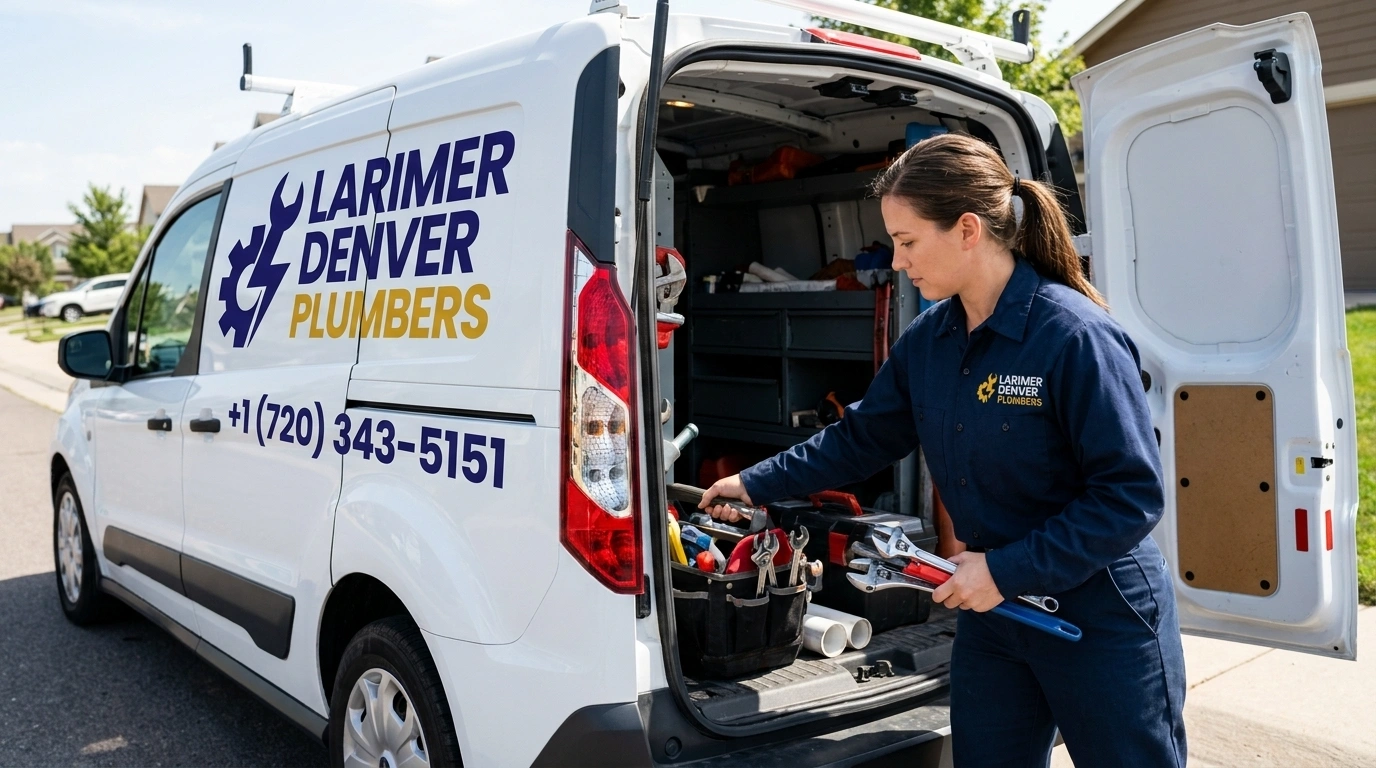
10 Fully Equipped Service Vehicles Serving Denver & the Metro Area
Tools, field capability, and 24/7 dispatch support when septic or commercial plumbing problems cannot wait.
Larimer Denver Plumbers operates with 10 fully equipped service vans and a team of 50 skilled professionals serving Denver and nearby communities. Our field capability supports emergency plumbing, drain cleaning, hydro jetting, sewer camera inspection, sewer-line repair, leak detection, water-heater work, and related commercial plumbing services.
For septic tank pumping, holding-tank service, vault pumping, disposal, or specialized OWTS work, the available service scope, equipment, required authorization, and site conditions should be confirmed during scheduling.
Fleet and equipment strengths:
Payment Options for Larger Septic, Sewer & Plumbing Projects
Clear conversations about project scope, timing, and available payment arrangements.
A routine septic tank pump-out is usually a smaller maintenance service. Larger projects — such as extensive sewer-line repair, replacement plumbing, pump-system work, water-damage restoration, excavation coordination, or a potential septic-to-sanitary-sewer conversion — may require more planning.
Larimer Denver Plumbers can discuss payment expectations, project scope, and available options for qualifying larger plumbing projects. Availability, terms, approvals, financing products, and payment schedules vary. Ask the team for current details before relying on financing or payment-plan availability.
Planning support:
- Discussion of phased work when a project has multiple steps
- Clear scope and estimate information before major work begins
- Coordination with related drain, sewer, plumbing, restoration, or commercial project needs
- Straightforward explanation of payment expectations and project timing
Denver Plumbing Team Recognition & Community Service History
A long-term commitment to responsive plumbing, drain, sewer, and property-support services.
Larimer Denver Plumbers' business profile includes references to recognition associated with service quality, workplace culture, and neighborhood visibility. Awards, dates, issuing organizations, current status, and eligibility should be verified before publication in badge form, structured data, advertising, or claims that imply present certification or endorsement.
Recognition referenced in the business profile:
For septic pumping, customers should prioritize the specific service scope, local authorization requirements, safe work practices, documented results, availability, and the company's ability to explain whether the problem is septic-related, sewer-related, or plumbing-related.
Senior & First Responder Benefits on Eligible Plumbing Services
Supporting qualifying customers with service options and seasonal offers.
Larimer Denver Plumbers' business profile lists a First Responder/Senior Benefit, along with service-call credits, sewer and drain savings, water-heater incentives, and routine-maintenance offers. Availability, eligibility, exclusions, service limits, and current offer terms should be confirmed at the time of scheduling.
For a septic, drain, sewer, or commercial plumbing concern, call our team and ask whether a current offer applies to the service you need.
Offer categories referenced in the business profile:
Septic, Sewer & Commercial Plumbing Hours in Denver, CO
24/7 availability for urgent plumbing, drain, sewer, and wastewater-related concerns.
A sewage backup, overflowing holding tank, gurgling toilet, severe drain blockage, or sewer odor can happen at any hour. Larimer Denver Plumbers operates 24 hours a day, seven days a week, across Denver and the surrounding metro area.
| Day | Hours |
|---|---|
| Monday | 00:00 – 23:59 |
| Tuesday | 00:00 – 23:59 |
| Wednesday | 00:00 – 23:59 |
| Thursday | 00:00 – 23:59 |
| Friday | 00:00 – 23:59 |
| Saturday | 00:00 – 23:59 |
| Sunday | 00:00 – 23:59 |
Contact Larimer Denver Plumbers
Larimer Denver Plumbers vs. Typical Septic Service Providers in Denver
What makes a full-service Denver plumbing team different when wastewater problems are complex.
Not every provider offers the same level of emergency availability, related drain and sewer capability, local service coverage, or capacity for commercial plumbing support. A property with slow drains or sewage backup may need a pump-out, but it may also need a sewer camera inspection, hydro jetting, drain cleaning, sewer repair, restoration coordination, or a combination of services.
| Feature | Larimer Denver Plumbers | Typical Limited-Scope Provider |
|---|---|---|
| Denver-area experience | 30+ years listed in the business profile | Varies by provider |
| Team and fleet capacity | 50 skilled professionals and 10 service vans listed in the business profile | Varies by provider |
| Service scope | Septic-related support plus drain, sewer, camera, hydro jetting, water, leak, restoration, and commercial plumbing services | May focus on one narrow service |
| Emergency availability | 24/7 operations listed in the business profile | Availability varies |
| Wastewater diagnosis | Can assess whether symptoms may involve septic, drain, sewer, or related plumbing issues | May be limited to one service type |
| Commercial plumbing support | Commercial plumbing is included in the service portfolio | Varies by provider |
| Documentation | Clear service information and recommendations | Format and detail vary |
The right provider is the one that can accurately identify the actual problem, explain the service scope, meet applicable requirements, and respond appropriately to the property's conditions.
Contact Larimer Denver Plumbers for Septic Tank Pumping in Denver, CO
Talk with a responsive plumbing professional about septic, drain, sewer, or commercial wastewater concerns today.
If you are unsure whether your property has septic or city sewer, dealing with slow drains, noticing gurgling toilets, smelling sewage, seeing wet ground near a wastewater system, managing a holding tank, or facing a backup, Larimer Denver Plumbers is ready to help. We will listen to the symptoms, explain the appropriate next step, and coordinate service for qualifying septic, drain, sewer, and commercial plumbing needs.
Contact Larimer Denver Plumbers
Denver, CO 80206
United States
Hours of Operation
Request an Online Septic Service Estimate
Submit your septic or wastewater service request below for prompt confirmation.
Protect your Denver-area property with professional septic tank cleaning Denver CO homeowners, property managers, businesses, and facilities can rely on for practical guidance, clear communication, and the right next step.