Denver Sewer Camera Inspection to Protect Your Property and Avoid Costly Sewer Guesswork
When you need a sewer camera inspection Denver CO homeowners can use to make a confident decision, Larimer Denver Plumbers helps you see the condition of the line before approving major cleaning, repair, or replacement work. Repeated main-line backups, slow drains throughout the house, sewage odors, toilet gurgling, standing water, tree roots, and an alarming home-inspection finding all deserve more than a guess.
- Code-conscious sewer inspection & documentation
- Licensed plumbers trained in main-line diagnostics
- Fast response for backups & recurring clogs
- 24/7 emergency availability across Denver Metro
- 50 skilled pros & 10 equipped service vans
- Camera-first guidance — no sewer guesswork
Call (720) 343-5151 for same-day sewer camera inspection service in Denver and clear next-step guidance. Clear the symptom. Camera the line. Review the evidence before choosing a repair.
Request Sewer Camera Inspection
Fill out the form and our team will contact you immediately!
Instant Service Credit & Discounts Available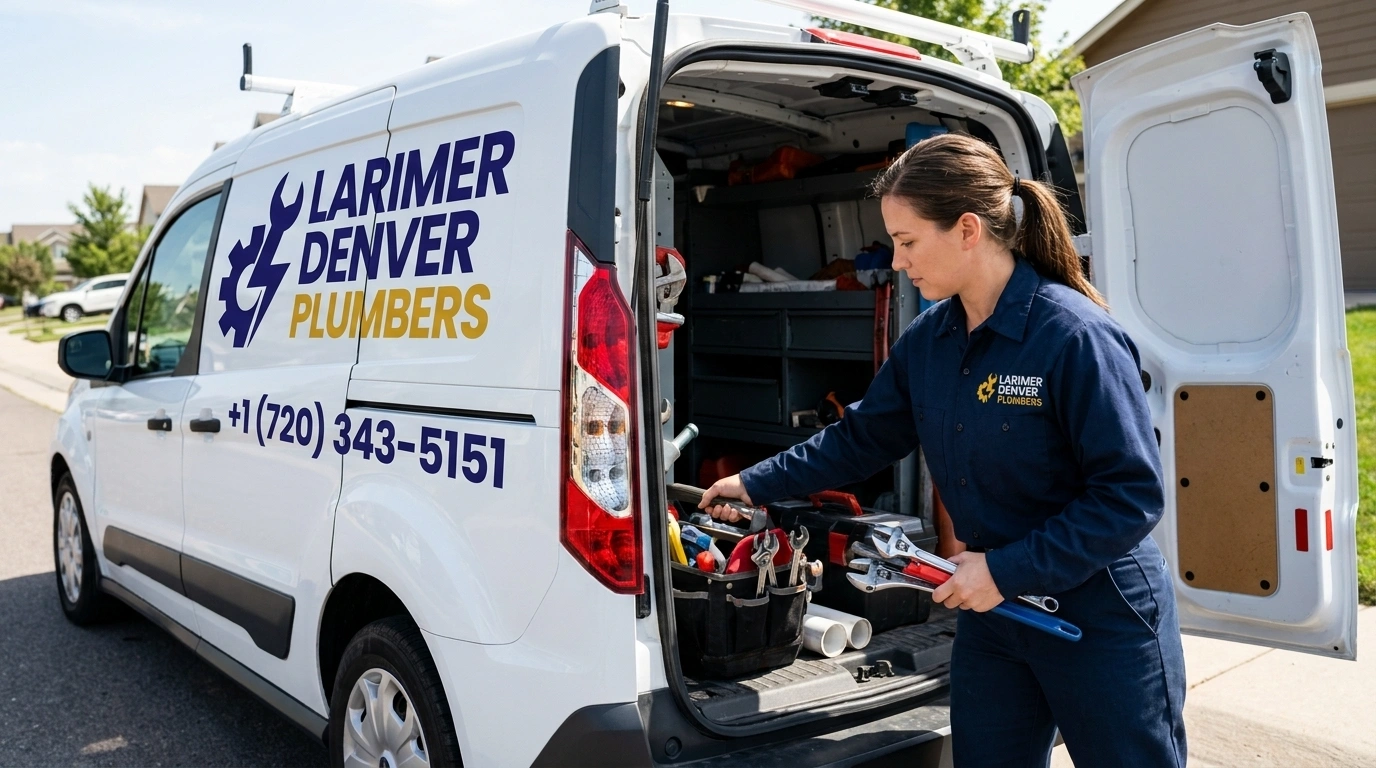
Sewer Video Inspection Backed by 30+ Years of Experience
A sewer scope is not simply a camera run through a pipe. It is the diagnostic step that helps protect a property owner from approving the wrong solution. A drain may clear temporarily, but a camera inspection can reveal why the main line keeps backing up: root intrusion, a shifted joint, a pipe belly, grease, scale, cracks, a collapsed section, or another obstruction deeper in the sewer lateral. A backup does not automatically mean full sewer line replacement—the condition, location, severity, drainage history, and accessibility all matter.
Sewer Camera Inspection Near Denver Landmarks, Neighborhoods & Business Hubs
Larimer Denver Plumbers provides sewer camera inspection service for homes, apartments, restaurants, offices, retail spaces, rental properties, and commercial buildings throughout Denver. Whether a property is near Cherry Creek, Capitol Hill, Denver Union Station, Washington Park, City Park, Larimer Square, Coors Field, Five Points, or a busy neighborhood business corridor, an unseen sewer problem can disrupt daily life, damage property, and create expensive uncertainty.
Denver Neighborhoods We Serve
Nearby Cities & Metro Denver Communities
Regional Hubs & Destinations Served
- Denver Union Station and downtown business districts
- Cherry Creek commercial corridors
- Denver Tech Center-area properties and nearby metro facilities
- Retail centers, apartment communities, HOA-managed properties, restaurants, offices, and mixed-use developments
- Denver-area schools, medical offices, hotels, warehouses, and commercial sites
Specialized Sewer Camera Inspection for Main Lines, Laterals, and Drainage Systems
A sewer line camera inspection requires more than putting a camera into a drain. The technician needs to understand how building drains connect to the main line, how to interpret pipe materials and transitions, why water may hold in a low spot, where roots commonly enter segmented pipe, and when a visible issue may require cleaning, locating, repair planning, or a second opinion.
Trained Technicians
Trained to recognize visible roots, scale, grease, offsets, separations, bellies, cracks, and obstructions.
Main-Line Diagnostics
Support for repeat backups, slow multi-fixture drainage, sewer odors, and gurgling fixtures.
Camera & Locating Options
Camera and locating options to support informed sewer-repair planning.
Plain-Language Findings
For homeowners, Realtors, buyers, sellers, property managers, and facility teams.
Full Plumbing Support
When the camera points to drain cleaning, hydro jetting, repair, or replacement.
Restoration Coordination
Integrated support with water-damage restoration when backups cause damage.
What Happens When a Sewer Line Fails in Denver?
A sewer lateral is the private line that carries wastewater from a building toward the public sewer main. When that line narrows, shifts, cracks, fills with roots, develops a low spot, or becomes blocked, wastewater may no longer leave the property reliably. The visible warning signs can range from a single slow drain to sewage coming back through a basement floor drain or the lowest fixture in the building.
Multiple Slow Drains
Multiple drains clogging or draining slowly at the same time.
Toilet Gurgling
A toilet gurgling when the shower, dishwasher, or washing machine drains.
Basement Backups
Sewage appearing at a basement drain, tub, shower, or other low fixture.
Recurring Main-Line Clogs
Recurring clogs after previous snaking or drain cleaning.
Root Intrusion
Tree roots entering joints, cracks, or separated pipe sections.
Standing Water
Standing water visible in a sewer line indicating a possible belly or low spot.
Structural Damage
Cracks, offsets, separations, or collapsed sections that restrict flow.
Uncertainty
Not knowing whether the issue is in the building drain, private lateral, or public main.
Safety Reminder
If sewage is actively backing up, limit water use immediately. Do not run washing machines, dishwashers, showers, or additional toilets until the issue is assessed. Avoid chemical drain cleaners, which can create hazards for occupants and technicians without correcting a structural sewer problem.
Prevent Major Surprises with Timely Sewer Camera Inspection
Unlike certain regulated plumbing devices, a sewer camera inspection is not a universal annual certification requirement. It is a diagnostic service that becomes especially valuable when there is a symptom, a property transaction, a planned project, a repeated maintenance issue, or a major repair recommendation that needs objective evidence.
| Situation | Why a Camera Inspection Helps | Recommended Timing | Practical Value |
|---|---|---|---|
| Repeat main-line clogs | Identifies roots, offsets, bellies, cracks, or debris beyond the immediate blockage | After recurring clogs or repeat snaking | Determines whether clearing alone is enough |
| Basement drain backup | Shows visible conditions in the accessible line | As soon as active situation is stabilized | Supports a safer repair decision |
| Older-home purchase | Documents accessible sewer-lateral condition before closing | During the inspection period | Helps buyers make informed decisions |
| Sewer repair quote | Confirms visible condition and defect location | Before approving major work | Compare repair, replacement, or lining paths |
| Mature-tree concerns | Detects visible root intrusion around pipe joints | When slow drainage or repeat roots occur | Supports root-management planning |
| Remodeling or excavation | Identifies line route and known concerns | Before finalizing plans | Reduces avoidable surprises |
| Commercial drainage issues | Documents repeat backups or performance concerns | Before disruption worsens | Supports maintenance and records |
Plan Ahead When Possible
- Schedule a sewer scope before your home-inspection objection deadline when buying an older Denver property.
- Request a camera inspection after recurring drain cleaning rather than repeatedly treating symptoms alone.
- Consider locating and depth marking when a visible defect may require exterior repair planning.
- Save video, photos, and written findings for your property records or future comparisons.
- Ask what is included before booking: camera access, video, locating, line clearing, report delivery, and repair-estimate prep may be separate services.
Frequency Note
Most properties do not need a routine camera inspection every year. However, homes with recurring root intrusion, older clay or cast-iron pipe, persistent main-line clogs, frequent backups, or prior sewer damage may benefit from a maintenance plan tailored to their actual line condition.
Consider coordinating a sewer scope alongside your regular drain cleaning service when line conditions warrant it.
Who Needs Sewer Camera Inspection in Denver?
Sewer line problems are not limited to one type of property. Any building with drains, a private lateral, an aging main line, heavy wastewater use, tree-root exposure, or a history of backups may need sewer video inspection. Larimer Denver Plumbers assists individual homeowners and larger property stakeholders who need clear diagnostic information before making a repair or maintenance decision.
Homeowners
Repeated clogs, gurgling, odors, or sewage backups.
Buyers & Sellers
Sewer scope information during a real-estate transaction.
Realtors
Coordinating inspection-period sewer camera service.
Landlords & Managers
Documenting a recurring drain or main-line issue.
HOAs & Apartments
Evaluating shared-property drainage concerns.
Restaurants & Hotels
Cafes, hotels, and food-service facilities with high-use drains.
Commercial Properties
Offices, retail, mixed-use, warehouses, and facilities.
Real Estate Investors
Assessing sewer-lateral condition before acquisition.
How Denver Weather, Soil, Trees, and Older Pipe Materials Affect Sewer Lines
Denver properties experience broad seasonal temperature changes, freeze-thaw cycles, mature landscaping, soil movement, dry conditions, heavy rain events, and changing property usage. These conditions do not automatically mean a sewer line is damaged, but they can expose weaknesses in aging joints, older pipe materials, low spots, and root-prone connections. In older neighborhoods such as Baker, Capitol Hill, Park Hill, Highland, Berkeley, Sunnyside, Washington Park, and Congress Park, some properties may have segmented clay tile, cast iron, or transitions between pipe materials.
Summer
Mature trees can seek moisture and enter vulnerable joints or openings in older sewer lines.
Winter
Freeze-thaw conditions and soil movement may reveal or worsen weaknesses around already compromised pipe sections.
Spring & Fall
Seasonal water use, landscaping activity, shifting ground conditions, and irrigation startup may make drainage problems more noticeable.
Year-Round
Frequent use, grease, wipes, foreign objects, scale, corrosion, and debris can combine with structural issues to restrict flow.
What Can a Sewer Camera Inspection Show in Denver?
A sewer camera inspection can identify visible features of the accessible line, including pipe material changes, obstructions, roots, offsets, separated joints, standing water, and internal deterioration. It cannot guarantee that every buried section is defect-free, especially if heavy debris, water, a blockage, or damage prevents the camera from reaching the entire line. Still, recorded footage is one of the most useful tools for understanding what is happening below ground.
| Pipe Type / Finding | Typical Use / Context | Common Concern | What the Camera May Show |
|---|---|---|---|
| Clay Tile / Vitrified Clay | Often found in older sewer laterals | Joints can allow roots or shift over time | Segmented joints, root intrusion, separation, offsets |
| Cast Iron | Common in older building drainage | Internal scale, corrosion, reduced flow area | Rough interior walls, scaling, corrosion, restricted flow |
| PVC | Common in newer repairs and replacements | Damage at fittings, joints, or from outside impact | Cracks, separation, bellies, debris, connection issues |
| Orangeburg / Fiber Pipe | May exist in some mid-century properties | Material can deform or deteriorate | Flattening, distortion, internal deterioration |
| Root Intrusion | Roots entering joints, cracks, or failed connections | Repeat blockages and restricted flow | Fine roots, dense root masses, debris catching |
| Offset Joint | Pipe sections no longer align | Flow restriction and snagging of debris | Visible lip or shifted pipe connection |
| Belly / Low Spot | Sagging section that holds water | Waste and debris settle instead of moving | Standing water, pooled debris, slower camera movement |
| Crack, Separation, Collapse | Structural damage or severe deterioration | Backup risk and reduced pipe integrity | Visible break, gap, impassable section, soil intrusion |
Reliability Note: Reliable diagnosis depends on the visible footage, the distance reached, the line's drainage history, access conditions, and whether a locator is used to identify the position of a concern above ground.
What to Expect During a Denver Sewer Camera Inspection
Larimer Denver Plumbers uses a practical process designed to give you clarity before major sewer work is approved.
Initial Call & Symptom Review
We ask about repeated clogs, basement backups, gurgling toilets, odors, recent drain cleaning, property age, real-estate deadlines, and any previous sewer findings.
Access & Property Assessment
Our technician identifies an appropriate accessible entry point, often a cleanout. If a cleanout is missing, blocked, damaged, or inaccessible, we explain available access options before proceeding.
Camera Inspection of the Accessible Line
A specialized camera is advanced through the sewer line while the technician reviews visible conditions in real time. We look for roots, debris, offsets, bellies, cracks, separation, scale, grease, pipe transitions, and other visible restrictions.
Camera Findings & Plain-English Review
We explain what the footage shows, what remains uncertain, whether the camera reached the city connection, and how the observed condition may relate to the symptoms you reported.
Locating & Next-Step Planning
If a concern may require exterior repair, a sewer line locate or depth mark may help identify its approximate position for planning. Locating, cleaning, or additional diagnostics may be separate from the initial scope.
Repair, Maintenance, or Monitoring Options
We may recommend drain cleaning, hydro jetting, targeted root management, further locating, spot repair evaluation, trenchless options, sewer line replacement, or monitoring.
Transparent Sewer Scope Deliverables for Denver Property Owners
Every sewer scope should have a defined purpose. Whether you are trying to diagnose a backup, evaluate an older home, confirm a repair recommendation, or understand a line before purchase, Larimer Denver Plumbers explains the scope of work so you know what the inspection is intended to provide.
Scope Note: A sewer camera inspection does not automatically include drain cleaning, hydro jetting, excavation, repair, video delivery, locating, depth marking, permit processing, or a formal real-estate report. Before work begins, ask our team to confirm the deliverables for your appointment.
Key Advantages of Choosing Larimer Denver Plumbers
Our sewer camera inspection service is built for Denver property owners who need more than a vague diagnosis. We help you understand what is visible in the line, how it may relate to the problem, and what reasonable next steps may be available.
Professional Sewer Video Equipment
Professional sewer camera equipment for accessible main-line and sewer-lateral diagnostics.
Full Plumbing Capability
Drain cleaning, hydro jetting, sewer repair, and restoration support.
24/7 Emergency Availability
Around-the-clock response for urgent sewer backups and plumbing issues.
Clear Explanations
For homeowners, homebuyers, sellers, Realtors, landlords, HOAs, and commercial managers.
Local Denver Metro Service
Local service across Denver neighborhoods and the greater metro area.
Camera-First Guidance
Designed to help avoid premature or unsupported major-repair decisions.
Sewer Camera Inspection Results for Denver Properties
A sewer issue can feel overwhelming because the most important part of the system is underground and out of sight. Many customers call after repeated drain clearing, a home-inspection surprise, a sewer odor, a basement backup, or a costly repair recommendation. A camera inspection helps replace uncertainty with visible evidence.
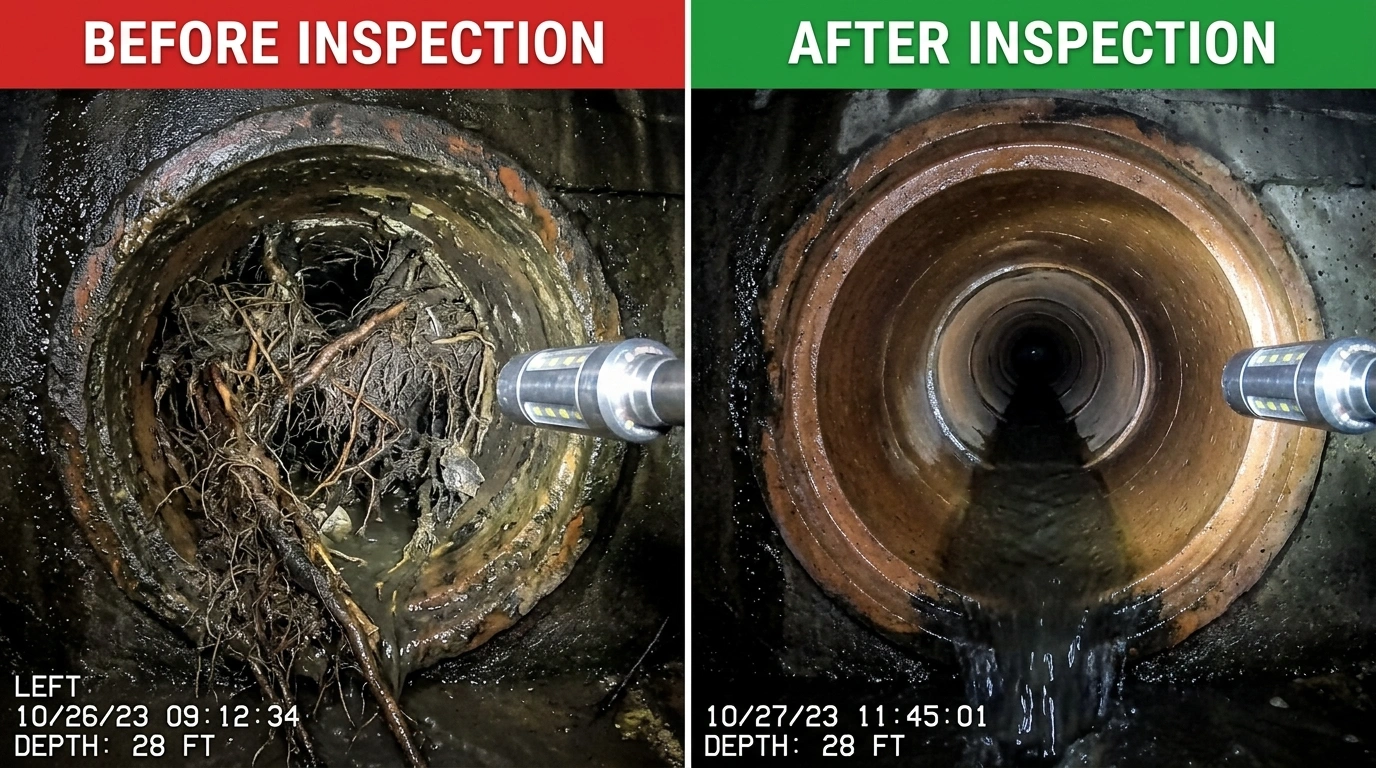
The main line keeps clogging, but the cause is unclear. Repeated snaking treats symptoms without confirming the root problem.
You can review the accessible condition of the line with a technician and get a clearer basis for cleaning, monitoring, or repair.
A homebuyer does not know whether an older sewer lateral is a manageable maintenance issue or a major risk.
A buyer, seller, Realtor, or owner can retain documentation for informed decision-making during the transaction.
A property owner has been told replacement is needed but has not reviewed recorded footage or seen the actual defect.
Repair, lining, pipe bursting, or replacement discussions are grounded in evidence—not sewer guesswork.
Repair planning is difficult because the visible concern has not been located above ground.
If a visible concern needs exterior work, locating can support more accurate planning and less digging.
How We Inspect, Locate, and Diagnose Sewer Lines in Denver
Larimer Denver Plumbers uses professional equipment and a structured diagnostic approach to inspect accessible sewer-line interiors. A camera inspection is designed to visually document the inside of the pipe; it does not involve immediate digging or automatically commit you to a repair path.
Camera inspection through a suitable cleanout or other approved access point
Flexible push-rod camera equipment designed for sewer lateral diagnostics
Live monitor review of visible line conditions
Video recording or still-image capture when included in the service scope
Signal locating and depth estimation when a visible defect requires repair planning
Drain cleaning or hydro jetting when blockage prevents further camera progress
Coordinated repair planning for accessible, verified concerns
Permitting & Utility Note: For any excavation, sewer repair, replacement, or work near a sidewalk, alley, curb, street, or other public right-of-way, the required permits, restoration obligations, and utility coordination depend on the actual project scope and location. Before digging, Colorado property owners should use 811 utility-location procedures. Denver's guidance states that the City locates main sewer lines only; private service-line location and repair responsibilities can remain with the property owner.
Do You Need Sewer Repair, Drain Cleaning, or a New Sewer Line?
A sewer camera inspection is valuable because it helps separate conditions that may be manageable with cleaning or monitoring from those that may require repair planning. The correct choice depends on pipe condition, location, severity, repeat-backup history, access, property goals, and whether the issue affects flow or pipe integrity.
| Visible Condition | Cleaning or Maintenance May Be Considered | Repair or Replacement Evaluation May Be Recommended |
|---|---|---|
| Minor debris or soft blockage | Yes, after evaluating the cause and line condition | Only if camera evidence shows underlying structural concern |
| Light root intrusion at limited joints | Root clearing and follow-up monitoring may be reasonable | Considered if roots repeatedly return or joints are damaged |
| Heavy root mass restricting flow | Clearing may restore short-term flow | Evaluation of damaged joints or recurring intrusion often required |
| Scale in aging cast iron | Cleaning may improve flow when pipe remains sound | Considered if corrosion or severe restriction is substantial |
| Offset joint | Limited cleaning may provide short-term relief | Evaluation needed when flow is restricted or debris catches |
| Belly or standing water | Monitoring may be appropriate in minor cases | Evaluation needed when pooling causes repeat backups |
| Cracked, separated, or collapsed line | Cleaning alone is generally not a durable correction | Repair or replacement planning is often necessary |
| Camera cannot pass | Additional cleaning or access may be needed | Repair evaluation may be needed if severe obstruction suspected |
Consider a Second Sewer-Scope Opinion When:
- You have not seen the recorded footage of the defect
- The defect location is unclear or has not been marked above ground
- The recommendation involves significant excavation or full replacement
- You want independent evidence before authorizing a major project
The goal is not to delay necessary work; it is to make sure the work matches the documented problem.
What Affects Sewer Scope Pricing in Denver, CO?
The cost of a sewer camera inspection varies because every property has different access, line conditions, service goals, and documentation needs. A straightforward camera run through an accessible cleanout is different from an emergency backup call, a blocked line that must be cleared first, a buyer report with video delivery, or a sewer defect that requires locating and depth marking.
Main Cost Factors
- Availability and condition of a usable cleanout
- Whether the line is accessible or blocked before the camera can travel
- Length, layout, and condition of the sewer lateral
- Need for drain cleaning or hydro jetting before or during diagnostics
- Video recording, still images, written report, or homebuyer documentation
- Sewer line locating and depth marking for repair planning
- Emergency or after-hours response needs
- Residential, HOA, multifamily, restaurant, or commercial complexity
Local Pricing Note
Local published planning ranges for a standalone Denver sewer scope often fall in the low hundreds, while difficult access, locating, reporting, clearing, and emergency conditions can add to the total.
Request a written estimate for your actual property and service scope before work begins. Larimer Denver Plumbers explains the recommended scope clearly so there are no surprises.
| Sewer Camera Service Type | Typical Pricing Considerations |
|---|---|
| Standard Sewer Camera Inspection | Access point, line length, inspection goal, camera travel distance |
| Camera Inspection After Recurring Clog | May involve separate drain clearing if blockage prevents camera access |
| Homebuyer or Real-Estate Sewer Scope | May include video, written findings, location details, deadline coordination |
| Sewer Line Camera & Locate | Includes planning for surface location and possible depth information |
| Emergency Sewer Camera Inspection | Varies based on urgency, active backup, access, and stabilization work |
| Commercial Sewer Inspection | Varies by fixture count, building layout, site access, multiple lines |
Which Denver Properties Benefit Most from Sewer Scope Service?
You may benefit from a sewer camera inspection if your property has a recurring drainage issue, older plumbing, mature trees near the sewer route, a planned sale or purchase, recent construction, an unexplained backup, or a major repair recommendation.
Homes with recurring main-line clogs or repeat drain-cleaning calls
Properties where several fixtures drain slowly or make gurgling sounds
Buildings with basement floor drains, lower-level bathrooms, or prior sewer backups
Older homes that may have clay tile, cast iron, or mixed pipe materials
Properties with large established trees near a yard, alley, sidewalk, or sewer route
Homes under contract where a buyer wants a sewer inspection before closing
Properties with an existing recommendation for sewer repair or replacement
Commercial buildings with high-volume wastewater use or repeat interruptions
Apartment buildings, HOAs, restaurants, and multi-unit properties requiring documented diagnostics
Responsibility Note: The City and County of Denver states that it locates main sewer lines only. The private service line, also called the lateral, is generally the property owner's responsibility to locate and maintain up to and including the connection at the city main.
Sewer Camera Inspection for Denver Commercial and Multi-Unit Properties
Commercial sewer problems can affect tenants, customers, employees, inventory, operations, and property reputation. Restaurants, offices, retail centers, apartment communities, hotels, healthcare facilities, warehouses, schools, and mixed-use properties often need prompt, documented answers when a main line repeatedly backs up or multiple areas of a building experience drain problems. Larimer Denver Plumbers works with property managers, facility teams, owners, HOAs, and commercial operators to assess accessible sewer lines, communicate findings clearly, and coordinate the appropriate next step through our commercial plumbing services.
| Commercial Sewer Service | How It Supports Your Property |
|---|---|
| Sewer Camera Inspection | Documents accessible pipe conditions, blockages, roots, offsets, and structural concerns |
| Drain Cleaning | Removes many common obstructions that disrupt service or block camera access |
| Hydro Jetting | Uses high-pressure water to address certain heavy buildup conditions where appropriate |
| Sewer Line Locating | Supports planning when a visible concern may require exterior work |
| Sewer Repair or Replacement Evaluation | Helps owners compare feasible correction paths after camera evidence |
| Portfolio & Multi-Unit Coordination | Helps property managers plan access, scheduling, documentation, and follow-up |
Why Commercial Owners Choose Us
- A single plumbing partner for sewer diagnostics, drain service, and corrective work
- Coordinated scheduling for occupied buildings and multi-unit properties
- Plain-language findings for property managers and decision-makers
- 24/7 emergency support when active sewer backups threaten operations
- Repair-planning support when camera evidence identifies a concern requiring further work
Commercial Properties Served
- Restaurants, cafes, bars, and hospitality venues
- Office buildings, retail centers, and mixed-use developments
- Apartment communities, condominiums, and HOA-managed properties
- Hotels, event spaces, and healthcare facilities
- Schools, churches, daycares, and community centers
- Warehouses, industrial sites, and logistics facilities
Why Hire Licensed Sewer Camera Inspection Professionals in Denver?
Professional camera inspection gives you a practical way to see the accessible interior of a sewer line before authorizing work that may affect your yard, basement, landscaping, sidewalk, operations, or budget.
Identify Visible Defects
Visible roots, offsets, cracks, bellies, scale, grease, debris, and pipe separation.
Explain Repeat Backups
Understand why a main line keeps backing up after snaking or cleaning.
Better Repair Decisions
Choose between cleaning, monitoring, repair, trenchless methods, or replacement.
Real Estate Support
Useful information for buyers, sellers, Realtors, and property managers.
Location Certainty
Locating visible defects when exterior work may be required.
Documentation Records
Records that can support repair comparisons and insurance conversations.
Why DIY Sewer Inspection and Unqualified Sewer Work Can Create Bigger Problems
Sewer lines can contain wastewater, gases, sharp debris, unstable pipe sections, and hidden obstructions. Improperly forcing equipment into a damaged line can worsen an existing defect, damage fittings, create a messy backup, or leave the real issue unidentified. For active sewer backups, avoid do-it-yourself chemical drain cleaners. They rarely solve root intrusion, pipe offsets, collapses, or structural sewer problems, and they can create safety hazards for occupants and service professionals.
Improper equipment use can push debris farther into the line or damage weakened pipe sections
An untrained diagnosis may mistake a temporary clog for a collapse—or overlook a structural issue
Digging without proper utility-location procedures can damage buried utilities or create unsafe conditions
Work near sidewalks, alleys, streets, and right-of-way areas can require permits, licensing, and utility coordination
A camera diagnosis should guide the next step—not justify unsupported fear-based repairs
Sewer backup cleanup may require specialized water damage restoration support
Answers to Common Sewer Camera Inspection Questions in Denver
Straight answers for Denver homeowners, homebuyers, and property managers.
Why is my Denver basement drain backing up when I use the washing machine?
When a washing machine discharges a large volume of water, it can expose a restriction in the main sewer line. If the line cannot carry wastewater away fast enough, it may return through the lowest available drain, often a basement floor drain, shower, tub, or utility drain. A sewer camera inspection can help identify visible roots, debris, offsets, bellies, cracks, or other restrictions in the accessible line.
Why do multiple drains clog at the same time?
When multiple fixtures are slow, gurgling, or backing up together, the issue may be in the main line or sewer lateral rather than one sink or shower drain. A main sewer line camera inspection can help identify the visible cause and guide the next step.
Why did my main sewer line back up again after it was snaked?
Snaking may remove enough blockage to restore temporary flow without correcting the condition that keeps catching debris. Common causes include roots, a shifted joint, a belly, scale, grease, a crack, or a damaged pipe section. A camera inspection after drain cleaning can help determine why the line continues to clog.
Can a sewer camera find tree roots in my sewer line?
Yes. A sewer camera can often show visible root intrusion in accessible areas of the line. Roots may enter through joints, cracks, pipe separations, or compromised connections. The footage can help determine whether root clearing, monitoring, repair evaluation, or another approach is appropriate.
Do older Denver homes have clay sewer pipes?
Some older Denver properties may have clay tile, cast iron, or mixed pipe materials, but pipe material should be verified at the individual property. A sewer scope can often identify visible pipe transitions and accessible line conditions.
Should I get a sewer scope before buying a house in Denver?
A sewer scope can be especially valuable during a home-inspection period because it provides information about an underground system that a standard visual home inspection may not fully evaluate. Ask whether the service includes recorded footage, written findings, approximate defect location, and confirmation of whether the camera reached the city connection.
Is a sewer scope included in a standard home inspection?
Not always. Many buyers arrange a sewer scope separately. Confirm the home-inspection package, timing, cost, report format, and whether the scope is performed by a plumbing or sewer-diagnostic provider.
Does a sewer camera inspection reach the city main?
The goal is often to inspect the accessible lateral toward the city-main connection, but results depend on the cleanout location, pipe layout, blockage, water level, damage, and whether the camera can travel the full distance. The technician should explain how far the camera reached and any limitations.
What does standing water in a sewer pipe camera inspection mean?
Standing water may indicate a pipe belly or low spot where water and debris collect. The importance depends on the severity, length of the affected area, repeated backup history, pipe condition, and whether the standing water causes recurring restrictions.
Can a sewer camera see a collapsed pipe?
A camera may show visible collapse, severe deformation, soil intrusion, or an impassable section. However, the camera may also be stopped by heavy debris, roots, water, or another obstruction. Further diagnosis may be needed before confirming the exact cause.
Does sewer camera inspection include locating and depth marking?
Not automatically. A standard camera run, locating, and depth marking can be separate services. If you are evaluating repair, replacement, or trenchless sewer options, ask whether a camera locate is included or recommended.
Is sewer camera inspection included with drain cleaning?
Not always. Drain cleaning and camera inspection are different services, although they are often used together. Clearing may be needed first if a blockage prevents the camera from traveling through the line.
Do I need hydro jetting before a sewer camera inspection?
Not in every case. Hydro jetting may be appropriate when heavy buildup or debris needs to be cleared, but it is not an automatic solution for roots, a broken pipe, offset joints, bellies, or collapse. The right sequence depends on the condition of the line.
Can small root intrusion be cleaned instead of replacing the sewer line?
Sometimes. Small or limited root intrusion may be managed with clearing and monitoring when the pipe remains structurally sound. Repeated roots, damaged joints, severe offsets, cracks, or a compromised pipe may require repair or replacement evaluation.
What if the camera cannot get through the sewer line?
The technician should explain what stopped the camera, whether the line needs cleaning, whether the camera was limited by water or debris, and whether a severe restriction or damaged section is suspected. The next step may include drain cleaning, hydro jetting, alternate access, locating, or repair evaluation.
How much does sewer camera inspection cost in Denver?
Pricing depends on cleanout access, line condition, scope distance, urgency, whether drain clearing is needed, and whether video, written reporting, locating, or depth marking is included. Request an estimate based on your property and the service you need.
Are you available for emergency sewer camera inspection in Denver?
Yes. Larimer Denver Plumbers offers 24/7 emergency plumbing response for urgent sewer and drain situations. If sewage is actively backing up, limit water use and call (720) 343-5151 for guidance and dispatch availability.
Clear Diagnostic Support from First Visit to the Right Next Step
Larimer Denver Plumbers is committed to providing practical, professional sewer camera inspection service that helps customers understand visible line conditions and make informed decisions. We explain what the footage shows, what remains uncertain, and which next-step options may be appropriate for the accessible condition of your sewer line.
If a camera inspection leads to recommended cleaning, repair, replacement, locating, or additional diagnostics, we will outline the scope of work and available next steps clearly. Warranty coverage, if applicable, depends on the specific repair, replacement materials, labor scope, and written terms provided for that work.
Our goal is to help Denver property owners make informed decisions with the benefit of visible line evidence—not fear or pressure.
Our Address
Larimer Denver Plumbers329 Detroit St
Denver, CO 80206
United States
Credentials That Support Sewer Camera Inspection and Sewer Line Service
Sewer camera inspection is a diagnostic service that can lead to drain cleaning, hydro jetting, sewer repair, trenchless pipe work, or replacement planning. When a sewer concern requires corrective work, it should be handled by properly qualified plumbing and specialty professionals following applicable local requirements. Larimer Denver Plumbers supports sewer diagnostic and repair work with a skilled plumbing team.
Master Plumber Licensing
Journeyman Plumber Licensing
Residential Plumber Licensing
Backflow Prevention Certification
Medical Gas Certification
Multi-Property Service Experience
Credentials Note: Credentials, license classifications, and applicability to a particular service should be confirmed for the specific work being performed.
Emergency Sewer Camera Inspection in Denver, CO
An active sewer backup can quickly become a property-damage and sanitation concern. If wastewater is coming through a basement drain, shower, tub, toilet, or other low fixture, you need a clear assessment of the immediate risk and the likely source of the problem. Larimer Denver Plumbers provides 24/7 emergency plumbing availability across Denver and surrounding metro communities.
Our Emergency Process
- Immediate phone discussion to assess active backup symptoms and urgency
- Guidance to limit water use and avoid worsening the backup
- Dispatch of a qualified plumbing professional based on availability and severity
- Assessment of the main line, drains, cleanout access, and visible conditions
- Drain clearing, camera inspection, or additional diagnostics as appropriate
- Clear explanation of urgent mitigation, next-step repair planning, and documentation needs
Common Emergency Scenarios
- Sewage coming up through a basement floor drain
- Multiple fixtures backing up at once
- Main-line blockage causing toilets, tubs, or showers to overflow
- A recurring clog that has become a full sewer backup
- A suspected collapsed, root-filled, or severely restricted sewer line
- A commercial sewer problem threatening operations, tenants, customers, or inventory
Sewer Documentation Support for Denver Property Damage Claims
When a sewer backup or plumbing failure causes damage, your insurance carrier may request documentation of the incident, visible conditions, mitigation work, repair estimates, and invoices. Larimer Denver Plumbers can provide service-related documentation connected to the work performed, subject to the specific scope of service.
Service notes describing reported symptoms and observed conditions
Photos or video of accessible sewer-line findings when included in service
Drain-clearing, diagnostic, repair, or replacement invoices
Written descriptions of recommended corrective work
Documentation of temporary mitigation or emergency response performed
Coordination with related water damage restoration providers when needed
Policy Note: Insurance coverage depends on your policy, endorsements, exclusions, cause of loss, maintenance history, and insurer determination. A sewer camera inspection does not guarantee coverage or establish claim eligibility. Review your policy and speak with your insurance agent or claim representative for policy-specific guidance.
Warranty Information for Sewer Diagnostics, Repair, and Replacement
A sewer camera inspection is a diagnostic service. The camera footage and written findings reflect conditions visible in the accessible portion of the line at the time of the inspection. They are not a lifetime guarantee against future blockages, root growth, ground movement, damage, or other changes inside an underground sewer system. When Larimer Denver Plumbers performs repair or replacement work, applicable workmanship and manufacturer warranty information will be provided in writing for the specific job.
| Coverage Type | Typical Application |
|---|---|
| Diagnostic Inspection Record | Documents visible accessible line conditions at the time of service |
| Workmanship Coverage | May apply to qualifying repair or installation labor under written job terms |
| Parts or Pipe Materials | May be subject to manufacturer warranty terms for qualifying installed products |
| Service Documentation | Can support future maintenance, repair planning, and property records |
Warranty Note: Warranty details vary by pipe material, repair method, access conditions, manufacturer requirements, soil conditions, root exposure, and the written terms of the completed project. Ask for specific warranty information before authorizing repair or replacement work.
10 Fully Equipped Service Vehicles Serving Denver & the Metro Area
Larimer Denver Plumbers operates with 10 fully equipped service vehicles to support plumbing, drain, sewer, water-heater, leak-detection, and emergency service needs across Denver and nearby cities. Our service readiness helps us respond to customers facing backups, recurring clogs, home-inspection deadlines, and property-management concerns.
Sewer camera inspection and drain diagnostic equipment
Drain-clearing tools for common main-line and branch-drain obstructions
Hydro jetting capability where appropriate
Sewer locating tools for repair planning
Common plumbing repair equipment and parts
Communication and dispatch systems for coordinated Denver metro response
Equipment Note: Equipment availability varies by dispatch, vehicle assignment, service type, and the condition of the line. We will explain the diagnostic and corrective options appropriate for your property.
Flexible Payment Options for Major Sewer Repair and Replacement
A sewer camera inspection may show that a property needs more than routine drain clearing. If further evaluation supports major repair, trenchless work, excavation, or sewer-line replacement, Larimer Denver Plumbers can discuss available payment and financing options for qualifying projects.
Major Sewer Repair
Major sewer line repair or replacement projects.
Trenchless Options
Trenchless pipe-lining or pipe-bursting evaluations where appropriate.
Multi-Unit & HOA
Multi-unit, HOA, or commercial sewer improvements.
Broader Upgrades
Broader plumbing upgrades completed alongside sewer work.
Post-Purchase Repairs
Planned repairs following a home purchase or property inspection.
Program Terms Vary
Financing availability, approval, rates, and lender requirements vary.
A Commitment to Professional Sewer and Plumbing Service
Larimer Denver Plumbers is focused on delivering responsive plumbing and sewer support for Denver property owners. Our work includes drain cleaning, sewer camera inspection, hydro jetting, sewer line repair and replacement, water-heater service, leak detection, fixture repair, and commercial plumbing support.
BBB Torch Awards for Ethics
ColoradoBiz Top Company Awards
Quality Business Awards
The Denver Post Top Workplaces
Nextdoor Neighborhood Faves
Special Savings for Eligible Denver Customers
Larimer Denver Plumbers may offer qualifying discounts, seasonal savings, service-call credits, sewer and drain promotions, and benefits for eligible senior, military, veteran, or first-responder customers. Discount availability, service eligibility, combination rules, and promotional terms may change.
Senior Discount
Ask whether a senior discount is currently available for your service.
Military & Veterans
Military, veteran, or first-responder benefits may apply.
Sewer & Drain Savings
Sewer and drain savings can be applied to eligible appointments.
Service-Call Credit
Service-call credit may apply toward approved repair work.
Seasonal Promotions
Seasonal promotions on drain, sewer, and maintenance services.
Ask Our Team
Ask whether special offers can be combined with other promotions.
24/7 Sewer Camera Inspection Service in Denver, CO
Sewer backups do not follow a business-hours schedule. Larimer Denver Plumbers provides 24/7 emergency plumbing availability for Denver customers who need help with active sewer backups, main-line clogs, overflowing fixtures, and urgent drainage concerns.
Contact Details
Phone: (720) 343-5151
Email: larimerdenverplumbers@gmail.com
Website: emergencyplumbingdenverco.com
Larimer Denver Plumbers vs. Typical Sewer Camera Inspection Providers in Denver
Not every sewer-camera service provides the same level of communication, plumbing capability, emergency availability, or follow-through. Some providers perform only a basic camera run; others may offer a repair recommendation without explaining the footage, the limits of the inspection, or the alternatives.
| Feature | Larimer Denver Plumbers | Typical Limited-Scope Provider |
|---|---|---|
| Denver-Area Experience | Local plumbing service focused on Denver and nearby metro communities | May have limited familiarity with Denver property conditions |
| Service Capacity | 50 skilled professionals and 10 service vehicles | May have limited scheduling or dispatch capacity |
| Diagnostic Approach | Camera findings explained in plain language with practical next steps | May provide footage with limited interpretation |
| Related Plumbing Support | Drain cleaning, hydro jetting, sewer repair, leak detection, commercial plumbing | May only perform a camera run or one repair path |
| Emergency Availability | 24/7 emergency plumbing response for urgent sewer situations | May operate only during business hours |
| Repair Decision Support | Cleaning, monitoring, locating, repair, trenchless, and replacement options | May provide limited options or unclear documentation |
| Residential & Commercial Service | Homeowners, buyers, sellers, HOAs, managers, and commercial properties | May focus on one property type |
Key Point: A camera inspection should give you useful evidence—not pressure you into a decision before you understand the condition of the line.
Contact Larimer Denver Plumbers for Sewer Camera Inspection in Denver, CO
If your main line keeps clogging, your basement drain is backing up, your toilet gurgles when other fixtures drain, you are buying an older home, or you need a second opinion before approving a major sewer repair, Larimer Denver Plumbers is ready to help. We provide sewer camera inspection, sewer scope service, drain cleaning, hydro jetting, sewer-line repair planning, and emergency plumbing support throughout Denver and surrounding metro communities.
Contact Larimer Denver Plumbers
Denver, CO 80206
United States
Hours of Operation
Request an Online Sewer Camera Inspection Estimate
Submit your request below for prompt confirmation. Include the symptom (recurring clogs, backup, gurgling, home purchase), the property type, and any prior sewer history for faster preparation.
Protect your Denver property from recurring sewer uncertainty with a professional sewer camera inspection Denver CO service from Larimer Denver Plumbers.