Sewer Line Repair & Replacement in Denver, CO — Fast, Licensed & Available 24/7
Denver sewer line repair to protect your property, restore drainage, and prevent costly wastewater damage.
When you need sewer line repair Denver CO homeowners can rely on, you need clear answers—not pressure or guesswork. Larimer Denver Plumbers helps homeowners, landlords, HOAs, property managers, and commercial facilities identify the real cause of recurring backups, slow drains, sewer odors, root intrusion, cracked pipes, and damaged sewer laterals.
With 30+ years serving Denver and surrounding communities, 50 skilled professionals, 10 fully equipped service vans, and 24/7 emergency availability, our team handles everything from sewer camera inspections and root removal to trenchless sewer repair, spot repairs, and full sewer line replacement. We explain what the camera found, show you the practical options, and provide a written scope before major work begins.
Call (720) 343-5151 for same-day sewer service, camera-based diagnosis, and a clear repair or replacement plan.
- Code-conscious sewer repair and replacement for residential and commercial properties
- Licensed plumbing professionals for sewer diagnostics, repair planning, and installation
- Fast help for main sewer backups, root intrusion, cracked pipes, and failed sewer laterals
- Available 24/7 for urgent sewer emergencies across Denver and the metro area
Request Sewer Line Service
Fill out the form below and our team will contact you immediately!
Instant Service Credit & Discounts AvailableSewer Line Repair Backed by 30+ Years of Experience
Partner with a local Denver sewer team that treats your property, budget, and plumbing system with care.
A sewer line problem is not a routine inconvenience. A backup can interrupt business operations, damage finished spaces, expose occupants to wastewater, affect tenants, and create a major repair decision for a homeowner or property manager. Larimer Denver Plumbers combines sewer-specific diagnostic work with full-service commercial plumbing capabilities, so you have one team for camera inspection, drain clearing, repair, replacement planning, and related plumbing needs.
We do not assume that every clog needs a full replacement. Our approach is to inspect the line, identify the condition of the pipe, explain the finding in plain language, and discuss whether cleaning, targeted repair, trenchless rehabilitation, pipe bursting, or excavation is the appropriate next step.
Sewer Line Repair Near Denver Landmarks, Neighborhoods & Business Hubs
Denver sewer line repair services for properties throughout the Mile High City and nearby communities.
Whether your property is near Cherry Creek, City Park, Denver Botanic Gardens, Union Station, Washington Park, Larimer Square, Coors Field, or a busy commercial corridor, a functioning sewer lateral is essential to daily life and operations. Larimer Denver Plumbers provides sewer line repair and replacement for homes, apartment communities, restaurants, offices, retail sites, and other properties throughout Denver.
Older homes in established neighborhoods may have aging clay tile or cast-iron piping. Tree-lined areas can experience root intrusion at old pipe joints. Dense urban locations may require thoughtful access planning, documentation, and coordination when work affects a driveway, alley, sidewalk, or other constrained area.
Denver Neighborhoods We Serve
Nearby Cities We Serve
Regional Business Hubs Served
Downtown Denver, Cherry Creek, RiNo, Five Points, the Denver Tech Center area, major retail corridors, medical offices, multifamily communities, restaurants, and commercial properties.
Specialized Sewer Line Repair & Replacement for Denver Properties
Denver sewer specialists focused on camera-based diagnosis, practical repair options, and reliable long-term flow.
Your sewer lateral is the private underground pipe that carries wastewater from your home or building to the city sewer main. When it becomes blocked, cracked, misaligned, invaded by roots, corroded, or collapsed, the symptoms can affect multiple fixtures at once. A toilet that bubbles while the washer drains, a shower that backs up when the sink runs, or sewage rising through a basement floor drain may point to a main sewer line issue rather than a simple fixture clog.
Larimer Denver Plumbers uses professional sewer camera inspection, locating, drain-cleaning, and repair methods to identify the cause before recommending work. We help you understand what terms such as "offset joint," "belly," "root intrusion," "channeling," and "collapsed pipe" actually mean for your property.
- Camera inspection and locating to identify the route, depth, and condition of the line
- Sewer repair options based on actual pipe findings, not assumptions
- Trenchless pipe lining and pipe-bursting evaluation when the line may qualify
- Open-trench repair or replacement planning when the pipe is too damaged for rehabilitation
- Clear documentation and communication for homeowners, businesses, HOAs, and property managers
What Happens When a Sewer Line Fails in Denver?
Common sewer line problems Denver property owners face—and why fast action matters.
A sewer line can fail when roots enter damaged joints, an old clay pipe cracks, cast iron deteriorates, soil movement shifts sections out of alignment, or the pipe develops a low area that repeatedly collects waste. In some cases, a blockage can be cleared. In others, the underlying pipe condition means the backup is likely to return until the damaged section is repaired or replaced.
A failing sewer lateral can cause wastewater to back up through the lowest drain in the property, often a basement floor drain, shower, laundry drain, or lower-level toilet. If several fixtures are draining slowly, gurgling, or backing up together, stop using water where possible and arrange a sewer camera inspection.
- Sewage backing up into a basement shower, tub, floor drain, or toilet
- Multiple drains slowing down, gurgling, or stopping at the same time
- Persistent sewer odor inside the home, in a crawlspace, or outside near the sewer route
- Repeated clogs after snaking or drain cleaning
- Wet, soft, unusually green, sunken, or foul-smelling areas in the yard
- Root intrusion, cracked clay pipe, corroded cast iron, bellies, offsets, or collapsed sections
- Wastewater damage, tenant disruption, business downtime, and avoidable restoration costs
Prevent Sewer Backups with Routine Sewer Line Maintenance
What Denver properties can do to catch sewer-line problems before they become emergencies.
Sewer lines do not require annual certification in the same way as certain regulated plumbing devices, but routine maintenance and camera inspections can help identify developing trouble before it becomes a backup. Properties with mature trees, old clay pipe, cast-iron piping, recurring clogs, heavy use, commercial kitchens, multi-unit occupancy, or a history of root intrusion can benefit from a proactive sewer maintenance plan.
Larimer Denver Plumbers can inspect, clean, and assess your sewer line based on the property's age, pipe material, previous camera findings, usage, and history of backups. If cleaning reveals structural damage, we explain the next step and provide a practical repair or replacement recommendation.
| Maintenance Task | Description | Typical Timing | Impact |
|---|---|---|---|
| Sewer camera inspection | Video inspection of the inside of the sewer line | After recurring clogs, before purchase, or as recommended | Identifies roots, cracks, offsets, bellies, and collapse |
| Drain and root cleaning | Removes buildup, debris, or root intrusion where appropriate | Based on line condition and recurrence | Restores flow and helps reduce backup risk |
| Cleanout inspection | Checks access points used for sewer maintenance and camera work | During service visits | Improves access for future diagnostics and clearing |
| Pipe condition review | Evaluates whether the pipe is structurally sound | After camera inspection | Helps determine repair, lining, or replacement options |
| Documentation and recommendations | Provides findings and an itemized scope | After diagnostic work | Supports informed decisions and project planning |
| Replacement planning | Reviews options when repair is not reliable | After serious damage is confirmed | Helps prevent repeat failures and emergency disruption |
Practical Maintenance Guidance
- Schedule preventive sewer cleaning before periods of heavy property use when your line has a history of recurring blockage
- Consider a sewer scope before purchasing an older Denver home or after discovering repeated drainage problems
- Address roots, cracked joints, and recurring backups early before a partial issue becomes a larger excavation project
- Keep camera reports, invoices, and previous sewer-work records for future maintenance, property sales, or insurance discussions
Frequency note: Most homes do not need a one-size-fits-all annual sewer service. The right frequency depends on pipe age, material, tree roots, occupancy, past backups, and the condition shown on a camera inspection. Larimer Denver Plumbers can recommend a maintenance plan based on your actual line—not a generic schedule.
Cost note: Costs vary based on the sewer line's length, accessibility, pipe condition, cleaning needs, camera findings, and whether repair or replacement becomes necessary. We provide clear next-step recommendations before major work begins.
Who Needs Sewer Line Repair in Denver?
From older Denver homes to restaurants, HOAs, and multi-unit properties across the metro area.
Sewer line problems can affect any property connected to a municipal sewer system. Homeowners may notice a basement backup or recurring clog. A property manager may receive tenant reports from multiple units. A restaurant may face drainage disruption that affects operations. Larimer Denver Plumbers provides sewer repair and replacement support for residential and commercial plumbing customers throughout the Denver area.
How Denver Weather, Soil, Roots & Aging Pipes Affect Sewer Line Lifespan
Seasonal change, mature landscaping, and older pipe materials can reveal weak points in a sewer lateral.
Denver's mix of older housing, mature trees, changing seasons, dry conditions, and ongoing redevelopment creates different sewer challenges from one property to another. Not every Denver home has the same pipe material or risk level, but older properties may still have clay tile or cast-iron sections that deserve careful evaluation when drainage problems begin.
Clay sewer pipe often has joints where roots can enter over time. Cast-iron piping can corrode or develop internal deterioration. Settlement, shifting soil, and repeated seasonal expansion and contraction can contribute to misaligned joints or low areas in aging lines. The goal is not to blame every problem on weather; it is to identify the actual pipe condition through a camera inspection.
Summer
Mature roots may seek moisture through vulnerable joints or cracks, especially in older lines.
Winter
Cold conditions can expose weak plumbing components, while seasonal changes may reveal existing pipe defects.
Spring & Fall
Soil movement, heavy use, and changing moisture conditions can make recurring drainage problems more noticeable.
Year-Round
Restaurants, multi-unit buildings, and busy commercial facilities may place frequent demand on their drainage systems.
Common Sewer Line Types and Problems Found in Denver
Understanding what your sewer camera inspection may reveal.
Different pipe materials and damage patterns require different repair strategies. During a sewer scope, our technicians evaluate the pipe's material, condition, slope, joints, access points, and the location of any obstruction or structural failure. A root-filled but structurally stable line may have a different solution than a severely offset or collapsed lateral.
| Pipe Type or Condition | Typical Use or Finding | Concern Level | What It Can Mean |
|---|---|---|---|
| Clay tile pipe | Common in many older properties | Moderate to high | Joints can separate or allow root intrusion |
| Cast-iron sewer pipe | Found in older homes and buildings | Moderate to high | Corrosion, scale buildup, cracking, or channeling may restrict flow |
| PVC or ABS pipe | Common in newer installations or replaced sections | Low to moderate | Can still crack, shift, clog, or develop connection issues |
| Root intrusion | Roots entering joints, cracks, or openings | Moderate to high | May require cleaning, repair, lining, or replacement depending on pipe condition |
| Offset joint | Pipe sections no longer align correctly | Moderate to high | Can catch waste, restrict flow, and allow roots to enter |
| Belly in the line | A low spot holds water and solids | Moderate | May cause recurring clogs and poor drainage |
| Cracked or broken section | Structural damage in the lateral | High | May allow leakage, root intrusion, or soil entry |
| Collapsed pipe | Pipe no longer maintains a usable flow path | High | Often requires excavation and replacement |
Reliable sewer performance depends on proper installation, correct slope, sound joints, regular maintenance where needed, and prompt attention to recurring problems. A camera inspection helps separate a cleanable blockage from a structural sewer-line issue.
Our 6-Step Sewer Line Repair & Replacement Process
What to expect when Larimer Denver Plumbers arrives at your Denver property.
Initial Call & Symptom Review
We discuss what you are seeing: sewage backup, gurgling drains, slow fixtures, odors, wet areas in the yard, prior root problems, or a recent sewer camera report.
On-Site Assessment & Access Setup
Our team identifies available cleanouts, evaluates safe access, reviews affected fixtures, and determines the best way to inspect the sewer line.
Camera Inspection & Diagnostic Work
We use camera equipment to inspect the interior of the pipe and identify blockages, roots, cracks, offsets, bellies, corrosion, breaks, or collapse where accessible.
Locate the Problem & Review the Findings
When needed, we locate the affected area from above ground and explain what the footage shows. You should understand the problem before approving substantial repair work.
Repair, Lining, or Replacement Options
We discuss practical options based on the pipe condition. This may include cleaning, targeted repair, trenchless lining, pipe bursting, or open-trench replacement.
Project Completion, Testing & Documentation
After work is completed, we verify drainage where applicable, explain the work performed, provide relevant documentation, and discuss maintenance or follow-up recommendations.
What's Included in Our Sewer Line Repair & Replacement Service
Clear deliverables for Denver homeowners, property managers, and commercial plumbing clients.
Every sewer line service visit is built around clarity. The exact scope depends on the condition of the line and the service requested, but Larimer Denver Plumbers works to ensure you understand the inspection findings, recommended method, project considerations, and next steps.
- Initial symptom review and property assessment
- Visual evaluation of affected drains, cleanouts, and accessible plumbing components
- Sewer camera inspection when appropriate for diagnosis
- Identification of likely roots, blockage, cracks, offsets, bellies, breaks, or collapse
- Surface locating of the sewer route or damaged section when needed
- Clear explanation of repair, trenchless, and replacement options
- Written repair or replacement recommendations for major work
- Permit, inspection, or utility-locate coordination when required by the project scope
- Final drainage verification and project documentation when work is completed
Key Advantages of Working with Larimer Denver Plumbers
Sewer repair support designed for fast decisions, clear documentation, and less disruption where possible.
Sewer line problems can be stressful because they affect sanitation, property use, and potentially the value of your home or building. Our team focuses on evidence-based diagnostics, transparent options, and practical planning from the first camera inspection through the completed repair.
Camera-first diagnostic approach for more informed recommendations
Sewer repair, drain cleaning, hydro jetting, camera inspection, and related commercial plumbing support
Evaluation of trenchless repair options when pipe condition and site conditions allow
24/7 emergency availability for severe backups and urgent sewer concerns
Clear repair scopes that address access, method, permitting, restoration, and expected next steps
Support for homes, HOAs, rental properties, restaurants, offices, retail sites, and multi-unit buildings
Sewer Line Repair Transformations for Denver Properties
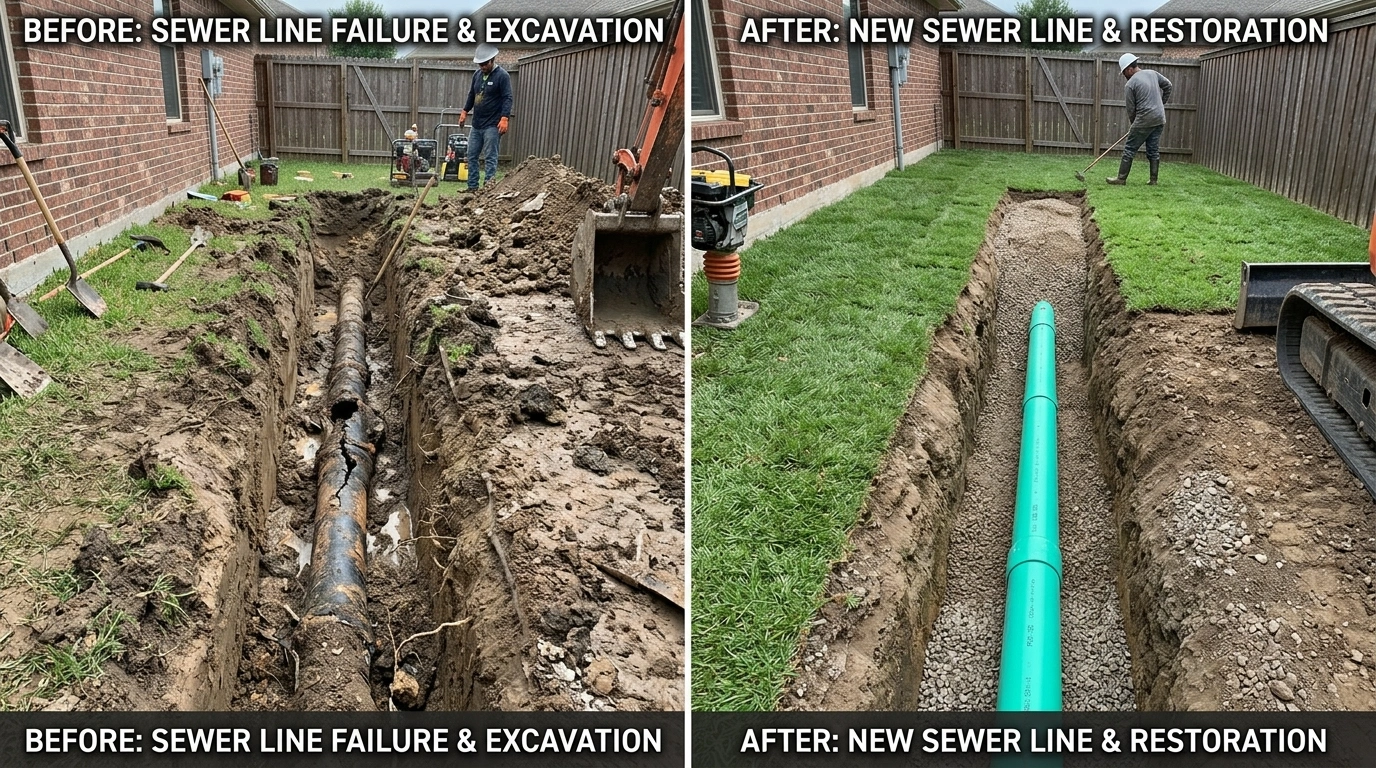
What changes once your sewer line is inspected, repaired, and documented.
Many property owners call after a backup, repeated drain-clearing visits, a home inspection concern, or a sewer camera report that uses unfamiliar terms. The goal of professional sewer service is not simply to clear today's blockage. It is to identify why the problem happened, explain whether the line can be repaired, and give you a durable path forward.
How We Repair, Rehabilitate & Replace Sewer Lines in Denver
Practical methods selected for the pipe condition, property layout, and long-term reliability.
Larimer Denver Plumbers selects the sewer repair method based on camera findings, pipe material, structural condition, access, depth, local requirements, and the property owner's long-term goals. Not every line qualifies for trenchless rehabilitation, and not every damaged line needs total replacement.
- Sewer camera inspection: Identifies the location and condition of the issue before major repair decisions
- Drain cleaning and root removal: May restore flow when roots or buildup are blocking a line that remains structurally serviceable
- Hydro jetting: Uses high-pressure water to clear certain buildup or roots when the pipe condition supports the method
- Targeted spot repair: Replaces or repairs a limited damaged section when the remaining sewer line is in acceptable condition
- Trenchless pipe lining: A resin-based lining method that may rehabilitate a structurally suitable host pipe with reduced excavation
- Pipe bursting: Replaces a damaged line by pulling new pipe through while breaking apart the old pipe, when site and pipe conditions allow
- Open-trench replacement: Exposes and replaces severely damaged, collapsed, crushed, or unsuitable pipe sections
- Restoration planning: Addresses affected soil, landscaping, concrete, driveways, sidewalks, or other surfaces according to the approved project scope
Should You Repair a Failing Sewer Line or Install a New One?
Helping Denver property owners choose the right path based on camera evidence—not pressure.
A sewer line recommendation should match the actual condition of the pipe. A small, isolated defect may be repairable. Repeated root intrusion through failing joints, widespread deterioration, major offsets, severe bellies, or a collapse may make a larger repair or full sewer lateral replacement the more dependable option.
| Scenario | Repair May Be Recommended | Replacement May Be Recommended |
|---|---|---|
| Isolated crack or damaged fitting | Yes, when the rest of the line is sound | Only if additional widespread damage is found |
| Root intrusion in otherwise stable pipe | Cleaning and targeted repair may help | Consider when roots repeatedly return through failed joints |
| Small offset or limited joint issue | Possible depending on access and pipe condition | May be better if misalignment is severe or widespread |
| Minor buildup or debris | Cleaning may restore flow | Not usually needed unless structural problems are present |
| Severe cast-iron corrosion | Limited repair may be possible in isolated areas | Often considered when deterioration affects long sections |
| Bellied sewer line | Depends on severity and location | May be needed when the slope cannot drain reliably |
| Collapsed or crushed pipe | Usually not a durable repair candidate | Often requires replacement |
| Repeated backups after cleaning | Temporary relief may be possible | May be appropriate when camera findings show structural failure |
Replacement May Be the Better Long-Term Option When:
- The sewer pipe is cracked, crushed, collapsed, or corroded through
- Multiple areas show root intrusion, offsets, or recurring failure
- The line cannot maintain proper flow because of major structural defects
- The existing pipe cannot safely support a trenchless lining method
- A partial repair would leave extensive aging or failing pipe in place
Sewer Line Repair & Replacement Costs in Denver, CO
Transparent cost factors and a written scope for your sewer project.
A sewer line repair or replacement estimate can vary significantly because no two properties, pipe conditions, or access situations are identical. If you are comparing estimates, make sure each proposal addresses the same scope: camera findings, damaged length, repair method, permit requirements, access points, cleanup, restoration, warranty terms, and exclusions.
Trenchless sewer line replacement Denver may be relevant when a camera inspection confirms the pipe and site are suitable for that method. It is not automatically the right or lowest-cost approach for every damaged sewer lateral.
Main Cost Drivers
- Length of the affected sewer pipe
- Depth of the line and accessibility from the property
- Pipe material, age, and severity of the damage
- Roots, collapse, offsets, bellies, cracks, corrosion, or recurring blockage
- Spot repair versus full lateral replacement
- Trenchless lining, pipe bursting, or open-trench excavation requirements
- Need to work beneath a lawn, tree area, driveway, patio, basement slab, sidewalk, alley, or right-of-way
- Permit, inspection, locating, and restoration requirements
- Emergency scheduling versus planned project work
| Service Type | Typical Cost Consideration |
|---|---|
| Sewer camera inspection | Depends on access, line length, and diagnostic complexity |
| Drain cleaning or root removal | Depends on blockage severity, equipment needs, and recurrence |
| Targeted sewer repair | Depends on location, depth, pipe material, and excavation needs |
| Trenchless rehabilitation | Depends on pipe condition, length, access points, and suitability |
| Full sewer line replacement | Depends on length, depth, method, permitting, and surface restoration |
| Commercial or multi-unit work | Depends on unit count, access planning, scheduling, and project scope |
Larimer Denver Plumbers provides a project-specific estimate after evaluating the condition of the line and the work required. For major sewer work, a clear scope should explain what is included before you approve the project.
Which Denver Properties Need Sewer Line Repair or Replacement?
Signs that indicate it is time to schedule a sewer camera inspection.
You may need sewer line repair if a sewer camera shows a damaged pipe, or if the symptoms point to a main-line issue rather than a simple local drain clog. A professional diagnosis helps determine whether the immediate problem is a blockage, a root issue, or a structural defect in the sewer lateral.
- Several fixtures clog, gurgle, or back up at the same time
- Sewage appears in a basement shower, tub, toilet, laundry drain, or floor drain
- The line keeps backing up after it has been snaked or cleaned
- A sewer scope identifies roots, cracks, offsets, bellies, corrosion, breaks, or collapse
- You notice recurring sewer odor, wet ground, or an unusual green strip over the sewer route
- You are purchasing, selling, remodeling, or managing an older property and need a sewer camera inspection
- A commercial property, HOA, or multifamily building has recurrent drainage problems affecting occupants or operations
Sewer Line Repair for Commercial & Multi-Unit Properties
Protect every connection across your Denver property, portfolio, campus, or community.
Larimer Denver Plumbers provides commercial sewer line repair for businesses, property managers, HOAs, landlords, and multi-unit properties throughout Denver, Denver County, and the metro area. Commercial sewer problems can disrupt customers, staff, residents, tenants, kitchens, restrooms, and building operations. We coordinate access, schedule diagnostic work, communicate findings, and build practical repair plans around your site needs.
| Commercial Sewer Service | Description |
|---|---|
| Sewer camera inspection | Video diagnosis of roots, blockages, damage, pipe condition, and access issues |
| Drain cleaning and hydro jetting | Clearing appropriate commercial drainage and sewer-line blockages |
| Sewer line repair | Targeted repairs for cracked, offset, root-damaged, or failing sections |
| Full sewer replacement | Planning and installation when the line has structurally failed |
| Multi-unit sewer assessment | Evaluation of recurring backup patterns, access points, and shared infrastructure |
| Documentation and coordination | Clear scopes, repair records, and communication for owners and managers |
Commercial Plumbing Customers We Serve
Why Commercial Clients Choose a Coordinated Sewer-Service Partner
- One team for sewer diagnostics, repair, drain services, and broader commercial plumbing needs
- Scheduling designed to reduce disruption to tenants, customers, employees, and operations
- Support for complex access conditions and multi-unit property planning
- Clear documentation for maintenance records, project approvals, and future service needs
| Commercial Project Type | Typical Planning Consideration |
|---|---|
| Multi-unit building | Tenant access, shared lines, phased scheduling, and communication |
| Restaurant or food-service site | Drainage downtime, grease-related conditions, and operating hours |
| Retail or office property | Customer access, restroom availability, and surface restoration |
| Large campus or portfolio | Site mapping, staged work, multiple cleanouts, and coordinated scheduling |
| Industrial or warehouse site | Safety requirements, equipment access, and drainage demand |
Benefits of Hiring Licensed Sewer Repair Pros in Denver
Clear diagnosis, safer repair planning, and greater confidence in a major property decision.
A sewer line repair project involves more than clearing a clog. It may require camera evidence, locating, excavation planning, pipe-material decisions, permits, inspections, restoration, and communication with homeowners, tenants, managers, or insurers. Professional sewer service helps you make decisions based on the actual condition of the lateral.
Identify the difference between a fixture clog and a main sewer line problem
Reduce the risk of recurring backups caused by unaddressed roots or pipe damage
Understand whether repair, lining, pipe bursting, or replacement is appropriate
Protect landscaping, driveways, sidewalks, patios, and other property features through better planning
Receive a documented project scope before authorizing major work
Coordinate sewer service with related drain cleaning, leak detection, excavation, or commercial plumbing needs
Improve confidence when comparing a sewer replacement estimate or seeking a second opinion
Why DIY or Unlicensed Sewer Repair Is Risky
Sewer backups, excavation, and underground utilities require trained plumbing professionals.
Sewage and wastewater can create sanitation hazards, while underground repair work can involve excavation, buried utilities, unstable soil, property access challenges, and permit requirements. Trying to force a blockage with chemicals, repeatedly using unsuitable equipment, or digging without proper locating can make a sewer problem worse and may create additional damage.
- Chemical drain cleaners can damage certain pipes and do not repair cracks, offsets, bellies, or collapsed sections
- Improper drain-clearing methods can push debris, damage weak piping, or fail to address the actual cause of repeat backups
- Unplanned digging can damage buried utility lines or create unsafe excavation conditions
- A sewer lateral may cross driveways, sidewalks, landscaping, or other structures that require careful project planning
- Serious sewage backups should be handled promptly to limit property damage and avoid exposure to wastewater
Answers to Common Sewer Line Repair Questions in Denver
Straightforward answers to the questions Denver property owners ask most.
Why are my toilet, shower, and sink all backing up at once?
When multiple fixtures back up, drain slowly, or gurgle together, the issue may be in the main sewer line or private sewer lateral rather than one fixture drain. Stop using water where possible and schedule a camera inspection to identify the location and cause of the problem.
Why is sewage backing up into my basement floor drain?
A basement floor drain is often one of the lowest points in a plumbing system, so wastewater may appear there when a main sewer line is blocked or damaged. Avoid running water, keep people and pets away from the affected area, and call for urgent sewer service.
Do I need to replace my sewer line, or can it be repaired?
It depends on the camera findings. A line with a limited defect may qualify for cleaning, a spot repair, or a trenchless method. A pipe that is collapsed, severely offset, broadly corroded, or repeatedly damaged by roots may need more extensive repair or replacement.
Is a sewer line with roots always a replacement?
No. Roots can sometimes be cleared if the pipe remains structurally sound. However, repeated root intrusion may indicate failing joints, cracks, or deteriorated pipe. A camera inspection helps determine whether root removal is temporary maintenance or whether a repair is needed.
Can you repair a sewer line without digging up the whole yard?
Sometimes. Trenchless lining and pipe bursting can reduce excavation in appropriate situations. Eligibility depends on the pipe's condition, layout, access points, depth, and the type of damage. A severely collapsed, crushed, or badly offset line may require open excavation.
What is a sewer lateral?
A sewer lateral is the private underground pipe that carries wastewater from a house or building to the public sewer main. It is different from the public main in the street.
Who is responsible for the sewer lateral in Denver?
Denver property owners are generally responsible for the private sewer lateral up to and including the tap at the public sewer main. The city maintains the public main. Responsibility can be complex near sidewalks, streets, or public right-of-way areas, so the line should be properly located and the specific project scope reviewed before work begins.
Do I need a permit for sewer line repair in Denver?
Permit and inspection requirements can apply to sewer work, especially for repair, replacement, connection, or trenchless rehabilitation. Project requirements depend on the location and scope. Denver's published trenchless requirements describe licensed-contractor work, inspection coordination, and pre- and post-work video requirements for qualifying rehabilitation work.
Can I see the sewer camera footage before approving replacement?
You should understand what the camera found before approving major sewer work. Ask to review the finding, location, affected length, proposed method, access needs, permit considerations, restoration scope, warranty details, and any exclusions in writing.
What should a sewer line replacement estimate include?
A thorough estimate should identify the diagnosed problem, affected section or line length, repair method, permit/inspection responsibilities, excavation or trenchless access needs, cleanout work, site protection, restoration allowances or exclusions, warranty terms, and payment expectations.
Does homeowners insurance cover sewer line repair?
Coverage depends on your individual policy, endorsements, exclusions, cause of loss, and service-line coverage options. Larimer Denver Plumbers can provide repair documentation and invoices for your records, but your insurer or agent should confirm what your policy covers.
Are you available for emergency sewer service?
Yes. Larimer Denver Plumbers provides 24/7 emergency plumbing support for urgent sewer backups, severe drainage failures, and related plumbing emergencies in Denver and surrounding service areas.
You're Supported From Camera Inspection to Completed Sewer Work
Clear options, practical documentation, and responsive Denver sewer service.
Larimer Denver Plumbers approaches sewer line work with the understanding that it is a major property decision. We focus on identifying the problem, explaining the available repair paths, and completing approved work with attention to drainage performance, project planning, and communication.
Warranty note: If a repair or replacement includes applicable workmanship or manufacturer coverage, the terms will be provided with the project documentation. Warranty eligibility, duration, exclusions, and maintenance requirements can vary by repair method, material, and manufacturer.
Larimer Denver Plumbers
329 Detroit St
Denver, CO 80206
United States
Credentials That Support Professional Sewer Line Work
Qualifications that matter when diagnosing, repairing, and replacing plumbing infrastructure.
Sewer line repair is connected to plumbing codes, excavation planning, drainage performance, public-health concerns, and local inspection requirements. Larimer Denver Plumbers works with qualified plumbing professionals for sewer diagnostics, repair, replacement, and related commercial plumbing services.
Emergency Sewer Repair in Denver, CO
Rapid help when sewage, wastewater, or a major drainage failure cannot wait.
A sewer emergency can interrupt your ability to use toilets, showers, sinks, dishwashers, washing machines, or commercial plumbing fixtures. If sewage is rising through a basement drain, multiple fixtures are backing up, or wastewater is affecting your property, call Larimer Denver Plumbers for 24/7 emergency assistance.
Emergency Service Process
Phone Consultation
Immediate phone consultation to understand the symptoms and urgency.
Rapid Dispatch
Dispatch coordination for severe sewer backups and plumbing emergencies.
On-Site Assessment
On-site assessment, drain-clearing support, camera inspection, and temporary mitigation where appropriate.
Repair Planning
Repair or replacement planning once the line condition is identified.
Documentation
Documentation for property records, project planning, or insurance discussions when available.
Emergency Sewer Situations May Include:
- Sewage backing up into a basement, shower, tub, or floor drain
- Multiple fixtures clogging or overflowing together
- A recurring main-line blockage that prevents normal water use
- Visible wastewater, severe sewer odor, or suspected sewer-pipe failure
- Commercial sewer problems affecting customers, tenants, staff, or operations
Insurance Claim Assistance for Sewer Line Incidents
Documentation that may help you discuss a sewer-related loss with your insurance provider.
A sewer backup or damaged sewer line can create cleanup and restoration concerns beyond the plumbing repair itself. If you need documentation for an insurance conversation, Larimer Denver Plumbers can provide available service records, inspection details, invoices, and repair information related to the work performed.
- Initial inspection notes and available camera findings
- Photos or video documentation when included in the scope of service
- Itemized repair or replacement invoices
- Written descriptions of diagnosed pipe conditions and completed work
- Documentation of recommended corrective measures
Policy note: Insurance coverage is determined by the terms, deductibles, exclusions, endorsements, and conditions of your individual policy. Always review your policy and speak with your insurer or agent about coverage decisions.
Understand Your Sewer Repair Warranty Coverage
Clear project documentation for workmanship, materials, and future maintenance records.
Warranty coverage can differ depending on the repair method, pipe material, installed product, manufacturer, and scope of the project. Larimer Denver Plumbers provides applicable warranty information with the approved repair or replacement documentation so you understand what coverage applies to your completed work.
| Coverage Type | Description |
|---|---|
| Workmanship | Coverage terms related to the installation or repair labor, when applicable |
| Materials or pipe products | Manufacturer coverage for new components, piping, liners, or assemblies where provided |
| Project documentation | Records of completed work that may help with future maintenance, service, or claims |
| Maintenance guidance | Recommended steps to help protect the repaired or replaced sewer line |
Warranty details, exclusions, maintenance responsibilities, and duration vary by project. Review the written terms for your specific sewer repair or replacement before work begins.
10 Fully Equipped Vehicles Serving Denver & the Metro Area
Tools, diagnostic equipment, and skilled professionals for urgent sewer service.
Larimer Denver Plumbers operates a fleet of fully equipped service vehicles to support sewer diagnostics, drain service, emergency plumbing, repair planning, and commercial plumbing needs across Denver and nearby communities. Equipment needs vary by project, but our team comes prepared to evaluate the issue and coordinate the right next step.
Sewer camera and locating equipment for diagnostic work
Drain-clearing and hydro-jetting equipment where appropriate
Plumbing tools and common repair components for efficient service
Vehicles dispatched across Denver and surrounding service areas
Access to equipment and project planning for trenchless and excavation-based sewer solutions
Flexible Payment Options for Sewer Line Replacement Projects
Helping Denver property owners plan for necessary sewer repairs and upgrades.
A major sewer repair or full lateral replacement can be an unexpected property expense. When financing or payment options are available for qualifying projects, Larimer Denver Plumbers can discuss the current options, application process, project timing, and payment expectations before work begins.
- Potential options for substantial sewer repair or replacement projects
- Support for homeowners, property managers, and qualifying commercial clients
- Clear discussion of project scope before financing decisions are made
- Coordination for larger plumbing, sewer, or property-infrastructure work
Availability, approval, rates, terms, and eligibility may vary. Ask our team about current financing options for your specific project.
Recognition for Service Excellence
A long-term commitment to responsive plumbing and sewer service in Denver.
Larimer Denver Plumbers is committed to providing dependable sewer repair, drain service, emergency plumbing, water-heater work, leak detection, and commercial plumbing support throughout Denver and surrounding communities. Recognition and local standing are built through consistent communication, professional workmanship, property respect, and responsive service when customers need help most.
For current award information, recognition dates, issuing organizations, categories, and eligibility details, contact Larimer Denver Plumbers directly.
Senior & Military Discounts on Sewer Line Services
Supporting eligible Denver customers with qualifying service offers.
Larimer Denver Plumbers offers special savings opportunities for eligible customers, including senior and first-responder benefits on qualifying plumbing services. If you are scheduling sewer line repair, a camera inspection, drain cleaning, or another plumbing service, ask our team about active offers and eligibility requirements before work begins.
Discount availability, service eligibility, exclusions, and expiration dates may vary. Confirm current offers when you call or request service.
Sewer Line Repair Hours in Denver, CO
24/7 availability for sewer backups, repair needs, and plumbing emergencies.
Sewer problems do not wait for business hours. Larimer Denver Plumbers is available 24 hours a day, seven days a week for urgent sewer service, emergency plumbing support, and scheduled repair consultations throughout Denver and the surrounding metro area.
| Day | Hours |
|---|---|
| Monday | 00:00–23:59 (24 Hours) |
| Tuesday | 00:00–23:59 (24 Hours) |
| Wednesday | 00:00–23:59 (24 Hours) |
| Thursday | 00:00–23:59 (24 Hours) |
| Friday | 00:00–23:59 (24 Hours) |
| Saturday | 00:00–23:59 (24 Hours) |
| Sunday | 00:00–23:59 (24 Hours) |
Larimer Denver Plumbers vs. Typical Sewer Repair Providers in Denver
What to look for when choosing a sewer repair company.
A sewer repair recommendation can affect your home, yard, driveway, business operations, tenants, and budget. Rather than choosing based on a low introductory drain-clearing price alone, compare the actual diagnostic process, documentation, repair method, scope, permit planning, and restoration details.
| Feature to Compare | Larimer Denver Plumbers | What to Confirm with Any Provider |
|---|---|---|
| Diagnosis | Camera-based sewer evaluation when appropriate | Does the provider inspect before recommending major replacement? |
| Repair options | Cleaning, repair, trenchless evaluation, and replacement planning | Are multiple feasible options explained clearly? |
| Communication | Findings and project scope explained in plain language | Will you receive a written scope and clear exclusions? |
| Availability | 24/7 emergency plumbing support | Can the provider help during a serious sewer backup? |
| Service scope | Sewer work plus drain, leak, water, and commercial plumbing services | Will you need separate contractors for related plumbing needs? |
| Project planning | Discussion of access, permits, locating, and restoration | Are driveway, sidewalk, landscaping, and cleanup considerations addressed? |
For a major sewer project, compare estimates on an equal basis. Ask each provider to clarify the camera finding, damaged length, repair method, permit needs, cleanout work, excavation or trenchless access, restoration responsibility, warranty terms, and exclusions.
Contact Larimer Denver Plumbers for Sewer Line Repair & Replacement in Denver, CO
Talk with a Denver sewer-service professional about your symptoms, camera findings, or repair options today.
Contact Larimer Denver Plumbers
If you are unsure whether you have a main sewer line issue, received a sewer replacement recommendation, have roots coming back after cleaning, or are facing a backup in your home or commercial property, we can discuss the symptoms, arrange a sewer camera inspection, explain repair options, and provide a project-specific scope for the work your property needs.
Denver, CO 80206, USA
Request an Online Sewer Service Estimate
Submit your service request below for prompt confirmation.
Protect your home, business, drainage system, and property from recurring backups with professional sewer line repair Denver CO property owners can turn to from Larimer Denver Plumbers.