Water Line Replacement Denver CO — Fast, Licensed & Available 24/7
Denver Water Line Repair & Replacement to Protect Your Property, Restore Water Service, and Prevent Escalating Damage
When you need Water Line Repair Denver CO, you need a licensed team that can locate the problem, explain what is happening, and give you a practical path forward. Larimer Denver Plumbers helps homeowners, businesses, HOAs, landlords, and property managers handle underground water-line leaks, main water-line failures, low water pressure, damaged service lines, curb-stop concerns, and complete water-line replacement throughout Denver and the surrounding metro area.
With 30 years of Denver-area experience, 50 skilled professionals, 10 fully equipped service vans, and 24/7 emergency availability, our team handles everything from targeted water service line repairs to full water-line replacement projects. We assess the line, accessible plumbing, meter area, shutoff components, property access, and repair options before recommending major work.
- Underground water-line leak diagnosis for Denver homes and commercial properties
- Licensed plumbers for water service line repair, replacement, and main shutoff concerns
- Repair and replacement options designed around access, pipe condition, and property impact
- Available 24/7 for urgent water-line emergencies across Denver and the metro area
Call (720) 343-5151 for same-day water-line diagnostics, repair options, and clear next steps.
Request Water Line Service
Fill out the form below and our team will contact you immediately!
Instant Service Credit & Discounts AvailableWater Line Repair Backed by 30+ Years of Experience
Work with a Local Team Focused on Safe Repairs, Clear Communication, and Reliable Water Service
A damaged water service line is not a minor inconvenience. It can affect water pressure, increase water bills, saturate soil, damage landscaping, create moisture near foundations, and interrupt daily life or business operations. Larimer Denver Plumbers combines experienced plumbing service with a practical understanding of Denver properties, older homes, front-yard access, finished basements, water-meter areas, and underground utility concerns.
We begin with the actual problem—not a one-size-fits-all replacement recommendation. Our team explains whether the issue appears related to indoor plumbing, a private water service line, a main shutoff valve, a curb stop, a meter pit, or a possible public water-main concern. That gives you a clearer basis for deciding what to do next.
Water Line Repair Near Denver Landmarks, Neighborhoods & Business Hubs
Serving Properties Near Cherry Creek, City Park, Capitol Hill, Downtown Denver, and Major Metro Corridors
Whether your property is near Cherry Creek, City Park, Washington Park, Denver Union Station, the Colorado State Capitol, or a busy commercial corridor, a damaged water service line can disrupt your day quickly. Larimer Denver Plumbers provides water-line repair and replacement for homes, offices, restaurants, multi-unit properties, and commercial facilities throughout Denver and nearby communities.
Denver water-line problems can look different from property to property. A homeowner in Congress Park may notice a wet area in the front yard. A property manager near Downtown Denver may see pressure loss affecting multiple fixtures. A business near Larimer Square, Five Points, or RiNo may need urgent help protecting operations while a water supply issue is diagnosed.
Denver Neighborhoods We Serve
- Downtown Denver and the Central Business District
- Capitol Hill, Congress Park, City Park, and Cheesman Park
- Cherry Creek, Lowry, Park Hill, Montclair, and Mayfair
- Baker, Washington Park, Platt Park, and University Park
- Highland, LoHi, Berkeley, Sunnyside, and Sloan's Lake
- Five Points, RiNo, Curtis Park, and surrounding central neighborhoods
- Harvey Park, Montbello, Green Valley Ranch, and Gateway communities
Nearby Cities We Serve
Regional Landmarks & Business Areas
- Denver Botanic Gardens
- Denver Zoo and Denver Museum of Nature & Science
- Union Station and LoDo
- Coors Field and Ball Arena
- Empower Field at Mile High
- Cherry Creek Shopping District
- Denver Tech Center area
- I-25, I-70, Colfax Avenue, Speer Boulevard, and Colorado Boulevard corridors
Specialized Water Line Repair for Denver Service Lines, Shutoffs, and Underground Pipes
Denver Water Line Specialists Focused on Safe Diagnosis, Repair, and Replacement
Underground water-line work requires more than replacing a visible pipe or tightening a fitting. A water service line may run from the utility connection area toward your home or building, pass beneath landscaping or hardscape, enter through a foundation wall, connect near a meter, or tie into an interior main shutoff valve.
Larimer Denver Plumbers provides specialized water-line service for customer-owned lines, accessible water-supply components, pressure-loss concerns, and underground leak symptoms. We evaluate the likely failure point and explain the practical options before work begins.
Why Specialized Water Line Service Matters
What Happens When a Water Service Line Fails in Denver?
Common Water-Line Problems Denver Property Owners Face and Why They Matter
A water service line failure can occur when an underground pipe, fitting, valve, connection, or accessible supply component becomes damaged, corroded, cracked, worn, displaced, or otherwise unable to hold normal water pressure. The problem may be obvious—such as water pooling in the yard—or it may be hidden until you notice low water pressure, a higher water bill, damp soil, water near the foundation, or a meter that appears to register use while fixtures are off.
If you are asking, "Why is water pooling in my front yard but it has not rained?" or "Why did water pressure drop throughout my house?" a private water service line should be considered as part of the diagnosis. The exact cause must be confirmed before repair or replacement work is recommended.
Warning Signs of a Water-Line Problem
- Water pooling in the yard, near the driveway, or close to the foundation
- Persistently damp soil or an unusually green patch of lawn
- A sudden and unexplained increase in your water bill
- Reduced water pressure throughout the home or commercial building
- Water entering the basement near the meter, service entry point, or foundation wall
- A water meter that continues moving when water fixtures are turned off
- No water inside the property while neighboring properties still have water
- Rusty, discolored, or inconsistent water flow linked to aging supply components
- Repeated leaks in older supply piping or near the main shutoff valve
Potential Impacts of Delaying Service
- Higher water costs caused by continued water loss
- Yard, landscaping, sprinkler, driveway, sidewalk, or hardscape damage
- Water intrusion near foundations, basements, crawlspaces, or interior finishes
- Soil erosion, ground movement, or unsafe saturated areas
- Water-service interruptions affecting homes, tenants, customers, or employees
- More extensive repair scope if a small underground leak worsens
Prevent Major Water Line Repairs with Routine Plumbing Evaluations
What Denver Property Owners Can Do to Identify Water Line Problems Earlier
Water service lines do not typically require an annual certification in the same way that certain regulated plumbing assemblies (such as backflow prevention) may. However, older properties, homes with recurring leaks, buildings with low-pressure concerns, and sites preparing for landscaping or renovation work can benefit from proactive plumbing evaluations.
Larimer Denver Plumbers can assess warning signs, accessible piping, pressure concerns, meter behavior, shutoff condition, and the potential condition of older water-supply components. Early evaluation may help you identify developing issues before a line failure becomes an emergency.
| Task | Description | Recommended Timing | Benefit |
|---|---|---|---|
| Visual Property Check | Look for wet spots, unusual soil conditions, water near the foundation, and visible leaks | Seasonally or when conditions change | Helps identify visible warning signs early |
| Water Pressure Evaluation | Assess reported whole-home or building-wide pressure concerns | When pressure changes occur | Helps identify whether a larger supply issue may be present |
| Main Shutoff Inspection | Check accessible shutoff condition and operability | During plumbing maintenance visits | Helps prepare for emergencies |
| Meter and Usage Review | Review unexplained usage concerns and possible leak indicators | When bills rise unexpectedly | Can help identify possible hidden water loss |
| Pre-Project Evaluation | Assess line concerns before landscaping, remodeling, driveways, or additions | Before planned construction | Helps avoid damage and access surprises |
| Repair/Replacement Planning | Review long-term options for aging or recurring line issues | After repeated leaks or failures | Supports better budgeting and scheduling |
Seasonal Planning Tips
- Schedule a plumbing evaluation before major landscaping, driveway, patio, or remodeling work.
- Address recurring low water pressure or unexplained water use before winter weather increases urgency.
- Check for wet spots during dry periods, when persistent moisture can be easier to identify.
- Review older plumbing and water-line conditions before buying, selling, or substantially renovating a Denver property.
Frequency Note
There is no universal annual service rule for private water lines. The right timing depends on the property age, pipe material, history of leaks, pressure changes, water usage, planned construction, and visible symptoms.
Cost Note
Water-line evaluation and repair costs depend on the symptoms, access, diagnostic needs, line location, pipe condition, excavation requirements, and restoration scope. Larimer Denver Plumbers explains the available options before major work begins.
Maintenance Tips
- Keep the main shutoff valve accessible and make sure household members know its location.
- Watch for persistent damp spots, low pressure, unexplained usage, or recurring leaks.
- Avoid digging near suspected water-line routes without utility locates.
- Save invoices, plumbing records, repair details, and any available prior line information.
Who Needs Water Line Repair or Replacement in Denver?
From Denver Homes to Commercial Campuses Across the Metro Area
Water-line problems can affect almost any property with a private water service line. Larimer Denver Plumbers serves residential and commercial customers who need help diagnosing low pressure, identifying water loss, repairing damaged lines, replacing aging supply pipes, or planning a larger water-line project.
Properties We Help
How Denver Weather, Older Homes, and Property Conditions Affect Water Line Lifespan
Temperature Swings, Aging Materials, Landscaping, and Daily Water Demand Matter
Denver properties experience fast weather changes, winter cold snaps, freeze-thaw cycles, dry conditions, seasonal irrigation use, and varied soil conditions. These factors do not automatically cause a buried water line to fail, but they can make underlying weaknesses more noticeable or complicate repair access.
Older Denver homes may have aging, altered, or unknown water service line materials. Some properties also have mature landscaping, irrigation systems, retaining walls, patios, driveways, finished basements, and past remodeling work that can affect the route of a service line and the method used for repair.
Seasonal and Local Factors
Summer
High outdoor water use, irrigation activity, and dry soil can make persistent wet spots or unexplained usage more noticeable.
Winter
Sudden cold can create concern around vulnerable plumbing, exposed components, and water-service interruptions.
Spring
Irrigation startup can make it harder to tell whether a wet area comes from a sprinkler leak or an underground water service line.
Fall
Landscaping, driveway, and renovation projects can uncover aging plumbing conditions or create a need for pre-work line evaluation.
Possible contributing factors include pipe age, corrosion, worn joints, poor prior installation, external damage, soil movement, inadequate access, aging valves, and recurring pressure-related wear.
Common Water Service Line Materials and Components in Denver Properties
Understanding the Water Line, Shutoff, Meter Area, and Supply Components Serving Your Property
A homeowner may refer to any supply pipe as the "main water line," but several components can affect water flow, leak symptoms, shutoff ability, and repair planning. Larimer Denver Plumbers helps identify which part of the system may be involved before recommending service.
| Component or Material | Typical Location | Common Concern | Why It Matters |
|---|---|---|---|
| Water Service Line | Between the utility connection area and the property | Underground leaks, cracks, corrosion, damaged joints | Supplies water to the home or building |
| Water Main | Usually in or near the public street | Public distribution-line issues | Generally distinct from the private service line |
| Main Shutoff Valve | Inside the property or near the line entry point | Leaks, poor access, failure to shut off water | Helps isolate water during repairs or emergencies |
| Curb Stop / Stop Box | Near the property boundary or utility-side access area | Access, operation, or isolation concerns | May be relevant during water-service work |
| Meter Pit / Meter Area | Outdoor, below-grade, or near building entry | Moisture, access, water-usage concerns | Helps identify flow and system boundaries |
| Copper Water Line | Common in many installations and upgrades | Joint wear, corrosion, age-related issues | Durable material when installed correctly |
| Galvanized Supply Pipe | More common in some older properties | Internal corrosion and restricted flow | Can contribute to low pressure and recurring issues |
| Plastic Service Line | Varies by property age and prior installation | Fittings, damage, connection quality, access | Requires material-appropriate repair planning |
Reliable Water Service
Reliable water service depends on correct installation, accessible shutoffs, secure connections, proper pipe material, and timely repair when leaks or pressure problems occur.
Our 6-Step Water Line Repair & Replacement Process
What to Expect When Larimer Denver Plumbers Arrives at Your Property
Initial Call and Symptom Review
We discuss what you are seeing: water pooling in the yard, low pressure, no water, a wet basement area, increased water bills, visible leaks, or concerns near the meter or main shutoff.
On-Site Assessment and Access Review
Our technician evaluates accessible plumbing, shutoffs, water-meter indications, the affected area, likely line route, property access, and conditions that may affect repair planning.
Leak Diagnosis and System Evaluation
We determine whether symptoms may relate to interior plumbing, a private water service line, an accessible valve or connection, or a potential public water-main issue requiring utility contact. Our leak detection service supports accurate diagnosis.
Repair or Replacement Recommendations
We explain whether a targeted repair, partial line replacement, full replacement, excavation approach, or trenchless option may be appropriate based on the findings.
Authorized Repair, Replacement, and Water Restoration
Once you approve the scope, we complete the authorized work, follow safe plumbing practices, and work to restore reliable water service.
Final Review, Documentation, and Next Steps
We explain completed work, answer questions about restoration, provide available project documentation, and discuss any future recommendations for your plumbing system.
What's Included in Our Water Line Repair & Replacement Service
Clear Deliverables for Homeowners, Property Managers, and Commercial Facilities
Every water-line service visit from Larimer Denver Plumbers is built around clear communication. You deserve to know what we are inspecting, what we found, what repair options exist, and how work may affect access, water service, landscaping, hardscape, interior areas, or restoration planning.
Water Line Service May Include:
Key Advantages of Working with Larimer Denver Plumbers
Professional Equipment, Clear Communication, and Long-Term Plumbing Support
Our water-line service is designed for Denver property owners who need accurate information, responsive support, and a realistic plan—not vague promises or unnecessary disruption.
Feature Highlights
Dedicated plumbing professionals experienced with water-line leak concerns and underground supply issues
Diagnostic-first approach before recommending major repair or replacement work
24/7 availability for urgent water-line emergencies
Water service line repair, replacement, main shutoff, leak detection, and related plumbing support
Commercial plumbing capability for multi-unit, retail, office, restaurant, and facility properties
Clear scope explanations for access, water shutoff, repair methods, and restoration planning
Long-term plumbing guidance for older lines, recurring leaks, and property improvement projects
Water Line Repair & Replacement Transformations for Denver Properties
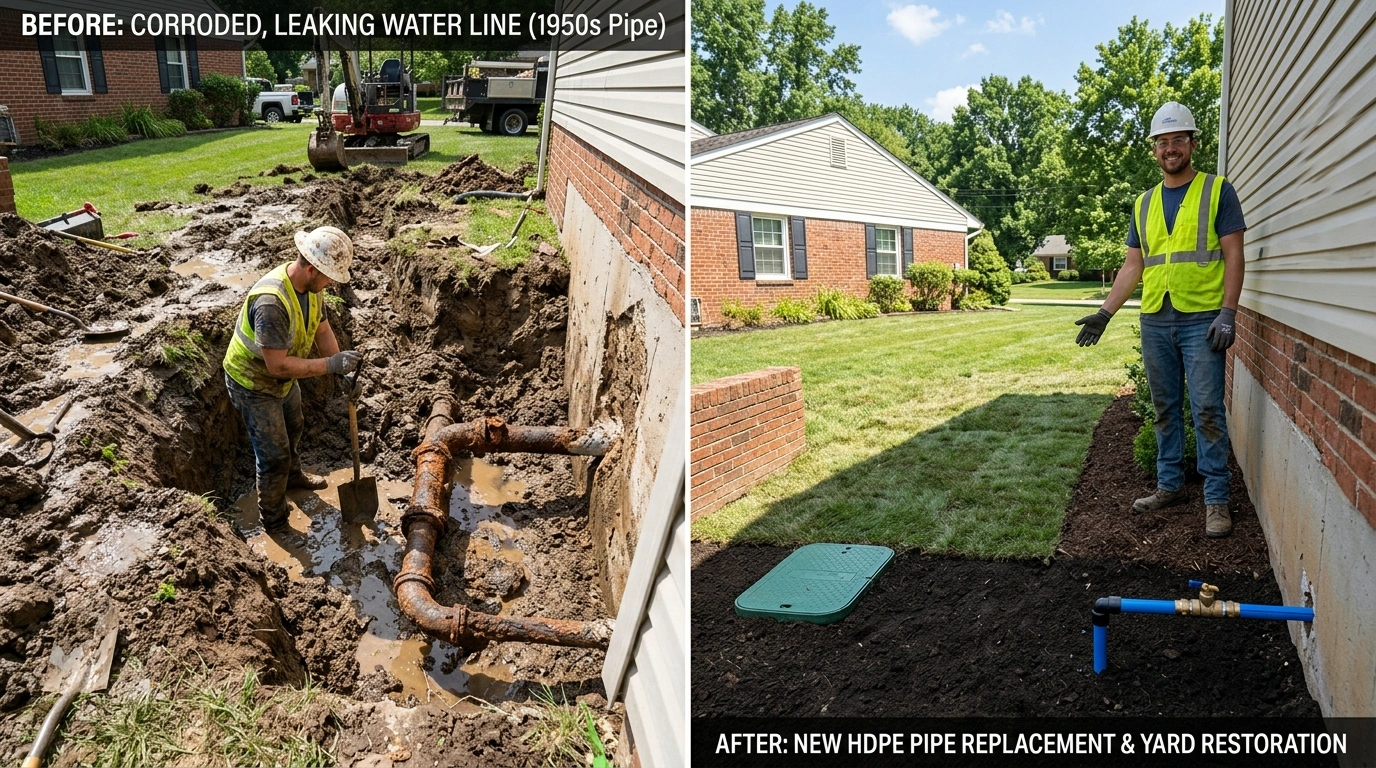
What Changes Once Your Water Line Is Diagnosed, Repaired, or Replaced
Many property owners contact Larimer Denver Plumbers after they notice water pooling, low pressure, a wet basement entry area, recurring leaks, or unexpectedly high water bills. Others call when preparing to sell, renovate, landscape, replace a driveway, or resolve an older-property plumbing concern.
After a proper assessment, homeowners and facility managers have a clearer understanding of the problem, the responsible area, the repair options, the expected access requirements, and the practical next steps.
Transformation Outcomes
Unknown leak source, unexplained water loss, or recurring pressure problems.
A documented assessment and an explained repair or replacement plan.
Concern about whether the issue is a public water main or a private service line.
Clearer guidance on the likely affected area and appropriate next contacts.
Anxiety about damage to landscaping, driveways, irrigation, or finished basement areas.
A defined work scope and restoration expectations before major work begins.
Repeated temporary repairs to an aging or failing supply line.
A longer-term repair or replacement strategy based on line condition and property needs.
How We Repair, Replace, and Protect Denver Water Service Lines
Appropriate Materials, Safe Methods, and Property-Specific Planning
Larimer Denver Plumbers uses professional plumbing materials, diagnostic methods, and repair practices suited to the condition of the line, property access, applicable plumbing requirements, and the scope of authorized work. We do not assume that every water-line problem requires the same method.
A targeted repair may be appropriate for an isolated issue. In other cases, a partial or full replacement may be more dependable, especially when the line has repeated failures, widespread deterioration, poor flow, outdated material, or difficult future access.
Water Line Repair and Replacement Methods May Include
Trenchless Methods Note
Trenchless methods may reduce surface disruption in some situations, but they are not appropriate for every route, pipe condition, property layout, soil condition, utility conflict, or access challenge. We evaluate the most practical option after inspecting the site.
Should You Repair a Damaged Water Line or Install a New One?
Helping Denver Property Owners Choose the Right Long-Term Solution
When a water line leaks or loses pressure, the right answer depends on the condition of the line, the location of the failure, the material, access conditions, previous repair history, and the likely cost of future disruption. Larimer Denver Plumbers explains both repair and replacement options so you can make an informed decision.
| Scenario | Repair May Be Recommended | Replacement May Be Recommended |
|---|---|---|
| One isolated, accessible leak | Yes, when the remaining line is in good condition | Not always necessary |
| Minor fitting or connection failure | Often, if the affected area can be safely accessed | Considered if repeated connection problems exist |
| Repeated leaks in the same line | Short-term repair may be possible | Often worth evaluating for long-term reliability |
| Corroded or deteriorated older pipe | Limited repairs may be possible | Often recommended if deterioration is widespread |
| Poor water pressure from restricted or undersized supply | Repair may not solve the root issue | A new properly sized line may be the better solution |
| Damage beneath a driveway, patio, or mature landscaping | Depends on access and failure location | May be more practical if repeated excavation is likely |
| Frequent past repairs | Possible but may continue the cycle | Full replacement can reduce repeated disruption |
Replacement May Be the Better Choice When:
- The pipe is cracked, severely corroded, collapsed, or structurally compromised
- The line has a history of recurring leaks or multiple prior repairs
- Water pressure remains poor due to restricted or aging supply piping
- The line material is outdated, damaged, or no longer dependable
- A larger planned project makes replacement more practical than future excavation
- The property owner wants a longer-term solution before selling, remodeling, or rebuilding outdoor areas
Water Line Repair and Replacement Costs in Denver, CO
Transparent Pricing and Clear Cost Drivers for Denver Properties
Water-line repair and replacement costs vary because every underground line has a different route, depth, material, access condition, and failure location. Larimer Denver Plumbers provides clear findings and upfront project information so you understand what is affecting the estimate before major work begins.
Main Water Line Cost Drivers
- Location and severity of the leak or damaged area
- Total length of line requiring repair or replacement
- Pipe material, diameter, and connections
- Accessibility of the line, meter area, shutoff, basement entry, or yard
- Depth of the line and excavation conditions
- Landscaping, irrigation, fencing, trees, patios, driveways, sidewalks, or concrete near the work area
- Whether trenchless methods are feasible or conventional excavation is needed
- Required permits, utility coordination, inspections, or right-of-way considerations
- Emergency scheduling versus planned project scheduling
- Restoration requirements after plumbing work is completed
| Service Type | Typical Pricing Considerations |
|---|---|
| Water-Line Diagnostic Visit | Symptoms, access, testing needs, and visible conditions |
| Targeted Water-Line Repair | Leak location, pipe material, excavation, fittings, and labor time |
| Main Shutoff or Accessible Valve Work | Valve condition, location, material, and access |
| Partial Water Service Line Replacement | Length of affected pipe, connections, depth, and restoration |
| Full Water Line Replacement | Total route, material, access, excavation/trenchless method, permits, and restoration |
| Commercial or Multi-Unit Work | Number of lines, building access, phasing, scheduling, and operational needs |
Pricing Note
A water-line estimate should account for the full scope of work—not only the pipe itself. Before authorizing work, ask about the likely repair method, water shutoff, access needs, permit requirements, utility coordination, restoration responsibilities, and whether landscaping, sprinkler, driveway, sidewalk, drywall, or flooring work is included.
Which Denver Properties Need Water Service Line Repair or Replacement?
Understanding When a Water-Line Evaluation Is the Right Next Step
You may need professional water-line service when symptoms point to a possible underground supply problem, an aging line, a pressure issue, or an access concern that cannot be resolved through ordinary fixture repair.
You May Need Water Line Service If:
Commercial Water Line Repair & Replacement for Denver Multi-Unit Properties
Protect Water Service Across Your Building, Facility, Campus, or Portfolio
Commercial water-line problems can affect employees, tenants, customers, equipment, sanitation, operations, and revenue. Larimer Denver Plumbers provides commercial plumbing support for water service line repairs, underground water-line issues, water pressure concerns, shutoff problems, and replacement planning across Denver, Denver County, and nearby metro communities.
We coordinate with facility managers, property owners, HOAs, maintenance teams, landlords, and business operators to define the scope, plan access, reduce disruption, and provide clear documentation for the work performed.
| Commercial Water Line Service | Description |
|---|---|
| Water Service Line Diagnosis | Assessment of low pressure, suspected underground leaks, water loss, and supply concerns |
| Targeted Repairs | Repair of accessible or isolated water-line failures where appropriate |
| Full Line Replacement | Planned replacement for aging, repeatedly failing, or inadequate service lines |
| Main Shutoff and Supply Valve Work | Assessment and replacement of accessible critical shutoff components |
| Multi-Unit Planning | Phased service coordination for apartments, HOAs, retail centers, and multi-building sites |
| Property Access Coordination | Scheduling around tenants, operations, parking, deliveries, landscaping, and building access |
| Documentation Support | Available work summaries, invoices, photos, and service records for property files |
Commercial Properties We Serve
Why Commercial Owners Choose Larimer Denver Plumbers
- One local partner for water-line issues and broader commercial plumbing needs
- Ability to coordinate complex access, multi-unit work, and operational scheduling
- 24/7 emergency response for urgent water-service problems
- Clear communication with managers, owners, tenants, and maintenance teams
- Practical repair-versus-replacement planning for long-term property maintenance
| Commercial Situation | Typical Considerations |
|---|---|
| Multi-Unit Property | Access coordination, tenant notices, water shutoff planning, phased work |
| Large Campus or Portfolio | Building-by-building evaluation, scheduling, documentation, and maintenance planning |
| Restaurant or Hospitality Facility | Water-service continuity, operating-hour coordination, sanitation needs |
| Industrial or Warehouse Site | Safety protocols, access restrictions, equipment operations, and supply demand |
| Retail or Office Building | Minimizing disruption to tenants, customers, staff, and parking areas |
Benefits of Hiring Licensed Water Line Repair Professionals in Denver
Reliable Diagnosis, Safer Repair Planning, and Greater Peace of Mind
Water service lines are pressurized plumbing components that can affect the entire property. Professional water-line service helps you identify the actual cause of the problem before unnecessary digging, temporary patching, or costly replacement decisions are made.
Benefits of Professional Water Line Repair and Replacement
Identify likely underground supply problems before major property damage develops
Distinguish whole-property pressure issues from isolated fixture or indoor plumbing problems
Make an informed repair-versus-replacement decision based on actual line condition
Protect landscaping, driveways, patios, foundations, basements, and finished interior areas through better planning
Restore dependable water service for homes, tenants, customers, and business operations
Receive clear scope information, repair documentation, and next-step recommendations
Reduce the risk of repeated emergency calls caused by unresolved or aging water-line problems
Why DIY or Unlicensed Water Line Repair Can Be Risky
Important Reasons to Leave Underground Water-Line Work to Qualified Professionals
A leaking underground water line can create hidden water loss, soil saturation, foundation moisture, property damage, and service interruptions. Improper excavation, unsafe shutoff attempts, or unqualified repairs can make the situation worse.
Water Line Safety Warnings
- Do not dig near a suspected water line or other underground utility without required utility locates
- Do not force a curb stop, stop box, meter component, or buried valve if you are unsure of its condition
- Do not ignore pooling water near electrical equipment, basement walls, driveways, sidewalks, or unstable soil
- Do not rely on temporary patches for pressurized underground water-service piping
- Do not assume every leak is your responsibility or that every issue is a public water-main failure
- Do not begin planned excavation without contacting Colorado 811 for utility locates
Colorado 811 Reminder
Denver advises property owners to contact Colorado 811 before digging because underground pipes, lines, cables, and other utilities may be present. Emergency locate requests are available through 811.
Answers to Common Water Line Questions in Denver
Quick Answers for Denver Homeowners, Businesses, and Property Managers
Who is responsible for a water line leak in Denver?
Denver Water states that it maintains and replaces public water mains, while customers are responsible for maintaining and replacing their water service lines and meter pits. The exact leak location still matters, so a professional diagnosis should come before assuming whether the issue is on the utility side or the private property side.
What is the difference between a water main and a water service line?
A water main is the larger public distribution pipe, generally located in or near the street. A water service line is the smaller pipe that carries water from the public system to an individual home or building. Many people call both pipes the "main water line," so identifying the actual affected component is important.
How do I know if my underground water line is leaking?
Common signs include water pooling in the yard, persistently damp soil, an unexplained increase in your water bill, reduced pressure throughout the property, moisture near the foundation or meter area, and a water meter that continues to show water use when fixtures are off. Our water leak detection service can help pinpoint the source.
Can a broken water line be repaired instead of replaced?
Yes, an isolated and accessible failure may sometimes be repaired. However, recurring leaks, severe corrosion, aging or restricted pipe material, widespread deterioration, poor water pressure, and difficult future access may make partial or full replacement the more dependable long-term option.
Why is my whole house water pressure suddenly low?
Whole-house low water pressure can result from several issues, including a water service line problem, aging or corroded supply piping, a damaged shutoff, a leak, a pressure-regulation concern, or a public-side water-service issue. A professional assessment helps identify the real cause.
Will water-line replacement tear up my entire yard?
Not always. The method depends on the pipe route, line condition, depth, access, landscaping, driveway or patio locations, soil conditions, utility conflicts, permit requirements, and the type of failure. Trenchless options may be possible for some projects after an on-site assessment.
Can a water line be replaced under a driveway?
It may be possible, but the best method depends on the location of the line, the driveway construction, pipe condition, access, underground utilities, and whether trenchless techniques are suitable. An evaluation is needed before a reliable recommendation can be made.
Do I need to call 811 before water-line work?
Yes. For planned excavation, Colorado 811 should be contacted before digging so underground utilities can be marked. Denver's utility-locate guidance states that anyone planning to dig must contact Colorado 811, and emergency locate requests are available 24 hours a day.
Can water-line replacement affect a finished basement?
It can. Access may be needed where the water service line enters the building, near a water meter, main shutoff, foundation wall, or finished area. Before work begins, ask about access needs, flooring protection, dust control, appliance clearance, shoe-cover practices, wall or floor openings, and whether finish restoration is included in the plumbing scope.
What should I move before a water-line crew arrives?
Keep the path to the water meter, main shutoff, service-line entry area, basement wall, mechanical room, and affected work area clear. You may need to move boxes, furniture, stored belongings, washers, dryers, or other items blocking safe access. Denver Water's lead-service-line consent information similarly advises occupants to provide safe, unencumbered access to the meter and interior service-line entry area.
Does Denver Water replace lead service lines?
Denver Water's Lead Reduction Program handles qualifying lead service-line replacements under its program. This is separate from ordinary private water-line repair or replacement work. Eligibility, scheduling, property requirements, and restoration responsibilities should be confirmed directly with Denver Water.
What should I do if I suspect a water-line leak?
If it is safe, turn off your property's main shutoff valve. Keep people away from pooling water or unstable ground, avoid digging, and contact a qualified plumber for assessment. If you believe the issue may involve a public water main or utility emergency, contact Denver Water directly. Denver Water's listed after-hours emergency number is 303-628-6801. For private water-line concerns, call Larimer Denver Plumbers at (720) 343-5151.
Does homeowners insurance cover water-line repair or replacement?
Coverage depends on your insurer, policy language, endorsements, cause of loss, exclusions, and whether the issue involves the line, resulting water damage, or both. Review your policy and speak with your insurance agent. Larimer Denver Plumbers can provide available repair documentation, invoices, and job details for your records.
Can a water line be repaired in winter?
Many water-line repairs can be performed during winter conditions, but the timeline and method may depend on weather, frozen ground, access, emergency conditions, materials, utility coordination, permits, and restoration requirements.
You're Supported from First Diagnosis to Reliable Water Service
Local Experience, Clear Findings, and Responsive Plumbing Support
Larimer Denver Plumbers approaches every water-line project with a focus on accurate diagnosis, safe work practices, clear recommendations, and respectful treatment of your property. Whether you need emergency water-line repair, planned replacement, main shutoff work, low-pressure diagnosis, or commercial water service support, our team helps you understand the situation before major work begins.
Our Commitment to You
- Clear explanation of what we find and what the next steps may involve
- Practical repair and replacement options based on the actual line condition
- Respect for your home, landscaping, driveway, basement, business, and property access
- Available documentation for completed authorized work
- Ongoing plumbing support for future questions, maintenance needs, and related repairs
If a concern develops after documented repair or replacement work, contact our team so we can review the issue and explain available next steps under the project's applicable workmanship and manufacturer warranty terms.
Larimer Denver Plumbers
329 Detroit StDenver, CO 80206
United States
Licenses and Certifications That Support Water Line Repair
Credentials That Matter When Protecting Your Water Supply and Property
Water-line repair and replacement involve pressurized plumbing systems, underground access, supply connections, shutoffs, pipe materials, and plumbing-code considerations. Larimer Denver Plumbers maintains a qualified team to perform water-line and broader plumbing work responsibly.
Credential Highlights
Emergency Water Line Repair in Denver, CO
Rapid Help When a Water Service Line Leak Threatens Your Property
When water is pooling in your yard, entering a basement area, reducing pressure throughout the property, or causing a sudden loss of water service, you may need emergency plumbing support. Larimer Denver Plumbers offers 24/7 response for urgent water-line and plumbing concerns across Denver and nearby communities. Call (720) 343-5151 anytime.
Our team can help assess the urgency, guide you on immediate safety steps, dispatch a qualified plumbing professional, and develop a repair or replacement plan based on the actual condition found on-site.
Emergency Water Line Process
- Immediate phone consultation to discuss symptoms, visible water, water loss, shutoff status, and property risks
- Dispatch of a qualified technician with plumbing tools and diagnostic equipment
- On-site assessment of accessible components, pressure concerns, leak symptoms, and likely line location
- Temporary mitigation where appropriate and planning for authorized repair or replacement
- Clear communication about water shutoff, access, excavation, restoration, and next steps
- Available documentation for property records, utility communication, or insurance review
Emergency Water Line Scenarios
- Water pooling in the front yard, near the driveway, or foundation
- Sudden whole-home or building-wide low water pressure
- No water at the property when nearby homes appear to have service
- Water entering a basement, crawlspace, or service-entry area
- A damaged or leaking main shutoff valve
- Suspected underground line break after construction, landscaping, or impact
- Water loss creating risks for tenants, customers, employees, equipment, or operations
Insurance Claim Assistance for Water Line Incidents
Documentation That Helps You Organize Repair Information
If a water-line failure contributes to water damage or another covered loss, your insurer may request records showing the condition, repair findings, completed work, and related costs. Larimer Denver Plumbers can provide available documentation to help you organize information for your insurer or property records.
Available Documentation May Include:
- Initial service notes and available photos of the affected area
- Findings from the on-site assessment
- Repair or replacement recommendations
- Detailed invoices for authorized work
- Parts, labor, and scope information
- Work summaries describing completed repairs or replacement steps
Policy Note
Insurance coverage depends on the specific policy, endorsements, exclusions, cause of damage, deductible, and insurer determination. Larimer Denver Plumbers does not approve claims or guarantee coverage. Review your policy and consult your insurance carrier or agent for guidance.
Warranty Coverage for Water Line Repair and Replacement
Understand How Your Authorized Plumbing Work Is Protected
Larimer Denver Plumbers provides clear project information for authorized water-line repairs and replacements. Warranty coverage may vary based on the type of repair, installed materials, manufacturer terms, property conditions, and the written scope of work.
| Coverage Type | Description |
|---|---|
| Workmanship | Coverage for eligible installation and repair labor as defined in the written project terms |
| Parts and Materials | Manufacturer warranty coverage for qualifying new components and pipe materials |
| Project Documentation | Written work details, invoices, and records to support future service questions |
| Follow-Up Support | Guidance on maintenance, warning signs, and next steps if a related concern develops |
Important Notes
- Warranty terms vary by repair type, materials, manufacturer, and project agreement.
- Existing pipe conditions, unrelated plumbing issues, external damage, and property alterations may affect coverage.
- Keep your project documentation and follow recommended maintenance guidance.
- Ask your Larimer Denver Plumbers technician about the applicable warranty terms before work begins.
10 Fully Equipped Vehicles Serving Denver and the Metro Area
Tools, Parts, and Plumbing Professionals Ready for Water-Line Problems
Larimer Denver Plumbers operates 10 fully equipped service vehicles to support responsive plumbing help across Denver and surrounding communities. Our vehicles carry diagnostic equipment, common plumbing parts, repair tools, and materials to help our team address many water-line concerns efficiently.
Fleet and Equipment Highlights
Diagnostic tools for evaluating pressure concerns, accessible plumbing, and suspected leak conditions
Common repair components, shutoff materials, fittings, and plumbing equipment
Equipment suited to water-line repair planning, supply-pipe work, and related plumbing service
GPS-dispatched service vehicles for efficient coverage across Denver and nearby cities
Access to additional equipment and coordinated resources for larger repair, excavation, or replacement projects
Flexible Payment Options for Major Water Line Projects
Helping You Budget for Reliable Water Service and Necessary Plumbing Upgrades
A significant water-line replacement can be an unexpected property expense. If your repair or replacement project involves a larger scope of work, Larimer Denver Plumbers can discuss available payment and financing options for qualifying projects.
Financing and Payment Considerations
- Potential options for larger water-line replacement projects
- Support for multi-unit, commercial, HOA, and property-management work
- Clear review of project scope before discussing payment options
- Straightforward explanations of available terms, timelines, and next steps
- Coordination with broader plumbing upgrades, remodels, or property improvement plans when appropriate
Financing availability, approval, rates, terms, and eligibility depend on the applicable provider and applicant qualifications. Ask our team about current options when discussing your project.
Recognition for Service Excellence
Local Recognition Reflecting Long-Term Service to Denver Properties
Larimer Denver Plumbers has earned recognition for its commitment to responsive service, professional standards, customer care, and dependable plumbing support across Denver and surrounding communities.
Recognition Highlights
Senior and Military Discounts on Water Line Services
Supporting Denver Seniors, Active-Duty Service Members, Veterans, and First Responders
Larimer Denver Plumbers recognizes the value of supporting seniors, military families, veterans, and first responders in the Denver community. Qualifying customers may be eligible for savings on select water-line repair, replacement, plumbing maintenance, or related service work.
Available Discount Opportunities
Senior Customer Savings
On qualifying plumbing and water-line service visits
Military & Veteran Discounts
For eligible repair and replacement services
First Responder Benefits
On qualifying plumbing services
Seasonal Savings
On selected sewer, drain, water-heater, and maintenance work
Instant Service-Call Credit
Opportunities where applicable
Discount availability, eligibility, exclusions, service limits, and combination rules may apply. Ask our team for current details before scheduling. Call (720) 343-5151 to learn more.
Water Line Repair Hours in Denver, CO
24/7 Availability for Water-Line Emergencies, Repairs, and Replacement Planning
Water-line leaks, pressure problems, and supply interruptions do not always happen during normal business hours. Larimer Denver Plumbers provides 24/7 emergency plumbing availability for urgent water-line concerns throughout Denver and the surrounding metro area.
| Day | Hours |
|---|---|
| Monday | 00:00 – 23:59 |
| Tuesday | 00:00 – 23:59 |
| Wednesday | 00:00 – 23:59 |
| Thursday | 00:00 – 23:59 |
| Friday | 00:00 – 23:59 |
| Saturday | 00:00 – 23:59 |
| Sunday | 00:00 – 23:59 |
Contact Larimer Denver Plumbers
- Phone: (720) 343-5151
- Email: larimerdenverplumbers@gmail.com
- Website: emergencyplumbingdenverco.com
- Address: 329 Detroit St, Denver, CO 80206
Larimer Denver Plumbers vs. Typical Water Line Repair Providers in Denver
What Makes Our Water Line Service Different
When you are dealing with an underground leak, a low-pressure problem, or a potential water-line replacement, the quality of diagnosis and communication matters. Some providers may offer a quick estimate without fully explaining the likely issue, access requirements, restoration needs, or available repair options.
Larimer Denver Plumbers provides comprehensive plumbing support, 24/7 availability, and a practical approach to water-line repair and replacement for Denver homes and commercial properties.
| Feature | Larimer Denver Plumbers | Typical Water Line Provider |
|---|---|---|
| Denver-Area Experience | 30+ years serving Denver and surrounding communities | May have limited local experience |
| Team Capacity | 50 skilled professionals and 10 service vehicles | Smaller teams or limited availability |
| Service Scope | Water-line repair, replacement, leak detection, shutoff work, and full plumbing support | May focus on limited repair types |
| Emergency Availability | 24/7 emergency plumbing response | May operate only during standard business hours |
| Repair vs. Replacement Guidance | Explains options after assessment | May emphasize one method without full evaluation |
| Residential and Commercial Capability | Homes, HOAs, multi-unit properties, businesses, and facilities | May serve only one property type |
| Communication | Clear scope, access, water shutoff, and restoration discussions | Varies by provider |
Contact Larimer Denver Plumbers for Water Line Repair & Replacement in Denver, CO
Talk with a Qualified Water Line Professional Today
If you are dealing with water pooling in your yard, a wet basement entry area, low pressure across the property, unexplained water use, an aging service line, or a planned replacement project, Larimer Denver Plumbers is ready to help. Our team can assess the issue, explain the likely cause, review repair and replacement options, and help you move forward with a clearer plan.
Contact Details
Denver, CO 80206
United States
Request an Online Water Line Estimate
Submit your request below for prompt confirmation.
Protect your property, water supply, landscaping, basement, and daily routine with professional Water Line Repair Denver CO from Larimer Denver Plumbers.